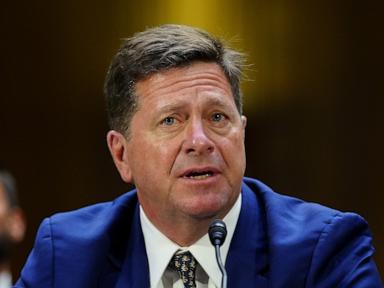
The United States Senate voted 51-47 along party lines to confirm Jay Clayton as the new Director of National Intelligence, installing a former Wall Street regulator and federal prosecutor atop the country's eighteen spy agencies. This confirmation ends weeks of administrative limbo following Tulsi Gabbard’s resignation and arrives alongside a broader restructuring of the national security apparatus. Behind the simple vote tally lies a high-stakes legislative bargain, an interim leadership tenure marked by aggressive staff reductions, and a bitter partisan dispute over election integrity that will dictate how American espionage is managed for years to come.
Understanding how Clayton reached this seat requires examining the friction points of modern federal power. When Gabbard stepped down in June, the administration faced an immediate vacancy at the helm of the Office of the Director of National Intelligence. Instead of moving swiftly to confirm Clayton, the White House installed Bill Pulte as acting chief. That temporary appointment served a dual purpose. It created a pressure valve for stalled legislative negotiations regarding government surveillance powers while initiating a rapid bureaucratic contraction within the intelligence community itself.
For weeks, Capitol Hill watched an unconventional administration play unfold. Pulte oversaw a sweeping downsizing of the central intelligence bureaucracy, cutting the agency's headquarters staff by roughly thirty percent. At the same time, the administration used the vacancy to exert leverage over the reauthorization of Section 702 of the Foreign Intelligence Surveillance Act. This warrantless surveillance authority had lapsed after months of gridlock, with lawmakers split over privacy safeguards and executive authority.
Senate Majority Leader John Thune and other Republican leaders pushed for Clayton’s quick installation as the necessary mechanism to unlock the legislative stalemate. Yet the nomination ran into immediate political turbulence. During his confirmation hearings before the Senate Intelligence Committee, Clayton faced harsh questioning from Democratic lawmakers regarding his refusal to explicitly state that former President Joe Biden won the 2020 election. Clayton maintained that the election was properly certified through the Electoral College, but his semantic caution alienated members who had initially viewed his corporate and legal background as a stabilizing force.
The ideological battle lines drawn during those hearings reflect a fundamental tension within the American security state. Critics argue that positioning a corporate securities lawyer and loyal prosecutor at the top of the intelligence hierarchy opens the door to partisan pressure. They point to the timing of document declassifications released during Pulte's brief tenure—materials focused on foreign election interference—as evidence that the machinery of state intelligence is increasingly being harnessed to validate political narratives.
Conversely, supporters emphasize Clayton's extensive background prosecuting international criminal enterprises and managing complex regulatory frameworks as the Southern District of New York attorney and SEC chairman. Proponents argue that the intelligence community requires an administrator capable of imposing operational discipline and fiscal restraint over an organization that has ballooned in size and bureaucratic complexity.
The consequences of this transition extend far beyond personnel changes in Washington conference rooms. The office now under Clayton's command functions as the primary coordinating hub for an intricate web of agencies, including the CIA, the NSA, and military intelligence branches. Managing a thirty percent reduction in central staff while attempting to restore operational tempo requires an aggressive administrative hand. At the same time, the new director must navigate ongoing congressional battles over electronic surveillance authorities that remain vital to foreign intelligence operations.
The confirmation of Jay Clayton marks a definitive pivot point for American intelligence oversight. Whether his tenure will restore traditional boundaries or accelerate a structural transformation of the spy apparatus remains an open question. The architecture of national security has shifted, and the implications of this shift are only beginning to unfold.


