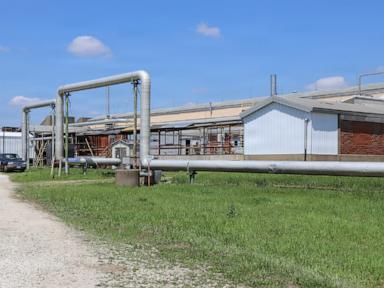
Residents living near the Iowa Army Ammunition Plant in Middletown, Iowa, are confronting the reality of an impending military disposal operation involving the open-air detonation of roughly five tons of explosive compounds and bomb-making chemicals. The operation relies on an outdated disposal method known as open burning and open detonation (OB/OD), a practice that releases heavy metals—most notably lead—and toxic particulates directly into the surrounding atmosphere. While the Department of Defense maintains that controlled detonations are necessary to safely eliminate unstable munitions, environmental watchdogs, agricultural producers, and local families warn that the resulting lead dust cloud poses severe, unmitigated risks to public health, topsoil integrity, and regional groundwater.
The core tension is straightforward. The military sits on vast stockpiles of obsolete, degraded, or off-specification energetic materials that cannot simply be thrown into a landfill. Yet the chosen method of destruction—setting them on fire or blowing them up in open pits—treats the surrounding rural airshed as an unfiltered exhaust pipe.
The Mechanics of Open Detonation and Heavy Metal Dispersion
To understand why a five-ton detonation triggers alarm across Des Moines County, you have to look at what happens chemically when military-grade explosives burn in the open air. Unlike commercial demolition explosives, military munitions and their manufacturing byproducts are complex cocktails. They contain primary explosives like lead styphnate and lead azide, alongside secondary high explosives such as RDX (Royal Demolition Explosive) and HMX, binders, plasticizers, and metallic casings.
When these materials are detonated in an open trench or burn pan, combustion is inherently incomplete. A closed-loop industrial incinerator forces exhaust gases through scrubbers, baghouses, and high-efficiency particulate air filters before anything touches the outside sky. Open detonation does none of that.
The blast generates intense thermal updrafts. Microscopic particles of vaporized lead, barium, copper, and unburned energetic residues are lofted hundreds of feet into the boundary layer of the atmosphere. Once airborne, these particulates do not vanish. They travel downwind, governed entirely by barometric pressure, wind shear, and humidity, before settling onto roofs, pastures, vegetable gardens, and watershed tributaries.
Lead is the primary culprit here, and for good reason. Unlike organic compounds that eventually break down under ultraviolet light or microbial action in the soil, lead is an elemental heavy metal. It never degrades. Once a plume deposits lead dust onto Iowa farmland, that lead remains in the top few inches of soil indefinitely unless physically excavated and hauled away as hazardous waste.
Why the Military Still Uses Open Burning in Southeastern Iowa
If closed-loop alternatives exist, why is the Army still lighting off tons of energetics in the open air in the twenty-first century? The answer comes down to a mix of regulatory grandfathering, safety liability, and cold institutional math.
When Congress passed the Resource Conservation and Recovery Act (RCRA) in 1976, it effectively banned the open burning of hazardous waste across the United States. The Environmental Protection Agency recognized the obvious danger of letting industries burn toxic chemicals in open pits. However, the EPA carved out a narrow, temporary exemption for waste explosives that could not be safely disposed of through other means.
That temporary exemption became a permanent crutch. For decades, the Department of Defense operated dozens of OB/OD sites across the country under interim status permits, arguing that handling unstable or shock-sensitive munitions inside enclosed chambers posed an unacceptable risk to workers.
There is truth to that safety argument, at least on a narrow technical level. Certain degraded propellants or damaged warheads can detonate unpredictably if subjected to the mechanical friction of feeding mechanisms required by enclosed thermal treatment systems. For those specific, hyper-unstable items, remote detonation in an open pit minimizes human exposure during the destruction phase.
The problem is scope creep. Over the years, open burning and open detonation became the default disposal method not just for unstable, hair-trigger munitions, but for routine manufacturing waste, contaminated rags, off-spec chemical batches, and bulk powders that could safely be processed in contained facilities. Building a Contained Detonation Chamber (CDC) or a Static Detonation Chamber (SDC) costs tens of millions of dollars per unit, requires rigorous maintenance, and slows down throughput. Pouring five tons of material into an open pit and wiring it to a blasting cap is fast, cheap, and requires minimal capital investment.
A History of Contamination at the Iowa Army Ammunition Plant
The anxiety in southeastern Iowa is not occurring in a vacuum. The Iowa Army Ammunition Plant (IAAAP), spanning roughly 19,000 acres near Middletown and West Burlington, has operated since 1941. Across World War II, the Korean War, the Vietnam War, and modern conflicts, the facility has loaded, assembled, and packed millions of artillery shells, bombs, mines, and warheads.
That industrial output left a deep environmental scar. Decades of wastewater discharges, unlined lagoons, and open burn grounds saturated the site's soil and shallow aquifers with RDX, TNT, and heavy metals. In 1990, the EPA placed the Iowa Army Ammunition Plant on the National Priorities List, designating it a federal Superfund site.
Longtime residents remember the plumes of black smoke rising from the installation's demolition grounds long before environmental impact statements were part of the public lexicon. Over the past thirty years, hundreds of millions of dollars have been spent pumping and treating contaminated groundwater, capping old landfills, and supplying bottled water or filtration systems to nearby homeowners whose private wells tested positive for explosive compounds.
Against that backdrop, an announcement of a multi-ton detonation does not sound like a routine maintenance event to locals. It sounds like a relapse. When an institution with a documented Superfund legacy asks neighboring communities to trust that a massive open-air blast will stay within acceptable safety thresholds, skepticism is the only rational response.
The Overlooked Agricultural and Economic Exposure
Most media coverage of military burn sites focuses exclusively on immediate human inhalation risks. While breathing fine particulate matter laced with heavy metals is an acute hazard—especially for children, the elderly, and anyone with respiratory conditions—the broader threat in Iowa is agricultural.
Des Moines County sits in the heart of some of the most productive row-crop and livestock land in North America. Corn, soybeans, hay, and pastureland surround the perimeter of the installation. Unlike an urban industrial corridor where dust settles onto asphalt and washes into municipal storm sewers, particulates falling over rural Iowa land directly on the food supply chain.
Consider a hypothetical scenario involving a late-spring detonation during dry, breezy conditions. A visible or invisible plume drifts three miles northeast over a 500-acre stretch of emerging corn and alfalfa. Fine lead oxide particles adhere to the waxy cuticles of the leaves and settle onto the topsoil. Rain washes a portion of that dust into the root zone, while machinery kicks it back up during harvest. If that alfalfa is baled and fed to dairy or beef cattle, heavy metals bioaccumulate in animal tissues and milk. Even if contaminant levels remain just below federal intervention thresholds, the reputational damage alone can ruin a farm's marketability.
Agricultural buyers, organic certifiers, and international export markets enforce strict tolerances for heavy metal residues. A single well-publicized contamination event—or even the credible threat of a lead dust cloud—forces local producers into an impossible bind. They either pay out of pocket for expensive soil and tissue testing to prove their crops are clean, or they risk rejected loads at the grain elevator. The military's dispersion models rarely account for the economic anxiety of a farmer trying to sell grain harvested downwind of an ammunition plant.
Dispersion Modeling Versus Ground-Level Reality
Whenever the Army proposes a large-scale detonation, it relies heavily on atmospheric dispersion modeling to reassure state regulators and the public. Software programs calculate wind speed, atmospheric stability, mixing height, and source emission factors to predict where the plume will go and how dilute the pollutants will be when they reach the fence line.
These models look authoritative on paper. In practice, they are riddled with blind spots.
First, emission factors for open detonations are notoriously imprecise. Because you cannot put a smokestack monitor over an explosion, regulators rely on data gathered from controlled test burns conducted inside massive inflatable domes—often called "bang boxes"—decades ago. Scaling up results from a few pounds of explosives burned in a laboratory tent to five tons of mixed chemical waste detonated in an open field introduces massive margins of error. Temperature variations, soil moisture, the exact geometry of the pit, and the presence of metallic debris all alter the chemical byproducts of the blast.
Second, Midwestern weather is volatile. A forecast calling for steady 10-mile-per-hour winds toward an unpopulated buffer zone can shift within twenty minutes due to localized thermal currents or an approaching front. Once the detonation sequence is initiated, you cannot call the cloud back.
Third, models measure averages, not spikes. Regulatory standards often evaluate air quality based on 24-hour or annual average concentrations. A short, intense detonation might technically stay beneath an annualized threshold while subjecting a nearby schoolyard or farmstead to a twenty-minute spike of toxic particulates that far exceeds safe acute exposure limits.
The Regulatory Friction Between State Agencies and the Pentagon
Oversight of these operations falls into a jurisdictional gray zone that frequently frustrates local officials. While the EPA sets overarching federal standards under the Clean Air Act and RCRA, day-to-day permitting authority is typically delegated to state environmental agencies, such as the Iowa Department of Natural Resources (IDNR).
State regulators face intense political and institutional pressure when dealing with Department of Defense facilities. Military installations are major regional employers. At the same time, federal supremacy doctrines and national security exemptions often limit how aggressively a state agency can force operational changes at an Army plant.
In recent years, the EPA has signaled a shift toward tightening rules around OB/OD permits, explicitly urging facilities to evaluate and adopt alternative technologies before renewing open-burn authorizations. The agency's updated guidance emphasizes that the burden of proof lies on the facility operator to demonstrate why non-thermal or closed-loop thermal treatments are technically infeasible.
Yet enforcement lags behind policy. Permitting cycles stretch across years, and interim operating agreements allow open detonations to continue while feasibility studies sit in bureaucratic review. For residents watching the calendar count down to a five-ton blast, long-term regulatory reform offers zero immediate protection.
Viable Alternatives That Already Exist
Critics of open detonation are not arguing that the Army should hoard unstable explosives indefinitely. They are arguing that the military should use the clean destruction technologies it already owns and operates elsewhere.
The most proven alternative is the Static Detonation Chamber. Essentially an armored, externally heated steel vessel, an SDC allows munitions to be fed into a sealed chamber where intense heat causes the explosives to deflagrate or detonate safely inside. The blast pressure is contained by the thick steel walls, and the resulting gases are routed through a comprehensive off-gas treatment system. Scrubbers neutralize acidic gases, activated carbon captures volatile organic compounds, and ceramic or HEPA filters trap over 99.9 percent of heavy metals like lead before a single cubic foot of air is released outside.
Another established technology is supercritical water oxidation and alkaline hydrolysis, chemical processes that break down energetic molecules into benign salts, water, and carbon dioxide without any combustion or airborne emissions whatsoever.
The Department of Defense has already deployed Static Detonation Chambers at several major sites—including the Blue Grass Army Depot in Kentucky and the Anniston Army Depot in Alabama—to destroy chemical weapons and conventional munitions safely. The technology works. The engineering is mature. The barrier in places like Middletown is rarely a lack of scientific capability; it is budget prioritization and procurement inertia.
What Local Residents Can Actually Do
When a federal installation schedules an open detonation, individual citizens often feel powerless against the machinery of the Pentagon. Waiting passively for post-event air monitoring reports from the contractor running the burn is a mistake. Communities near active OB/OD sites have specific, practical levers they can pull to establish accountability and document baseline conditions.
- Establish pre-detonation environmental baselines: Homeowners, schools, and farmers within a five-to-ten-mile radius can collect wipe samples from hard outdoor surfaces, topsoil samples, and water samples from open cisterns or livestock troughs before the scheduled blast date. Accredited third-party environmental laboratories can test for baseline lead and heavy metal concentrations for a fraction of the cost of post-contamination remediation. Without pre-event data, proving that newly discovered lead came from a specific military operation becomes a legal nightmare.
- Demand real-time fence-line telemetry: Public pressure through state legislators and county boards of health should focus on requiring continuous, real-time particulate monitoring (specifically PM2.5 and PM10 sensors) positioned downwind at the installation boundary during the detonation window, with raw data made publicly accessible rather than summarized months later.
- Scrutinize the RCRA permit renewal docket: Every open-burn facility operates under a formal permit that requires public comment periods during modifications or renewals. Detailed, technical comments questioning the facility's alternative-technology feasibility studies become part of the permanent administrative record—the exact record environmental attorneys use to challenge permits in federal court.
The fundamental flaw in the military's current disposal strategy is an accounting trick. Open detonation looks inexpensive on a defense contractor's spreadsheet only because the true costs—contaminated topsoil, degraded air quality, medical monitoring, and lost agricultural confidence—are quietly transferred onto the surrounding community. Until the Department of Defense is forced to internalize the environmental cost of every gram of lead it lofts into the sky, rural towns like Middletown will remain the unintended proving grounds for the military's toxic leftovers.