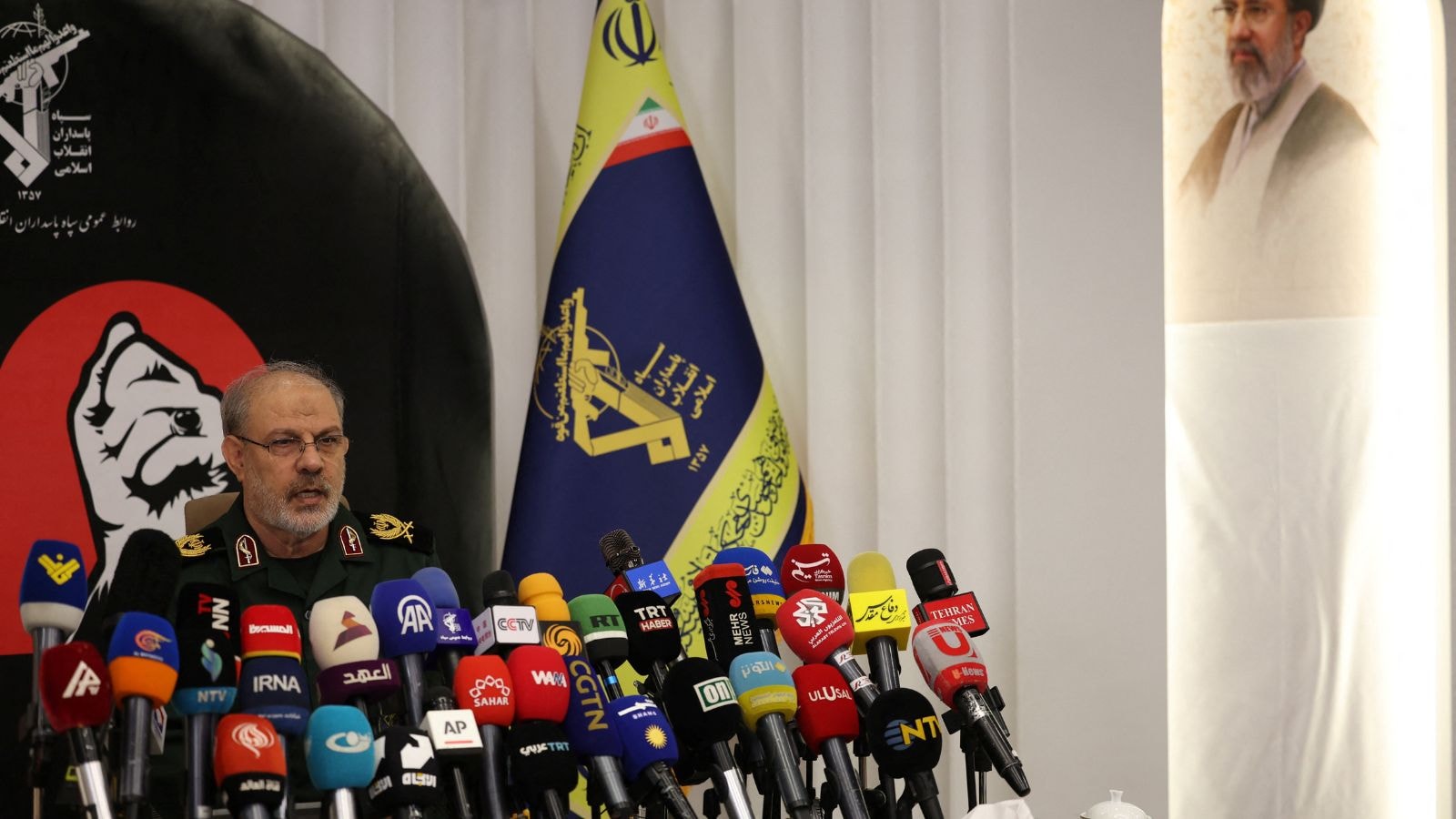
Posturing in modern military strategy rarely happens in a vacuum. When state-run media outlets in Tehran begin broadcasting footage of massive conventional munitions, foreign capitals take notice. The recent Iranian displays regarding heavyweight conventional ordnance are not merely domestic propaganda or empty chest-beating. They represent a calculated signaling campaign designed to match the rhetoric coming from Western defense planners regarding deep-penetration capabilities.
Understanding this dynamic requires looking past the flashy headlines and examining how military competition drives cyclical escalations in weapon development.
The Anatomy of Massive Conventional Deterrence
Military deterrence relies heavily on visibility. If you possess a weapon designed to destroy fortified underground bunkers, keeping it hidden defeats part of its strategic utility. Adversaries must know the capability exists, understand its rough parameters, and calculate the risk of its deployment.
The weapon systems frequently discussed in Iranian defense circles as the "father of all bombs" occupy a specific niche in conventional warfare. These are massive air-delivered thermobaric or high-explosive devices meant to compensate for a lack of stealth delivery platforms or precision-guided deep-penetration warheads. When an air force lacks the fifth-generation stealth infrastructure required to drop precision munitions directly into heavily defended airspace, brute force becomes the fallback option.
Historically, the United States developed the Massive Ordnance Air Blast, or MOAB, to target tunnel networks and cave complexes during conflicts in Southwest Asia. The psychological impact of such a device is immense, generating a shockwave visible from miles away and consuming oxygen across a massive blast radius. Tehran's pursuit of a domestic equivalent follows a familiar military logic. If an adversary fields a signature weapon of immense destructive capacity, developing a localized counterpart serves as a rhetorical and tactical counterweight.
Engineering Reality Versus State Television
Building a multi-ton conventional bomb is mechanically straightforward compared to the electronics required to guide it. Pouring high explosives into a massive steel casing requires industrial manufacturing capability, but achieving meaningful accuracy over long distances demands advanced guidance packages.
Defense analysts tracking these programs often split their assessments into two categories: industrial capacity and technological sophistication. Iran's domestic defense sector has demonstrated considerable resilience under decades of heavy sanctions. They can manufacture large rocket bodies, heavy casings, and basic guidance fins. However, the complex microelectronics, inertial navigation systems, and terminal guidance sensors required to turn a massive dumb bomb into a precision weapon remain subject to strict international supply chain restrictions.
When state media reveals a new heavy munition, the exterior finish often masks underlying limitations in guidance technology. Dropping a multi-ton explosive from a cargo aircraft without precise guidance limits its utility against hardened, mobile, or deeply buried targets. It functions primarily as a psychological instrument rather than a surgical surgical strike tool.
The Regional Calculus of Escalation
Every weapons test or unveiling sends ripples through regional security architectures. Israel and the Gulf states monitor these developments closely, factoring conventional ballistic and atmospheric missile stockpiles into their air defense planning.
The escalation ladder in the Middle East is characterized by asymmetric responses. While Western and allied forces invest heavily in multilayered missile defense systems like Iron Dome, David's Sling, and Arrow, regional adversaries often focus on mass, volume, and psychological impact. A massive conventional bomb is not designed to defeat a sophisticated air defense network on its own. Instead, it represents the upper tier of conventional firepower meant to signal resolve during periods of heightened regional tension.
Diplomatic channels frequently freeze while military planners game out worst-case scenarios. Every public demonstration of heavy ordnance narrows the margin for error between deterrence and miscalculation. When both sides continuously signal readiness for high-intensity conventional conflict, the risk of an accidental escalation increases exponentially.
Assessing the True Strategic Utility
Strip away the promotional videos and the dramatic narration, and the tactical reality of these heavy munitions becomes stark. Modern warfare has largely shifted away from massive, indiscriminate conventional drops toward hyper-precise, networked engagements. Precision-guided munitions launched from standoff distances minimize risk to the delivery platform while ensuring maximum target destruction.
A multi-ton unguided or semi-guided bomb requires air supremacy to deliver effectively. In a contested airspace defended by modern integrated air defense systems, lumbering cargo aircraft carrying oversized ordnance would face extreme vulnerability. This logistical hurdle highlights the gap between parade-ground displays and actual battlefield survivability.
The cycle of military competition will continue to produce reciprocal announcements of heavier warheads, larger yields, and louder threats. Yet, the real metric of power remains the ability to integrate technology, logistics, and intelligence into a cohesive operational strategy. As long as regional tensions persist, these massive weapons will remain potent symbols of an ongoing standoff, functioning more as political leverage than as practical instruments of war.