Most diplomatic dispatches reduce United Nations General Assembly week to a blur of handshakes, flags, and interchangeable readouts. They miss the blueprint underneath. During the 81st session of the UN General Assembly (UNGA 81) in New York in late September 2026, Indian External Affairs Minister S. Jaishankar executed a calculated, three-pronged diplomatic push—convening the inaugural V4+India Foreign Ministers' Meeting with Poland, Czechia, Slovakia, and Hungary, reviewing trade implementation with Swiss Foreign Minister Ignazio Cassis, and cementing development commitments with Nauru President David Adeang. Taken together, these meetings reveal how New Delhi is hedging against European Union bureaucracy, operationalizing $100 billion trade pledges, and locking down critical Pacific votes in a fractured global order.
On the surface, bundling a Central European bloc, a wealthy alpine non-EU financial hub, and a 21-square-kilometer Pacific island republic into a single week's itinerary looks like standard multilateral speed-dating. Look closer at the timing and the mechanics. Every one of these engagements addresses a specific structural bottleneck in Indian foreign policy—from slow-moving trade talks in Brussels to contested influence across the Indo-Pacific.
Breaking the Brussels Bottleneck Through the Visegrad Four
For years, India's European strategy revolved almost entirely around Berlin, Paris, and the European Commission in Brussels. That approach carried a predictable flaw. Whenever broader EU-India free trade negotiations stalled over regulatory friction, carbon border taxes, or agricultural tariffs, New Delhi's political momentum across the continent slowed with them.
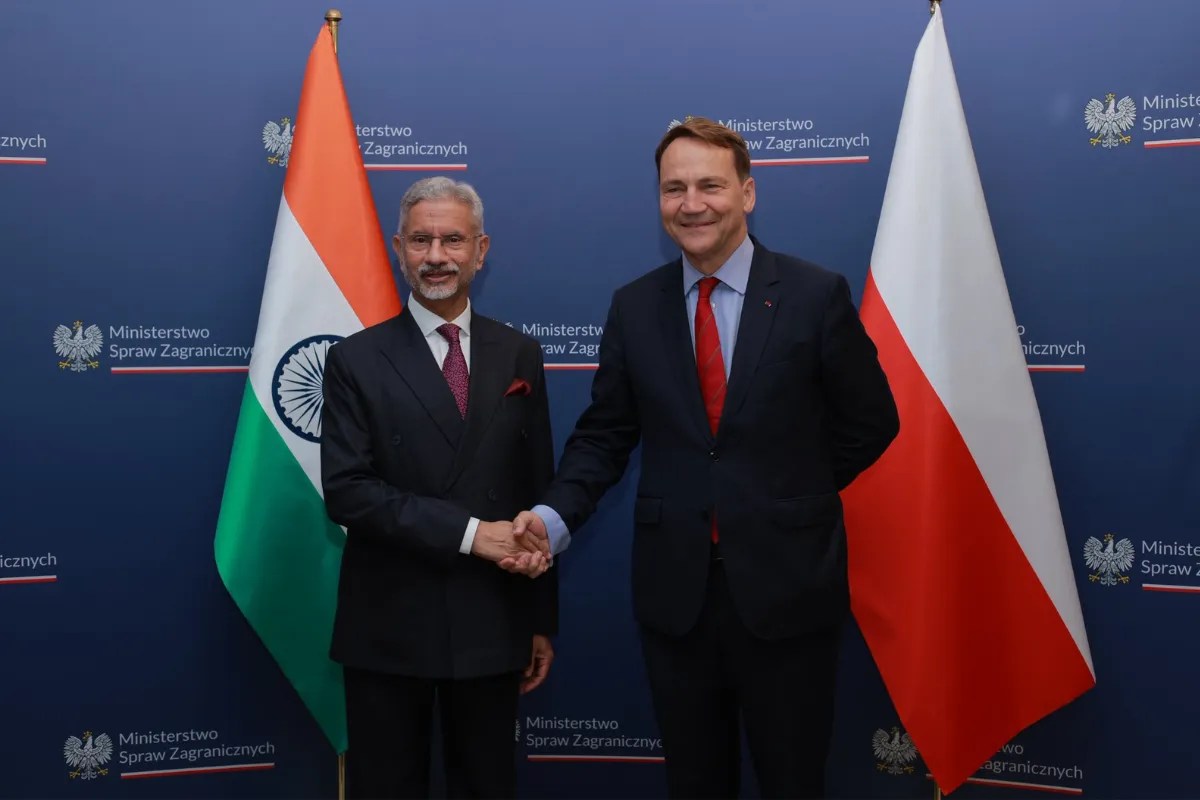
On September 21, 2026, Jaishankar opened a second front. Meeting under the Slovak presidency of the Visegrad Group (V4) in New York, Jaishankar sat down with Slovakia's Juraj Blanár, Poland's Radosław Sikorski, Czechia's Petr Macinka, and Hungary's Anita Orbán for the first-ever V4+India Foreign Ministers' Meeting.
The numbers explain why Central Europe matters far more than traditional diplomatic coverage suggests. The V4 nations represent a combined market of roughly 64 million consumers and sit at the industrial manufacturing core of the European Union. Supply chains for automotive components, defense hardware, precision engineering, and heavy machinery run straight through Poland, Czechia, Slovakia, and Hungary. As global manufacturers diversify away from single-country dependencies in East Asia, Central European factories need reliable engineering partners, software integration, and capital—areas where Indian conglomerates have quietly been acquiring assets and building delivery centers for over a decade.
The New York meeting moved beyond warm rhetoric into institutional architecture. Jaishankar and his four counterparts agreed to establish an annual V4+India business forum alongside regular yearly meetings at the foreign minister level. That institutionalization is deliberate. When four EU member states coordinate their economic and defense priorities with New Delhi annually, they form an internal caucus inside Brussels capable of advocating for pragmatic trade and technology rules.
Equally significant was the political signal on global governance. Following the meeting, Slovak Foreign Minister Juraj Blanár publicly affirmed that the V4 countries back India's bid for a permanent seat on a reformed United Nations Security Council (UNSC). Securing collective endorsement from four European Union and NATO members—nations that often diverge sharply on Russia, energy policy, and domestic EU politics—demonstrates how India's multi-aligned diplomacy can find common ground even among divided European capitals.
Where the V4 Alignment Faces Friction
Still, treating the V4+India track as an automatic breakthrough ignores real structural tensions. The Visegrad Group is not a monolithic voting bloc. Sharp policy rifts divide Warsaw and Prague from Budapest and Bratislava over European security architecture, sanctions enforcement, and energy imports.
- Defense procurement realities: Poland and Czechia have poured billions into rapid military modernization, creating openings for Indian ammunition, artillery components, and defense electronics. Yet EU procurement rules and NATO interoperability standards heavily favor European and American defense primes.
- Mobility and visa bottlenecks: While Central European industries face acute labor shortages that Indian skilled workers could fill, domestic political sensitivity around migration across parts of Central Europe complicates fast-track mobility agreements.
- The Brussels ceiling: Regardless of bilateral enthusiasm in Warsaw or Bratislava, trade tariffs and regulatory standards remain an exclusive competence of the European Commission. The V4 can champion India inside EU councils, but they cannot sign a separate tariff schedule.
New Delhi knows this. The V4 track is not a replacement for an EU-wide trade deal; it is pressure from the inside.
Turning Paper Promises Into Factory Floors With Switzerland
If the V4 meeting was about building political leverage inside the EU, Jaishankar's bilateral sit-down with Swiss Foreign Minister Ignazio Cassis on the UNGA sidelines was about execution outside it.
India and the four-nation European Free Trade Association (EFTA)—comprising Switzerland, Norway, Iceland, and Liechtenstein—signed their landmark Trade and Economic Partnership Agreement (TEPA) in March 2024, with the pact officially entering into force on October 1, 2025. Nearly one year into its operational lifecycle, the pact faces its toughest test.
TEPA made headlines worldwide for a binding commitment unlike anything in modern trade history. EFTA states pledged to promote $100 billion in foreign direct investment into India over 15 years—$50 billion in the first decade and another $50 billion in the following five years—paired with the creation of one million direct jobs in India. In exchange, New Delhi granted phased tariff reductions on high-value Swiss exports, including pharmaceuticals, precision machinery, watches, and medical devices.
Switzerland accounts for the overwhelming share of EFTA's economic weight and bilateral trade with India. That puts Bern at the center of whether TEPA delivers real capital or stalls in compliance disputes.
During their New York meeting, Jaishankar and Cassis focused directly on unlocking the new economic opportunities created by TEPA alongside broader multilateral coordination. One year after implementation, the easy part—signing the treaty and ratifying tariff schedules—is finished. The hard part is matching Swiss mid-sized industrial champions, known as Mittelstand firms, with Indian state governments, land clearances, and supply chain ecosystems.
The Fine Print Behind the $100 Billion Pledge
Veteran trade negotiators watch TEPA closely because of its unprecedented clawback mechanism. If EFTA investments fall short of the agreed trajectory after 15 years—and after a three-year grace period—India retains the legal right to rebalance or suspend tariff concessions granted to EFTA goods.
That clause creates mutual urgency. Swiss pharmaceutical, med-tech, and precision engineering companies want predictable patent enforcement, streamlined regulatory approvals from Indian agencies, and smoother customs clearance. Indian policymakers want verifiable capital expenditure on Indian factory floors, not merely portfolio inflows routed through financial vehicles.
Cassis and Jaishankar also carry diplomatic weight beyond bilateral commerce. Switzerland's tradition of neutrality and its frequent role as a host for peace summits and mediation tracks make Bern a vital sounding board for New Delhi as conflicts in Eastern Europe and the Middle East strain global supply chains.
Why a 21-Square-Kilometer Pacific Island Matters to New Delhi
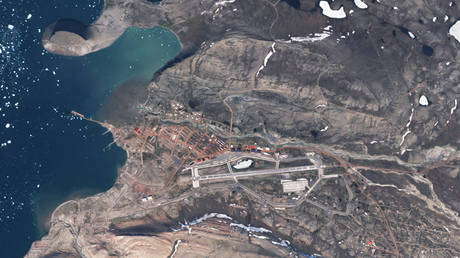
To casual observers, Jaishankar's meeting with Nauru President David Adeang during the same New York sprint might seem like a diplomatic footnote. Nauru is the world's smallest island nation, home to roughly 12,000 people in the central Pacific.
In the arithmetic of modern geopolitics, writing off microstates is an amateur mistake.
Every sovereign state in the United Nations General Assembly holds one equal vote. Whether the issue is UN Security Council reform, climate finance rules, deep-sea mining governance, or maritime law, Nauru's vote carries the exact same mathematical weight on the UNGA floor as that of a G7 economy. Over the past decade, competition for diplomatic loyalty across the Pacific Islands has intensified sharply, with Beijing pouring infrastructure loans, stadium projects, and diplomatic missions across the region—and successfully persuading Nauru in early 2024 to switch diplomatic recognition from Taipei to Beijing.
India refuses to concede the Pacific to a binary choice between Washington and Beijing. Through the Forum for India–Pacific Islands Cooperation (FIPIC), New Delhi has spent the last decade building a distinct, demand-driven development footprint across all 14 Pacific Island nations.
When Jaishankar met President Adeang in New York, the conversation centered on concrete development partnerships and multilateral cooperation. Unlike mega-infrastructure loans that leave small island economies saddled with unpayable debt, India's Pacific model focuses on high-impact, low-cost interventions tailored to island vulnerabilities:
- Healthcare and pharmaceuticals: Supplying affordable generic medicines, dialysis machines, and specialized medical camps where local hospital capacity is minimal.
- Climate resilience and clean energy: Deploying solar micro-grids, desalination units, and early-warning meteorological systems for nations facing existential sea-level rise.
- Digital public infrastructure: Offering low-cost digital identity, payment, and governance stacks that allow small administrations to modernize public services without expensive proprietary software licenses.
- Capacity building: Funding specialized training slots for Pacific civil servants, diplomats, and technicians under the Indian Technical and Economic Cooperation (ITEC) program.
For Nauru, whose economy has long struggled with the aftermath of decades of phosphate mining and relies heavily on regional fishing licenses and foreign aid, India represents a non-coercive development partner that demands no military basing rights and attaches no geopolitical debt traps.
The Common Thread Connecting Three Disparate Meetings
Step back from the individual readouts and a coherent doctrine emerges. Jaishankar's UNGA 81 schedule was built around institutional diversification.
Multilateral institutions forged in 1945 are visibly straining under great-power rivalry, paralyzed Security Council vetoes, and weaponized trade tariffs. Waiting for sweeping global consensus on trade or UN reform guarantees paralysis. Instead, Indian diplomacy is operating simultaneously across three distinct tiers of the international system:
- Sub-regional caucuses inside major blocs: Engaging the V4 to build an industrial and political coalition inside the European Union rather than dealing exclusively with Brussels.
- Non-EU European capital hubs: Using the operationalized India-EFTA TEPA with Switzerland to lock in long-term technology transfer and industrial investment independent of EU trade politics.
- The Global South and Small Island Developing States: Sustaining granular, grant-based development ties with nations like Nauru to preserve goodwill, maritime awareness, and voting coalitions across the wider Indo-Pacific.
Each tier reinforces the others. Backing from Central European capitals strengthens India's hand in UN reform debates, just as consistent support from Pacific Island states builds the numerical majority required in the General Assembly to push institutional change forward. Meanwhile, tangible investment flows from Switzerland validate India's pitch to European manufacturers that New Delhi can deliver high-trust trade agreements that work on the ground.
Real diplomatic leverage rarely comes from a single blockbuster summit. It is assembled piece by piece—in a Central European foreign ministers' huddle, a bilateral trade review with Bern, and a quiet development pledge to a Pacific island president—long before the cameras turn toward the General Assembly podium.