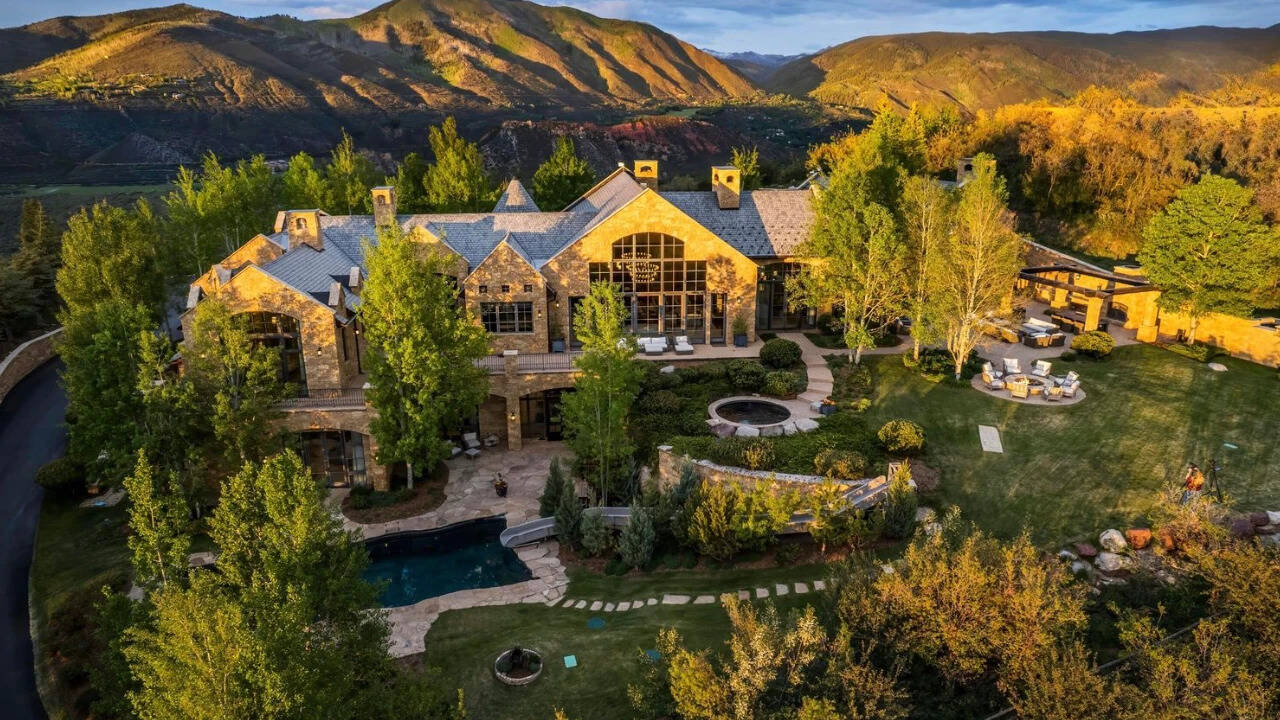
Australian billionaire James Packer offloaded his Aspen mansion for $42.7 million in an off-market transaction that capped a multi-year overhaul of his personal balance sheet. While casual observers read the sale as a standard luxury real estate flip, the deal tells a much sharper story about how ultra-high-net-worth individuals manage capital, shed illiquid trophies, and pivot toward mobile assets when global regulatory and financial pressures mount.
For years, the former Crown Resorts boss accumulated a sprawling collection of global estates that mirrored his ambition as a casino mogul. Aspen was supposed to be a crown jewel in that portfolio. Instead, it became one of the final pieces dismantled in a quiet, methodical liquidation that has reshaped how Packer holds his fortune.
The Anatomy of an Off-Market Trophy Sale
When a property trades for more than $40 million without ever hitting the Multiple Listing Service, the silence is intentional. Off-market deals in Pitkin County serve two distinct purposes for sellers at Packer’s tier. First, they protect privacy in a town where real estate gossip moves faster than a gondola up Ajax Mountain. Second, and far more importantly, they prevent the public price-chopping that destroys valuation power when a trophy home lingers on the open market.
Aspen real estate operates on scarcity. Strict county building caps, severe limits on residential floor area ratios, and mountainous topography mean you cannot simply manufacture more prime acreage near the slopes. If a buyer wants a turnkey compound with direct ski access or commanding views of the Elk Mountains, they are bidding against a shrinking pool of available inventory.
Packer’s $42.7 million exit capitalized on a post-pandemic surge that permanently reset Colorado mountain valuations. Buyers flush with liquidity from tech exits, private equity distributions, and hedge fund windfalls spent three years driving Aspen price-per-square-foot metrics into territory previously reserved for Fifth Avenue penthouses and Malibu beachfronts. Selling into that strength allowed Packer to convert brick, timber, and mountain views back into hard cash at the top of the cycle.
Why Trophy Homes Become Financial Anchors
Even for a billionaire, ultra-luxury residential real estate is a notorious cash drain. A $40 million mountain estate does not simply sit idle waiting for its owner to fly in for two weeks over Christmas.
- Carrying costs run into seven figures annually. Between Pitkin County property taxes, specialized mountain hazard insurance, heated driveway snowmelt systems, and full-time estate management, the burn rate never stops.
- Capital remains trapped. Equity locked in residential dirt produces zero yield unless rented out, which ultra-wealthy owners rarely tolerate due to security and wear-and-tear concerns.
- Maintenance in alpine climates is brutal. High-altitude UV exposure, freeze-thaw cycles, and heavy snow loads degrade roofs, stone facades, and mechanical systems far faster than in temperate coastal markets.
When you own one trophy home, these expenses are the price of admission. When you own half a dozen across multiple continents, they become an operational drag that demands constant attention.
The Great Liquidation of the Packer Portfolio
To understand why the Aspen mansion had to go, you have to look at the broader pattern of Packer’s asset sales over the past several years. This was never an isolated real estate decision. It was part of a sweeping retreat from the hyper-leveraged, globe-trotting lifestyle that defined his years running Crown Resorts.
Consider the timeline of divestitures that preceded or coincided with the Colorado sale. Packer parted with his massive superyacht, IJE, a 354-foot Benetti vessel that carried staggering annual operating expenses. He sold his historic Vaucluse mansion in Sydney—La Mer—for a record-breaking sum that stunned Australian property watchers. He also exited his high-profile Beverly Hills estate, unwinding a Hollywood chapter that had brought intense media scrutiny and minimal financial upside.
Each of these transactions followed the exact same logic. Packer was systematically trading high-maintenance, geographically fixed assets for liquidity and simplicity.
From Casino Mogul to Cash-Rich Investor
The catalyst for this transformation was the collapse of his corporate empire at Crown Resorts. Regulatory inquiries in New South Wales, Victoria, and Western Australia exposed severe governance failures at the casino operator, eventually stripping Packer of operational influence and forcing a historic takeover by Blackstone.
That $6.3 billion buyout by the private equity giant handed Packer a massive cash windfall for his roughly 37 percent stake, effectively severing his ties to the gaming industry he inherited from his father, Kerry Packer. Suddenly, the rationale for maintaining a global network of corporate-adjacent residences vanished.
A casino executive entertaining VIP high rollers, Hollywood executives, and international financiers needs glamorous staging grounds in Los Angeles, Sydney, London, and Aspen. A private investor managing liquid capital does not. Without a sprawling operational business requiring constant face-to-face courting of global elites, those mansions lost their strategic utility. They reverted to being expensive houses.
What the $42.7 Million Price Tag Reveals About Aspen
While Packer’s motivation was rooted in personal restructuring, the buyer’s willingness to pay $42.7 million underscores a fundamental shift in the luxury mountain market. Aspen is no longer a seasonal ski town. It has evolved into a year-round wealth sanctuary.
Historically, mountain resort real estate suffered from extreme seasonality and sharp downturns whenever Wall Street sneezed. During the 2008 financial crisis, Aspen property values took years to recover as discretionary second-home buyers pulled back. Today, the market dynamics look entirely different.
The Rise of the Primary-Secondary Hybrid
Remote work infrastructure, private aviation expansion at Aspen/Pitkin County Airport, and favorable Colorado tax rates relative to California and New York have turned former vacation homes into primary residences. Wealthy families now split their time evenly between coastal financial centers and the Roaring Fork Valley, enrolling children in local private schools and operating family offices out of mountain estates.
This demographic shift has created a structural floor under prices at the top end of the market. When a home is treated as a primary sanctuary rather than a four-week-a-year ski cabin, buyers justify price tags that would have seemed absurd a decade ago.
| Market Factor | Pre-2020 Aspen Dynamics | Current Aspen Dynamics |
|---|---|---|
| Primary Buyer Profile | Seasonal ski enthusiasts, legacy wealth | Tech founders, PE partners, family offices |
| Usage Pattern | 4 to 8 weeks per year (winter/summer) | 4 to 8 months per year (year-round hub) |
| Inventory Availability | Moderate turnover on open market | Severe scarcity; heavy off-market volume |
| Valuation Driver | Proximity to ski lifts | Acreage, privacy, turnkey modern construction |
Because Pitkin County enforces strict limits on home sizes—capping new builds at roughly 9,250 square feet in many zones unless transferable development rights are acquired—older, larger estates grandfathered in under previous rules carry an immense premium. Buyers are not just paying for lumber and stone. They are paying for regulatory permissions that can no longer be obtained at any price.
The Hidden Mechanics of Billionaire Real Estate Exits
When figures like Packer sell properties in the $40 million to $100 million bracket, the transaction rarely resembles a conventional residential closing. Cash is king, yet the deployment of that cash involves intricate legal and financial engineering.
In almost every transaction at this altitude, both buyer and seller operate behind layers of limited liability companies and blind trusts. This shields the principals from immediate public disclosure, though investigative reporters and local real estate insiders routinely trace the entity filings back to their beneficial owners.
Furthermore, off-market transactions eliminate the standard contingency periods that slow down normal home sales. There are no mortgage financing contingencies because institutional lenders rarely underwrite single-family residences above $30 million without demanding massive asset pledges elsewhere. Buyers wire funds directly from private wealth accounts, closing deals in weeks rather than months.
The Opportunity Cost of Holding Dirt
Financial advisors who manage nine- and ten-figure portfolios often view residential real estate as a necessary evil rather than a wealth-building tool. The math is straightforward.
Suppose an investor holds $42.7 million in a luxury residence. Even if the property appreciates at 4 percent annually—a generous long-term assumption for ultra-luxury real estate after accounting for cyclical downturns—that gross gain of roughly $1.7 million is immediately wiped out by property taxes, insurance, staffing, and capital improvements. The net real return hovers near zero, or turns negative.
Now redeploy that same $42.7 million into short-term Treasury bills, private credit funds, or institutional equities. Even in a conservative fixed-income allocation yielding 4.5 percent, that capital generates nearly $1.92 million in annual cash flow with zero maintenance headaches, instant liquidity, and complete geographic freedom.
Packer’s steady march out of trophy real estate reflects a cold-eyed acceptance of this arithmetic. When you are building an empire, trophies signal power and creditworthiness. When you are preserving wealth and reducing stress, trophies are liabilities disguised as assets.
Overlooked Pressures Driving Ultra-Luxury Sales
Media coverage of celebrity real estate transactions almost always fixates on square footage, wine cellars, and infinity pools. It rarely examines the macro pressures quietly pushing ultra-wealthy owners toward the exits.
The Insurance Crisis in Mountain Markets
Wildfire risk across the American West has fundamentally altered the economics of owning high-value homes in Colorado, California, and Montana. Major insurers have aggressively pulled back from underwriting policies in the wildland-urban interface, forcing owners of $30 million-plus estates into the excess and surplus lines market.
Premiums that once cost $30,000 a year have exploded past $150,000 or $200,000 annually, often accompanied by massive deductibles and strict defensible-space mandates. For a seller looking to streamline their holdings, skyrocketing non-recoverable carrying costs provide a powerful nudge to cash out while buyers are still willing to absorb the expense.
Geopolitical and Tax Mobility
Ultra-high-net-worth individuals increasingly prioritize jurisdictional agility. Owning massive physical footprints in multiple countries ties a person to local tax authorities, property assessments, and regulatory scrutiny.
By shedding fixed real estate in the United States and Australia, Packer has reduced his physical footprint and simplified his cross-border compliance obligations. Liquid capital moves across borders with a keystroke. A 12,000-square-foot mountain compound does not.
What Comes After the Great Unwinding
With the Aspen mansion off his books, alongside his Sydney estate, Beverly Hills compound, and mega-yacht, Packer has largely completed one of the most thorough personal de-leveraging campaigns in modern business history. He has transformed himself from a debt-laden corporate operator into a highly liquid private investor with minimal fixed overhead.
The lesson for anyone watching the ultra-luxury market is unmistakable. When the smartest, wealthiest operators in the room quietly sell their prized assets off-market at peak valuations, they are rarely doing it because they ran out of money—they are doing it because they finally did the math on what those trophies actually cost to keep.