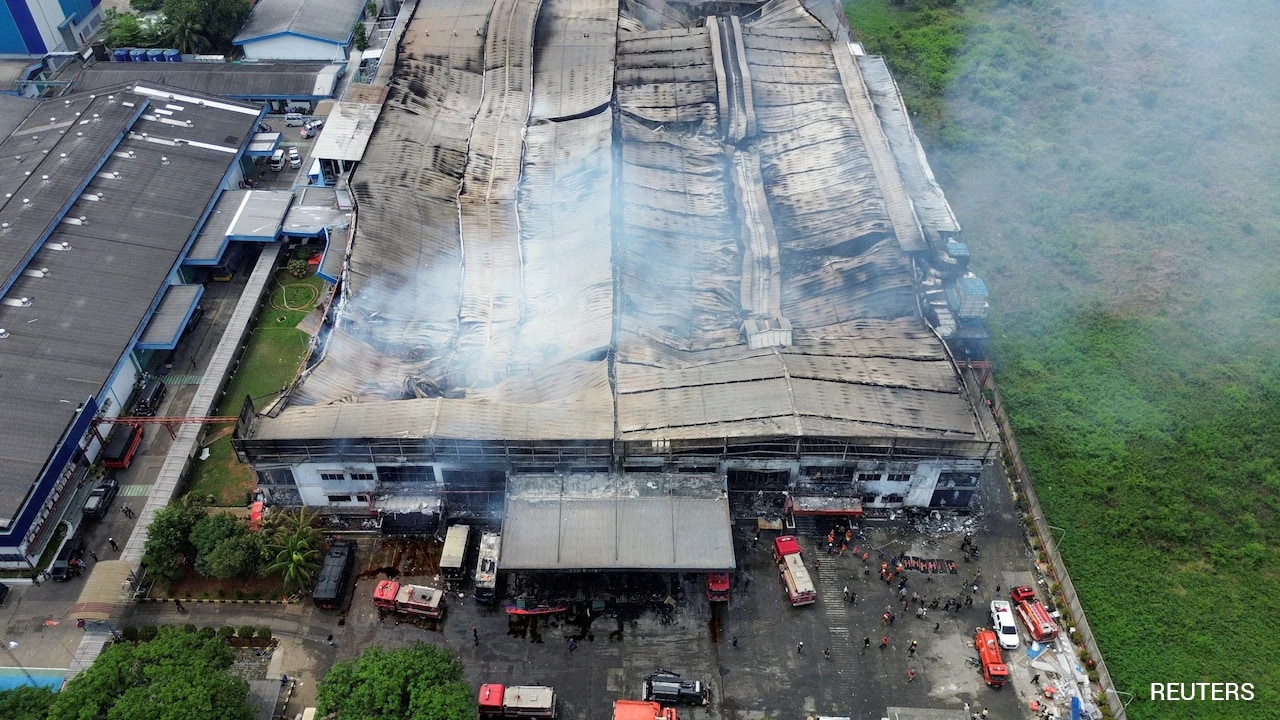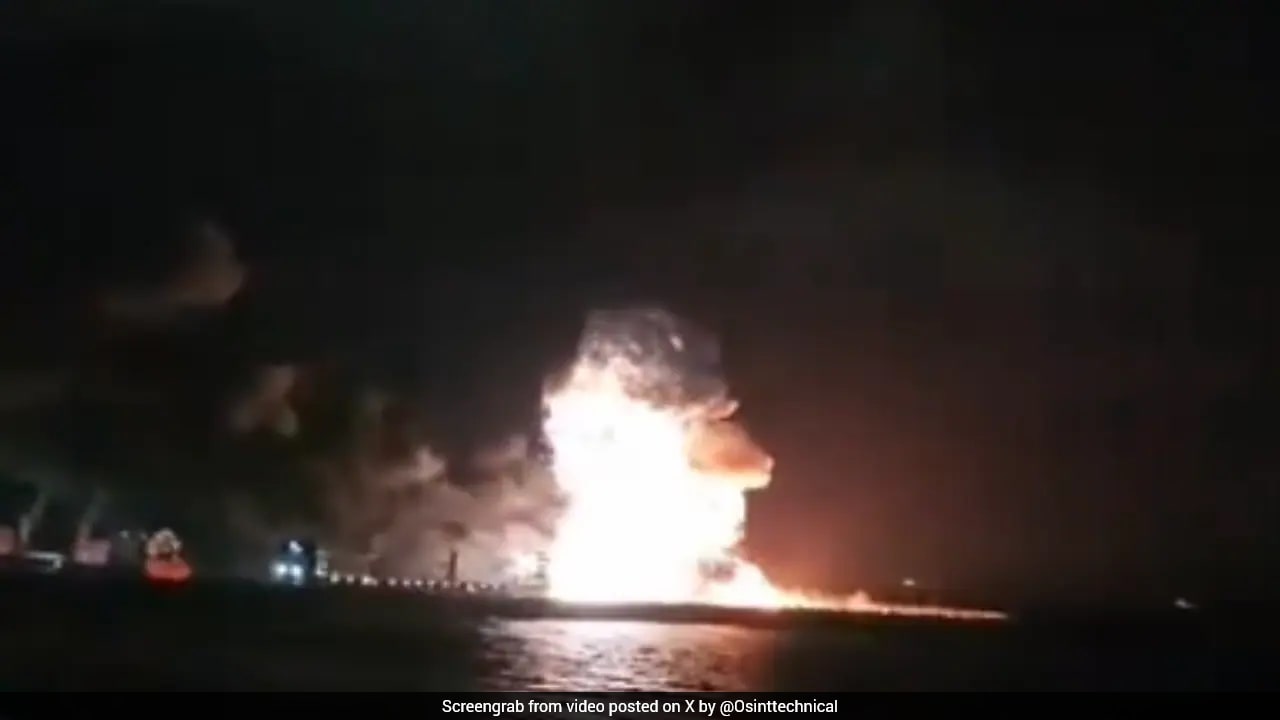
The footage is grainy, shot from a distance across dark Mediterranean waters, yet the message is unmistakable. A Russian naval vessel, far from the contested waters of the Black Sea, burns against the North African coastline following a suspected Ukrainian drone strike in Libya. While Moscow has spent years building a logistical bridge through eastern Libya to supply its mercenary operations across the Sahel, this strike signals a brutal reality for the Kremlin. Nowhere is safe anymore. By extending its operational reach thousands of miles from Kyiv, Ukraine has effectively turned Russia’s Mediterranean lifeline into an active shooting gallery.
For years, military analysts treated the war in Ukraine as a strictly regional conflict, bounded by the trenches of the Donbas and the coastal defenses of Crimea. That assumption is dead. The strike off the Libyan coast proves that Kyiv’s intelligence apparatus—specifically the Main Directorate of Intelligence, known as the HUR—is actively hunting Russian assets wherever they cluster. Also making headlines in related news: Seizing a Beverly Hills Mansion Won't Stop Fuel Smuggling.
The Tobruk Pipeline and Moscow's African Ambitions
To understand why a Russian warship was sitting vulnerable off Libya in the first place, you have to look at a map of global logistics. Since Turkey closed the Bosphorus Strait to military vessels under the Montreux Convention in early 2022, the Russian Navy has faced a severe geographic bottleneck. Ships trapped outside the Black Sea cannot get in, and ships inside cannot get out.
To bypass this, Moscow leaned heavily on the Syrian port of Tartus and, increasingly, the eastern Libyan port of Tobruk. Controlled by warlord Khalifa Haftar and his Libyan National Army, Tobruk became the primary transit hub for the Africa Corps, the state-run successor to the Wagner Group. Further details into this topic are detailed by NBC News.
It is a simple, dirty supply chain. Russian landing ships, often accompanied by naval escorts, haul heavy weaponry, air defense systems, and mercenaries from Russian ports in the Baltic and Arctic down through the Strait of Gibraltar. They offload in Tobruk. From there, cargo planes fly the equipment south into Mali, Burkina Faso, and Niger, propping up military juntas in exchange for gold, uranium, and geopolitical influence.
Kyiv watched this pipeline grow for two years. Every ton of gold extracted by Russian mercenaries in West Africa helps fund the missiles hitting Ukrainian apartment blocks. Cutting that artery in Libya isn't just a symbolic victory; it is economic and strategic warfare at its most direct.
How Ukraine Projects Power Across the Mediterranean
Executing a strike in the southern Mediterranean is a logistical nightmare, even for a superpower. Ukraine does not have a blue-water navy. It has no aircraft carriers, no overseas military bases in North Africa, and no heavy strategic bombers.
Yet, the warship burned.
When traditional military hardware is off the table, intelligence agencies rely on asymmetric methods. There are three primary ways Kyiv could have pulled off an attack of this magnitude in Libyan waters, and none of them bode well for Russian naval security.
- Covert Maritime Launch Platforms: Intelligence operatives frequently utilize commercial vessels—cargo ships, fishing trawlers, or chartered yachts—as floating launchpads. By smuggling disassembled first-person view (FPV) drones or long-range loitering munitions aboard a civilian ship, operators can approach a target under the guise of routine maritime traffic, launch the strike, and vanish before coastal radar even registers an anomaly.
- Local Proxy Networks: Libya remains fractured between rival administrations in Tripoli and Benghazi. Despite Haftar’s tight grip on the east, the region is awash with rival militias, smugglers, and foreign intelligence operatives. Ukrainian special forces have previously operated alongside local forces in Sudan to hunt Wagner fighters; establishing a similar cell in Libya to launch shore-based drones is well within their playbook.
- Unmanned Surface Vessels (USVs): Ukraine has revolutionized naval warfare with its Magura V5 and Sea Baby sea drones. While launching a USV from Odessa to Libya is geographically impossible due to the Bosphorus closure, deploying a compact maritime drone from a larger mother ship in international waters requires minimal crew and leaves almost zero forensic trail.
Whatever the exact mechanism, the tactical takeaway is identical. Modern asymmetric warfare has collapsed the concept of a safe rear area. A multi-million-dollar warship equipped with sophisticated radar and point-defense cannons is designed to fight other warships or supersonic jets, not a swarm of cheap, commercial-grade drones packed with high explosives.
The Intelligence Failure in Moscow
The Russian Navy has a terrible track record when it comes to basic operational security, and the incident in Libya highlights a systemic rot within its command structure. After losing roughly a third of its Black Sea Fleet to Ukrainian drones and cruise missiles, you might expect Russian captains operating in foreign ports to maintain peak vigilance.
They didn't.
Naval vessels anchored near friendly ports like Tobruk routinely drop their guard. Radars are powered down to save fuel and avoid interfering with local civilian frequencies. Watch rotations become lax. Crew members assume that because they are thousands of miles from the front lines, they are operating in a permissive environment.
This complacency is fatal against an adversary like the HUR. Ukrainian intelligence has demonstrated an obsession with tracking Russian logistics through open-source data, intercepted communications, and human intelligence on the ground. Every time a Russian ship turns on its Automatic Identification System (AIS) transponder, or every time a drunken sailor posts a photo on Telegram from a Libyan dockside cafe, Kyiv takes notes.
Furthermore, the diplomatic fallout puts Moscow in an impossible bind. Russia cannot publicly admit that a handful of Ukrainian operatives successfully targeted its fleet in the Mediterranean without looking profoundly weak to its African clients. If the Russian military cannot protect its own warships in a friendly port, how can it promise to protect a junta leader in Bamako or Ouagadougou?
The Legal and Geopolitical Gray Zone
While the tactical execution is impressive, striking targets in third-party nations carries immense geopolitical risk. Libya is not a declared war zone between Russia and Ukraine. Operating covertly in North Africa means stepping directly on the toes of Western intelligence agencies, regional powers like Egypt and Turkey, and the fragile Libyan political factions.
Washington and Brussels publicly cheer Ukrainian resilience, yet behind closed doors, Western diplomats often grow nervous when Kyiv takes the fight global. An escalation in the Mediterranean threatens international shipping lanes, complicates European migration deals with Tripoli, and risks dragging regional actors into a proxy conflict they want no part of.
There is also the problem of attribution. In the murky waters of North Africa, plausible deniability is currency. By using commercial drones or ambiguous launch platforms, Kyiv can let the burning wreckage speak for itself while keeping foreign ministries in Europe from having to issue formal statements condemning violations of Libyan sovereignty.
For Khalifa Haftar, the attack is a massive embarrassment. His entire pitch to Moscow relies on his ability to provide a secure, reliable sanctuary for Russian forces. If his air defenses and coastal patrols cannot stop Ukrainian sabotage teams from operating in his backyard, his value to the Kremlin plummets overnight.
A New Era of Global Attrition
We are witnessing the quiet globalization of a European land war. Historically, conflicts of this scale were contained by the physical limits of armies and navies. Today, cheap autonomous technology combined with relentless intelligence gathering allows a smaller, outgunned nation to hunt a superpower across multiple continents.
The Russian Navy now faces a grueling strategic dilemma. To protect its Mediterranean task force and its African supply lines, Moscow must divert scarce air defense assets, electronic warfare suites, and elite security personnel away from the front lines in Ukraine. Every electronic jammer sent to protect a dock in Tobruk is one less jammer protecting a Russian trench in Zaporizhzhia.
If they fail to reinforce these distant outposts, their ships will continue to burn. The strike in Libya was not an isolated fluke or a lucky shot in the dark; it was a deliberate, calculated expansion of the battlefield, proving that for the Russian military, the front line is now wherever their ships drop anchor.