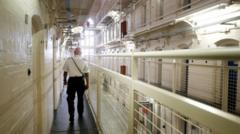
The threshold has been crossed. Available bed spaces in male prisons across the system have dropped to their lowest point of the entire calendar year, leaving facilities teetering on the edge of operational gridlock. Bureaucrats prefer sanitized terminology like capacity pressures and population bottlenecks. They talk about shifting populations on spreadsheets as if moving chess pieces across a polished wooden board. But anyone who has spent a decade walking the echoing concrete corridors of maximum-security institutions knows the truth. This is not a statistical anomaly. It is a slow-motion structural collapse driven by years of political cowardice, chronic underfunding, and an addiction to retributive sentencing that completely ignores the reality of bricks and mortar.
When operational margins shrink this thin, the entire machinery of justice begins to fray at the seams. Courts face impossible choices. Judges are pressured to either remand defendants into facilities that literally lack floor space or release high-risk offenders back into communities prematurely just to free up a mattress. Neither option serves public safety. Both options expose a profound failure of governance that stretches from ministerial offices down to the tired staff standing watch at the prison gates.
The Arithmetic of Overcrowding
Let us look past the talking points and examine the raw math governing male prisons right now. The total certified accommodation is a fixed physical constraint. You cannot stretch steel bars or magically expand concrete cell blocks because a legislative body decided to hike mandatory minimum sentences for nonviolent offenses. Yet, policymakers act as though the walls are elastic.
Every single morning, operations managers review the morning headcount with a quiet dread. When available spaces approach zero, the system loses its shock absorber. Normally, prisons require a buffer zone of empty cells to manage population shifts, separate rival gang factions, handle disciplinary segregation, and accommodate medical isolation units. Right now, that buffer has evaporated.
- Double-bunking cells designed for single occupants has become standard operating procedure rather than an emergency measure.
- Educational and vocational workshops are routinely converted into makeshift dormitories, stripping away the very programs proven to reduce recidivism.
- Intake units are completely choked, meaning new arrivals sleep on temporary floor mats in intake holding pens while staff scramble to find a permanent bed.
This is not efficient management. It is warehousing human beings in conditions that practically guarantee escalating violence. When men are packed together like cargo in spaces designed for a fraction of their current numbers, tension rises exponentially. A minor disagreement over a phone card or meal tray turns into a violent confrontation because nobody has anywhere to decompress. The staff feel the pressure just as acutely as the inmates. Stretched thin across rotating shifts, correctional officers operate in a constant state of hyper-vigilance, knowing that a single spark could ignite a facility-wide disturbance.
The Policy Drivers Behind the Surge
How did we arrive at this precipice? The answer requires looking at the legislative pipeline that feeds the prison system every single day. For the past several years, political campaigns have been won and lost on the altar of toughness. Lawmakers routinely introduce bills that lengthen sentences, restrict parole eligibility, and narrow the scope of diversion programs. Each individual law sounds defensible on a campaign flyer. Collectively, they create a demographic tidal wave that crashes directly against the iron gates of correctional facilities.
Courts are sentencing individuals to terms that outpace the construction of new facilities by a factor of ten. Building a modern prison requires years of environmental impact studies, community opposition battles, zoning hearings, and hundreds of millions of dollars in capital expenditure. Politicians love cutting ribbons on new cell blocks, but they hate allocating the necessary tax revenue during budget cycles when public attention is fixed elsewhere.
Furthermore, the legal backlog plays a massive role. Remand populations—individuals awaiting trial who have not been convicted of any crime—now make up a staggering percentage of the total prison count. Because court systems remain chronically underfunded and backlogged, defendants sit in local and regional facilities for months, sometimes years, simply waiting for their day in court. They occupy bed spaces that should be reserved for sentenced offenders, clogging the pipeline from the very beginning.
The Human and Financial Cost of Gridlock
Operating male prisons at absolute maximum capacity is a false economy. Taxpayers are told that keeping more people behind bars for longer periods ensures safety. The reality on the ground tells a entirely different story.
When facilities reach breaking point, rehabilitation programs are the first casualties. Vocational training, substance abuse counseling, and mental health support require physical space, specialized staff, and secure movement within the facility. When every square foot is converted into living quarters, those programs vanish. Men spend twenty-three hours a day locked in cramped cells with nothing to do except marinate in their own frustration and learn advanced criminal tactics from cellmates. They eventually leave prison more damaged, more bitter, and infinitely more dangerous than the day they arrived.
Recidivism rates soar under these conditions. The taxpayer dollar saved by delaying prison infrastructure spending is paid back tenfold through higher crime rates, increased victim trauma, and the astronomical long-term costs of police work, court trials, and re-incarceration. It is a cyclical trap of our own making.
Breaking the Cycle
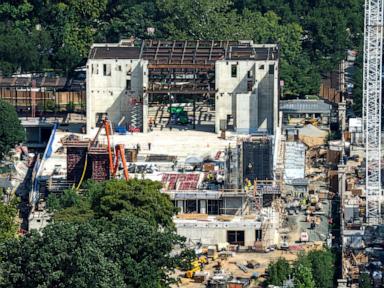
Resolving the male prison capacity crisis demands a fundamental shift in how we approach justice and resource allocation. Continuing to squeeze more bodies into crumbling Victorian-era institutions or hastily erecting temporary modular units inside prison yards is not a strategy. It is a desperate stall tactic.
True reform requires addressing the intake valve rather than just staring helplessly at the overflow drain. We must seriously evaluate the efficacy of mandatory minimums for non-violent offenses, streamline the parole boards to safely release individuals who have demonstrated genuine rehabilitation, and heavily invest in community-based supervision alternatives that actually work.
Until political leaders muster the courage to have an honest conversation about who belongs behind bars and why, those bed space numbers will keep hovering near zero. The gates will remain jammed, the staff will remain overworked, and the system will drift closer to a breaking point that everyone sees coming, but nobody wants to stop.