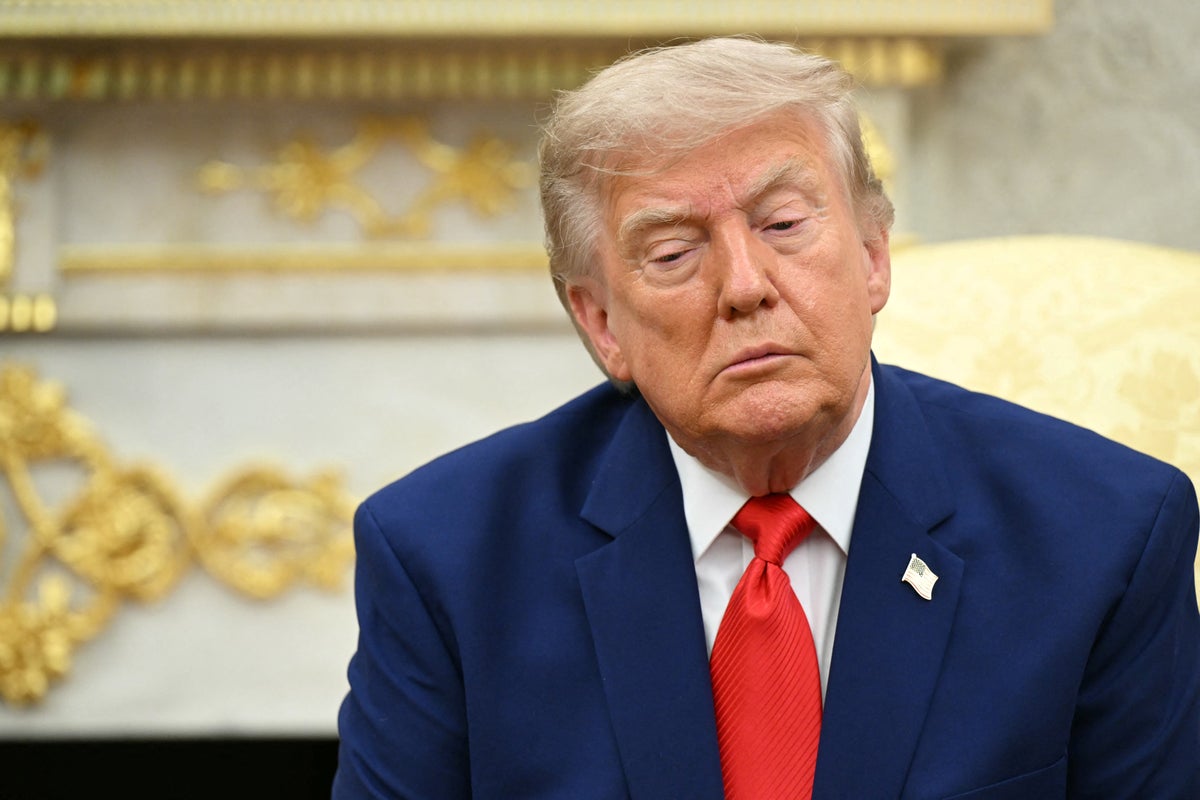
When Donald Trump took to social media with an expletive-laden ultimatum demanding that Iran immediately reopen the Strait of Hormuz, headlines framed it as an outburst of presidential temper. The reality behind the rhetoric is far more alarming. Five weeks into a military confrontation in the Persian Gulf, Washington faces an escalating strategic nightmare. The United States and Israel launched strikes expecting a swift collapse of Iranian resistance, but Tehran responded by shutting down a maritime passage that handles twenty percent of the world’s petroleum supplies. Energy prices spiked instantly, Western alliances strained, and the White House found itself trapped in a war of attrition it did not prepare for.
The profanity-laced threat to target Iranian power plants and bridges—coupled with a rigid deadline—is not a sign of calculated deterrence. It is the visible friction of a military strategy bumping up against harsh geographic and economic realities.
The Illusion of Total Air Dominance
Military commanders often confuse air superiority with total control. When two American fighter jets were downed over Iranian territory during high-risk sorties, the doctrine of effortless air control unraveled.
A high-stakes special operations rescue pulled a downed Air Force officer from enemy territory in the Iranian mountains. While Washington celebrated the extraction as a tactical triumph, military analysts saw a disturbing signal. Iranian air defense systems, fortified by years of subterranean engineering and mobile launcher tactics, remain functional.
The military reality on the ground contradicts official press briefings. Striking static targets from thirty thousand feet is simple. Suppressing localized, mobile anti-ship missile batteries hidden along Iran's jagged coastline is an entirely different combat problem.
Every flight over enemy territory carries operational risk. Every downed aircraft demands massive rescue deployments that pull naval and air assets away from defensive operations around commercial shipping lanes. The Pentagon finds itself allocating vast resources simply to protect its own footprints rather than keeping vital trade corridors clear.
Why the Strait of Hormuz Cannot Be Cursed Open
Geography is ruthless. The Strait of Hormuz narrows to just twenty-one miles at its slenderest point.
Navigating supertankers through this narrow passage requires predictable maritime channels that hug the Iranian coastline. You cannot force commercial shipping companies or marine insurers to send two-hundred-million-dollar crude carriers into a shooting gallery. Even if the U.S. Navy offers armed escorts, standard maritime insurance underwriters refuse to issue coverage while short-range shore-to-ship missiles and explosive drone swarms remain deployed along the coastal cliffs.
Tehran understands this math completely.
Iran does not need to defeat the United States Navy in open water. It only needs to maintain enough threat capability to keep global insurance syndicates from underwriting commercial transit. By keeping the waterway impassable, Iran forces global energy markets to absorb a massive supply shock.
The Cost of Economic Chokepoints
Commercial vessels are currently riding at anchor outside the Persian Gulf, unwilling to enter the danger zone.
- Oil Market Volatility: Crude futures surged past historical benchmarks within weeks of the initial blockade, threatening domestic fuel prices and driving transportation costs upward.
- Supply Chain Gridlock: Petrochemical shipments essential for manufacturing, plastics, and agricultural fertilizers are stranded in harbor, threatening secondary industrial shutdowns across Europe and Asia.
- Escalating Insurance Premiums: Marine war-risk premiums for Persian Gulf routes expanded exponentially overnight, making uninsured transit economically impossible for independent tank operators.
Tehran’s leadership has made its demands explicit. Iranian officials stated that transit will not resume without financial compensation for war damages and a revised maritime fee structure. By tying maritime access to direct political concessions, Iran turned a localized conflict into a global economic tax.
The Cracking Diplomatic Front
The White House expected key international allies to line up behind its Gulf policy. That consensus never materialized.
European governments, already struggling with inflation and domestic energy costs, flatly refused to participate in offensive naval actions inside Iranian territorial waters. Strategic partners across NATO questioned the legal justification of the initial offensive strikes, leaving Washington isolated on the diplomatic stage. When allied capitals declined to send warships to join the blockade-busting operation, domestic frustration exploded into threats of diplomatic retaliation against NATO members.
Regional Arab states find themselves in an equally precarious position. Nations along the southern shore of the Gulf rely on maritime trade for survival, yet housing American bases makes them immediate targets for proxy strikes and drone attacks. Rather than joining a coalition, several regional capitals quietly closed their airspace to offensive military strikes, forcing U.S. aircraft to fly longer, more hazardous routes from distant carriers.
The diplomatic fallout inside Washington is equally intense. Lawmakers across the political spectrum are raising alarms. Congressional leaders have publicly questioned the administration's strategic endstate, noting that destruction of civilian infrastructure like power grids and transport bridges raises severe questions under international humanitarian law. Former administration loyalists have publicly broken ranks, arguing that the country was dragged into an unprovoked regional conflict without a clear victory plan or exit strategy.
The Trap of Escalation Deadlines
Setting public deadlines creates a dangerous strategic trap. When a national leader publicly threatens to destroy energy grids and transportation infrastructure unless an opponent capitulates within forty-eight hours, options narrow rapidly.
If the adversary ignores the deadline, the choice becomes stark. Execute the strikes and risk a wider regional war, or back down and expose the threat as a bluff.
Destroying Iran’s power plants and bridges will certainly inflict economic pain on millions of civilians. It will not, however, clear mines from the Strait of Hormuz. It will not destroy thousands of mobile missile launchers buried in coastal mountains. In fact, retaliatory strikes on vital civilian infrastructure guarantee that Iranian forces will double down on asymmetric warfare, targeting regional oil refineries, desalination plants, and military outposts.
The White House is learning that tactical power cannot easily compensate for a flawed strategic premise. You can drop thousands of precision-guided munitions on military installations, but if the primary objective is to restore international commerce through a twenty-mile maritime passage, high-explosive ordnance is the wrong tool for the job.
As long as Washington relies on mounting threats rather than coherent diplomatic leverage, the Strait of Hormuz will remain closed, global energy markets will remain shaken, and the risk of a broader regional conflict will grow every single hour.