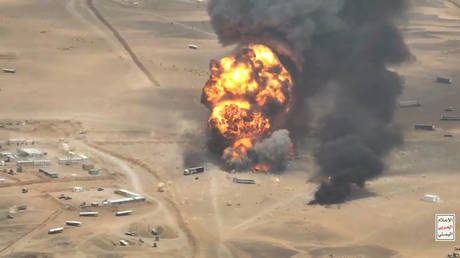
The fall of Mocha is not just another tactical shift in a fractured desert war. When Houthi forces punched through government lines and secured the historic Yemeni port city on the Red Sea, they crossed a psychological and geographic Rubicon. Less than fifty miles north of the Bab al-Mandab Strait, this coastal hub represents far more than concrete docks and salt-crust buildings. It is the jugular vein of international shipping, and Western naval planners have spent the past decade praying it would never fall into insurgent hands.
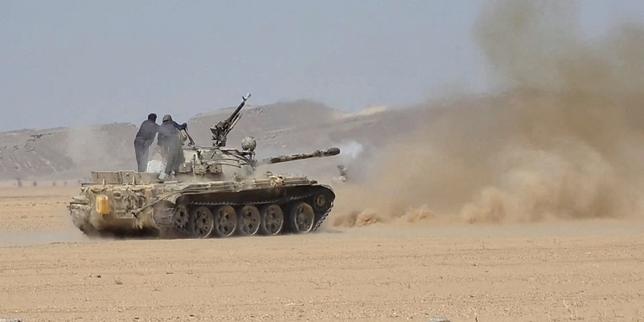
For years, mainstream reports reduced the Yemen conflict to a localized proxy skirmish or a humanitarian tragedy born of neglected borders. That framing was always dangerously lazy. What unspooled along the Tihama coastline is a masterclass in asymmetrical persistence meeting structural incompetence. The Saudi-backed government forces, fragmented by internal rivalries and commanded locally by figures like General Tareq Saleh, crumbled under a coordinated ground offensive that caught regional intelligence apparatuses flat-footed. For an alternative perspective, check out: this related article.
To understand why Mocha collapsed so swiftly, one must look past the immediate smoke of artillery duels and examine the rotting foundation of the anti-Houthi coalition. For a long time, the defense of the southern Red Sea coast relied on an uneasy patchwork of militias, ideologically split commanders, and distant backers in Riyadh who preferred management over victory. When the Houthis pressed forward, backed by advanced drone logistics and hardened combat experience gained over a decade of continuous civil war, that patchwork shredded. General Saleh’s strategic retreat—ordered to preserve what remained of his command structure—opened an operational vacuum that swallowed the city in hours.
The immediate casualty of this rout is global maritime security. Control of Mocha gives the Houthi movement an unhindered artillery and missile platform directly overlooking one of the busiest maritime chokepoints on Earth. Nearly twelve percent of global trade and a massive share of European energy imports transit these waters daily. For months, insurgent harassment from northern redoubts forced shipping giants to reroute vessels around the entire African continent, inflating logistics costs worldwide. With boots firmly on the ground in Mocha and adjacent island groups like the Hanish archipelago, those sporadic missile threats transform into permanent, institutionalized maritime dominion. Related coverage regarding this has been provided by The Guardian.
Tehran understands the weight of this map better than anyone in Washington or London. This advance arrives on the heels of escalating friction across the Gulf and the Red Sea, turning the western coast of Yemen into an active secondary theater for broader regional confrontations. By tightening their grip on the Bab al-Mandab alongside their strategic leverage over the Strait of Hormuz on the opposite side of the Arabian Peninsula, Iran and its regional allies now effectively bookend the primary energy arteries of the West.
Western capitals will issue sharp communiques. Naval task forces will continue patrol rotations, launching defensive sweeps against radar installations and drone caches inland. Yet naval gunfire cannot solve a territorial vacuum created by political failure. The architects of the anti-Houthi campaign spent years feeding a stalemate, assuming time was on their side.
History rarely offers second chances to those who mistake a ceasefire for a permanent truce. The red flags fluttered over the coastline for months, ignored by policymakers addicted to comfortable denial. Now, the coffee port of Mocha belongs to the insurgency, and the geopolitical architecture of the Middle East has shifted permanently south.