The catastrophic flash floods sweeping through the Himalayas have left hundreds uncontactable, drawing international concern as rescue operations struggle against fractured infrastructure. Among those missing or unreachable in the disaster zone is Lax Gopisetty, chief executive officer of Infosys Public Services.
Corporate confirmations trickled out late in the week, noting that Gopisetty was traveling through the region in a personal capacity when the disaster struck. While global technology conglomerates typically operate within sterile corporate bubbles, natural disasters instantly shatter that isolation. When environmental chaos collides with elite corporate travel, the resulting information blackout exposes the raw fragility of communication lines in remote mountain corridors.
Anatomy of a Himalayan Disaster
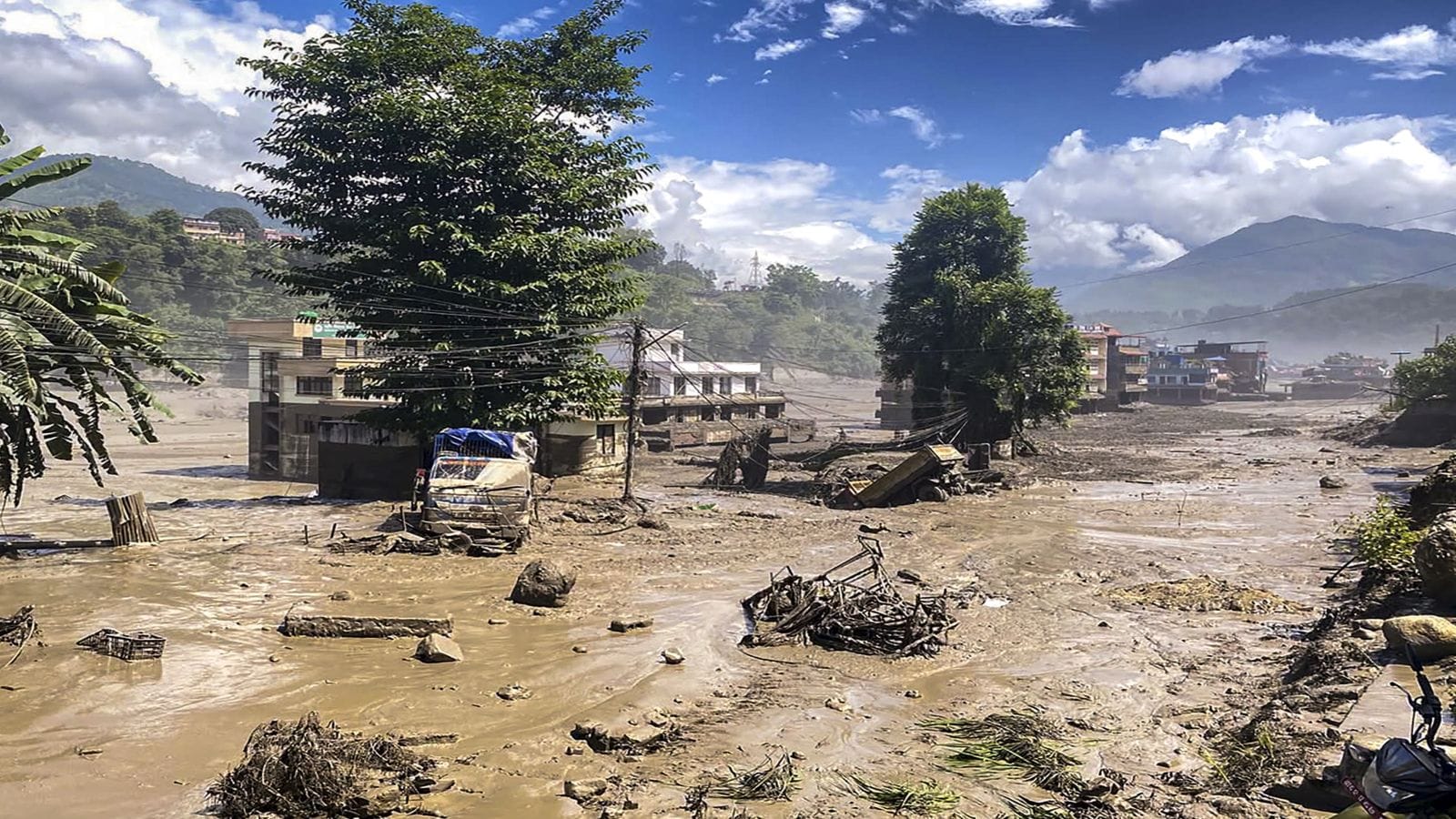
Massive flash floods and landslides tore through the Bhotekoshi and Trishuli river corridors near the Nepal-Tibet border. Heavy monsoon surges, compounded by high-altitude glacial shifts and sudden debris blockages, created walls of water that wiped out roads, bridges, and hydroelectric installations.
The scale of the destruction extends far beyond individual corporate executives. Hundreds of citizens, tourists, and migrant workers remain unaccounted for across multiple districts. Local authorities and foreign ministries, including India's Ministry of External Affairs, have scrambled to set up round-the-clock control rooms and dispatch emergency relief supplies.
Communication infrastructure in these rugged terrains is notoriously fragile. When power grids fail and fiber-optic links snap, entire valleys effectively vanish from the digital map. For families and employers thousands of miles away, the resulting silence is agonizing.
The Corporate Response and Uncertainty
Infosys issued formal statements confirming that Gopisetty, who manages its public sector business across the United States and Canada, is currently uncontactable. The Bengaluru-headquartered IT titan emphasized that its primary focus is coordinating with local and international agencies to gather intelligence and secure safety updates.
Corporate leadership transitions and executive security protocols usually focus on travel advisories, secure transport, and urban risk mitigation. Mountain tourism and remote personal travel present entirely different vectors of vulnerability. Even the most seasoned executives, accustomed to directing complex operational transformations for government agencies, find themselves subject to the raw indifference of geological forces.
The Broader Humanitarian Toll
Search and rescue teams face monumental hurdles as they navigate blocked passes and unstable slopes. Secondary hazards, such as barrier lakes forming behind debris dams, continue to threaten downstream communities with fresh inundations.
Governments are deploying helicopters and humanitarian aid packages, yet ground access remains severely compromised. The tragedy highlights the recurring perils of high-altitude travel during peak monsoon volatility, where sudden weather anomalies can transform serene valleys into isolated zones of survival.
As diplomatic channels and search parties press forward, the immediate priority remains establishing contact with the stranded and accounting for the hundreds still missing in the wreckage.