In October 2026, U.S. President Donald Trump blamed immigration for violent demonstrations and looting across France, declaring that Paris is going to be a Muslim city very soon and accusing French President Emmanuel Macron of refusing to close France's borders. Macron dismissed the claim as stupid, yet the clash exposed deep fault lines between American border politics, French street protests over living costs and public services, and domestic political battles ahead of France's 2027 presidential election.
A wire headline catches the shock value. An investigative report asks who benefits from turning a complex domestic crisis into a single-cause demographic prophecy.
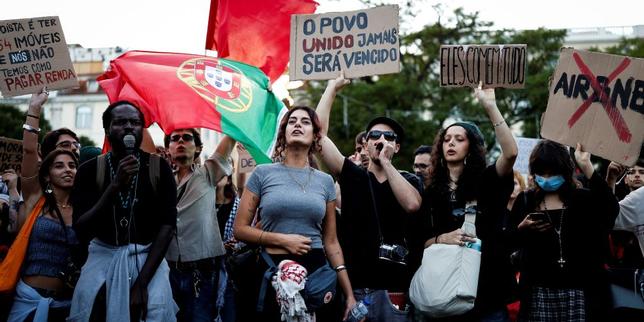
When demonstrations over living costs, fuel prices, and strained schools spilled into clashes, looting, and targeted public buildings across French cities in mid-October 2026, political opportunists moved fast. Trump told reporters at the White House that he had warned Macron years earlier to close France's borders. He argued that France's troubles stemmed from immigration rather than schools or other domestic pressures, and claimed Paris would soon become a Muslim city.
Why Border Rhetoric Collides With French Street Unrest
Street anger in France rarely comes from a single grievance. Demonstrators took to the streets over everyday pressures—household budgets, fuel costs, and crumbling school conditions—before frustration boiled over into property damage, clashes with police, and local curfews. Prime Minister Sébastien Lecornu opted for targeted local restrictions rather than a citywide curfew across Paris while keeping a state of emergency on the table if violence escalated.
Rhetoric travels faster than nuance. By framing every burned storefront and clashes-filled intersection as proof of open borders, Trump imported an American campaign frame onto French soil. That framing turns economic and administrative friction into an existential identity threat. It also gives domestic opponents of Macron an international megaphone without doing the hard work of fixing local policing, school funding, or cost-of-living pressures.
Consider a hypothetical example to see how political reframing distorts policy debates. Suppose a mid-sized industrial town sees rising youth unemployment, crowded classrooms, and a spike in weekend vandalism. A mayor who diagnoses underfunded schools and thin job pipelines faces messy budget negotiations and multi-year reforms. A politician who blames the entire crisis on a single demographic group offers a simple villain and an instant slogan, even when the underlying municipal strain has multiple causes.
What Demographic Data Actually Shows About France
Claims that Paris is about to become a Muslim city run straight into basic demographic math. France's national statistics agency, INSEE, estimated that roughly 10 percent of the adult population aged 18 to 59 identified with Islam based on 2019–2020 research published in 2023. Separate polling by Ifop in 2025 across more than 14,000 respondents placed the share of people aged 15 and older in mainland France identifying as Muslim at roughly 7 percent.
French law restricts direct official state questioning on religion, which is why researchers rely on survey declarations and geographic-origin modeling rather than a simple religious census.
Different methods produce slightly different percentages, depending on age brackets and how researchers define family background. None of those credible datasets points to Paris flipping into a Muslim majority overnight.
Why Numbers Alone Do Not Settle the Argument
Statistics clarify population shares. They do not erase real social tensions around housing segregation, integration, secularism, or unequal opportunities in outer suburbs. Critics of French immigration and integration policies argue that concentrated disadvantage in certain neighborhoods creates friction that national averages hide.
At the same time, civil rights observers and analysts warn that sweeping generalizations lump law-abiding citizens and residents into blame for street violence committed by rioters and looters. Equating an entire faith or immigrant background with civil disorder distorts both public safety and democratic debate.
| Indicator or Claim | What Public Data Shows | Practical Takeaway |
|---|---|---|
| National Muslim share (INSEE) | Around 10% of adults aged 18–59 in 2019–2020 research | Minority share nationwide, not an imminent majority |
| Mainland Muslim share (Ifop 2025) | Roughly 7% of respondents aged 15+ in a 14,244-person survey | Confirms single-digit national share in recent polling |
| Root cause of October 2026 unrest | Protests over living costs, fuel prices, and schools turned violent | Economic and public-service strain played a central role |
| Macron's response | Called claims that Paris will become a Muslim city stupid | Rejected demographic framing while managing unrest |
Macron, the Far Right, and the Road to 2027
Transatlantic sparring rarely stays contained in Washington. When Trump attacked Macron over borders and unrest, the remarks landed inside an already volatile French political arena. National Rally leader Jordan Bardella pressed the attack at home, blaming the government and Macron for failing to protect citizens and urging voters to punish leadership at the ballot box.
Macron fired back by calling the claim that Paris would become a Muslim city stupid. Yet pushing back on an exaggerated foreign soundbite does not automatically quiet domestic frustration over inflation, public order, or policing tactics. Some commentators faulted official messaging for focusing sharply on condemning disorder without addressing grievances over policing or rising anti-Muslim hostility during the crisis.
That is the trap for centrist leaders in France and across Western democracies. Dismissing a provocative claim as false or stupid is factually sound when the claim lacks evidence, but voters who feel squeezed at the checkout counter or unsafe during street clashes want concrete fixes, not just rebuttals.
Look past the loudest insult in the room and track who actually has a workable plan for housing, policing, schools, and daily affordability before the next election arrives.