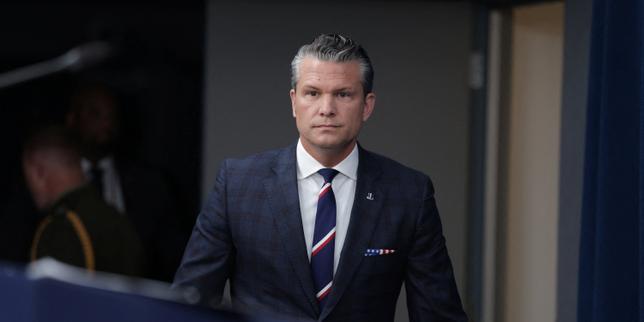
Defense Secretary Pete Hegseth stepped behind the Pentagon briefing podium this week to project operational continuity while House lawmakers actively advance articles of impeachment against him. The press conference, framed officially around ongoing military readiness and global force posture, functioned simultaneously as a public test of institutional survival inside the Department of Defense. For observers tracking civil-military relations in Washington, the briefing revealed how senior defense leadership manages congressional revolt without letting legislative warfare paralyze command authority.
The mechanics of an impeachment push against a sitting Secretary of Defense are rarely straightforward, and they almost never stay confined to the halls of Congress. When lawmakers introduce or rally behind impeachment resolutions targeting a cabinet official, the immediate consequence is not removal from office. Removal requires a majority vote in the House followed by a two-thirds conviction in the Senate, an extraordinarily high constitutional bar that has resulted in the removal of zero cabinet secretaries in American history. Instead, the real impact happens inside the five-sided building across the Potomac. Senior staffers divert hours toward document preservation, congressional liaison teams shift from policy advocacy to legal defense, and foreign allies quietly recalibrate how much political capital the Pentagon chief actually possesses.
The Architecture of a Crisis Briefing
Pentagon press briefings follow a strict choreography, even when political storm clouds gather overhead. Historically, when a Defense Secretary faces intense Capitol Hill scrutiny, the podium becomes a tool for reframing the narrative away from personal or political liability and back toward warfighter readiness.
Hegseth followed that established playbook closely. Rather than opening with a point-by-point rebuttal of his critics on the Hill, the briefing focused heavily on operational updates, troop deployments, and deterrence posture. By anchoring the opening remarks in concrete military logistics, a Defense Secretary reminds both the press corps and watching lawmakers of the constitutional chain of command. The subtext is unmistakable. While Congress debates resolutions, the Pentagon is managing active global contingencies.
Yet reporters in the briefing room rarely stick to the prepared script when an impeachment drive is underway. Questions inevitably pivot toward oversight, statutory compliance, and whether internal controversies are distracting the building from national security priorities. How a Secretary handles those exchanges matters far more than the prepared remarks. Defensiveness signals vulnerability to political opponents, while overly dismissive answers risk alienating moderate lawmakers whose votes determine whether an impeachment inquiry gains genuine traction.
Why Impeaching a Cabinet Official Works Differently
To understand what is actually happening around Hegseth, you have to separate political theater from constitutional procedure. Article II, Section 4 of the Constitution subjects all civil officers of the United States to impeachment for treason, bribery, or other high crimes and misdemeanors. In practice, however, cabinet impeachments operate under an entirely different set of political pressures than presidential impeachments.
A president cannot be fired by the chief executive; a cabinet secretary serves entirely at the pleasure of the president. Because the White House can end a cabinet crisis at any moment by accepting a resignation, impeachment resolutions against department heads are frequently designed to raise the political cost of keeping that official in place. Lawmakers use the process to force televised hearings, compel the release of internal communications, and put vulnerable members of Congress on the record.
History offers a clear precedent. In 1876, Secretary of War William Belknap became the only cabinet secretary ever impeached by the House of Representatives, following revelations of kickbacks tied to trading post appointments. Belknap resigned hours before the House voted, yet lawmakers proceeded with the impeachment anyway before the Senate ultimately acquitted him, largely because several senators believed they lacked jurisdiction over a private citizen. More than a century later, in 2024, the House impeached Homeland Security Secretary Alejandro Mayorkas over border enforcement policies, only for the Senate to dismiss the articles without a full trial.
Those two cases highlight the two distinct tracks cabinet impeachments take. One is rooted in alleged personal corruption or statutory violations; the other is driven by fierce policy disputes and oversight battles. In either scenario, the immediate battleground is not the Senate floor, which rarely convicts, but the daily news cycle and the confidence of the White House.
Friction Inside the Five-Sided Building
The Pentagon is not a normal federal agency. It is a sprawling bureaucracy divided into civilian policy offices, the Joint Staff, and the individual military services, each with distinct legal mandates and institutional cultures. When a Defense Secretary becomes the subject of an impeachment push, friction develops along very specific fault lines.
First comes the oversight bottleneck. Under Title 10 of the United States Code, Congress exercises strict budgetary and legislative control over the military. Committees like the House and Senate Armed Services Committees control everything from weapons procurement to senior officer promotions. When relations between the Secretary's office and Capitol Hill sour into impeachment territory, routine legislative business slows to a crawl. Nominees for key civilian and military posts face prolonged holds, reprogramming requests for urgent defense funds get stalled, and routine briefings turn into adversarial interrogations.
Second is the burden placed on the Office of General Counsel and legislative affairs staff. Every public statement made from the briefing podium during an active impeachment push is scrutinized against prior testimony, internal memos, and statutory reporting requirements. Career civil servants and military officers must carefully navigate the boundary between supporting their civilian leader and maintaining their own credibility with congressional overseers.
Third is the impact on civil-military norms. Senior uniformed officers, led by the Chairman of the Joint Chiefs of Staff, are strictly bound by law and tradition to remain apolitical. When the civilian Defense Secretary is locked in an overt political fight with Congress, uniformed leaders must walk a tightrope. They have to execute lawful orders from the Secretary while answering candidly when called before congressional committees, all without appearing to take sides in a partisan dispute.
What Competitors Missed About the Timing
Most surface-level coverage treats a press briefing during an impeachment push as a simple clash of personalities. That framing misses the institutional calendar driving Washington right now.
Pentagon leadership operates on a rigid fiscal and legislative cycle. Decisions regarding the upcoming defense budget request, force posture reviews, and arms transfers require continuous negotiation with congressional appropriators and authorizers. Holding a high-profile briefing while impeachment talk circulates is less about winning over die-hard critics in the House and more about reassuring key committee chairs, defense industrial partners, and foreign defense ministries that the department's decision-making machinery remains intact.
Allies in Europe and the Indo-Pacific watch these briefings with intense scrutiny. Foreign defense officials do not analyze Washington through partisan talking points; they look for signs of policy continuity and whether the Secretary of Defense still commands the full backing of the Oval Office. A briefing that projects steady command authority is aimed directly at those foreign capitals, signaling that bilateral defense commitments will not be derailed by domestic legislative turbulence.
At the same time, critics point out a real vulnerability in that strategy. Public confidence from the podium cannot substitute for formal compliance with congressional subpoenas, inspector general inquiries, or statutory reporting timelines. If lawmakers believe the Pentagon is stonewalling legitimate oversight requests, a polished press conference can actually harden opposition among institutionalists who care deeply about legislative prerogatives.
The Real Stakes Moving Forward
The trajectory of any impeachment effort against a Pentagon chief comes down to three concrete variables rather than cable news volume.
- White House Backing: As long as the President maintains public and private support for the Defense Secretary, an impeachment push rarely forces an exit on its own. Once that backing wavers, however, the pressure becomes unsustainable within days.
- Committee Chair Alignment: Backbench resolutions generate headlines, but impeachment inquiries only gain procedural teeth when the leadership of the House Judiciary, Oversight, or Armed Services committees commits staff and subpoena power to the effort.
- Operational Distraction: If the controversy begins interfering with the confirmation of senior Pentagon officials or the passage of annual defense authorization and appropriation bills, even supportive lawmakers begin questioning whether the political cost has grown too high.
For now, the briefing room remains the central stage where this tension plays out in public view. Hegseth used the podium to insist that the business of national defense continues uninterrupted, while his opponents on Capitol Hill continue building their procedural case. Until either the House brings articles to a decisive floor vote or the White House signals a change in direction, every operational update from the Pentagon will carry the weight of a political survival test.