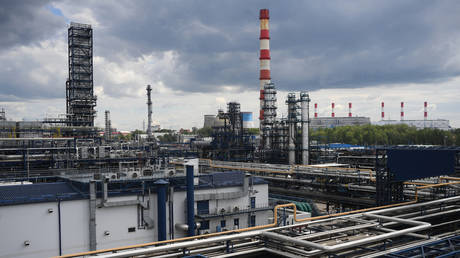
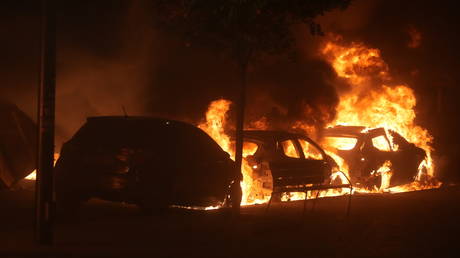
The United States Navy has assembled an armada in the Persian Gulf and Arabian Sea that rivals the opening days of the 2003 invasion of Iraq. With the arrival of the USS Theodore Roosevelt carrier strike group alongside the USS George H.W. Bush and the USS George Washington, the Pentagon now commands three full carrier air wings, 13 destroyers, two cruisers, and an incoming amphibious readiness group carrying 2,000 Marines. Military planners are openly weighing a compressed, high-intensity 72-hour strike designed to shatter Tehran’s remaining missile and naval infrastructure and force the regime’s hand.
Look past the cable news graphics of aircraft carriers, however, and a far messier reality emerges. The current military buildup is not the confident prelude to an easy victory. It is an admission that an eight-month war of attrition—launched on February 28 with promises of a rapid resolution—has settled into an expensive, politically toxic stalemate.
The Anatomy of a Compressed Blitz
To understand why defense officials are circulating concepts for a three-day aerial campaign, you have to look at the math of modern naval warfare. Aircraft carriers cannot sustain maximum sortie rates indefinitely. Pilots exhaust themselves, airframes require maintenance cycles, and guided munitions stockpiles drain faster than American factories can replenish them.
A 72-hour shock campaign attempts to solve the endurance problem through sheer mass. By overlapping three carrier strike groups in the region before older deployments rotate out, U.S. Central Command (CENTCOM) gains a temporary window of overwhelming strike capacity.
What the Target List Actually Looks Like
Unlike the initial February strikes that targeted Iran’s nuclear sites and conventional air defenses, a renewed blitz would focus on breaking the stranglehold over regional commerce. Intelligence assessments from Israel’s Institute for National Security Studies (INSS) indicate that while U.S. naval firepower in theater now exceeds March levels, executing a sustained air war would still require redeploying heavy land-based bombers. Without them, a three-day naval surge would concentrate on specific operational bottlenecks.
- Coastal Anti-Ship Batteries and Drone Hubs: Mobile launchers hidden along the rugged coastline and islands like Qeshm, which the U.S. struck earlier this week in retaliation for Iranian drone attacks on Bahrain.
- Naval Minelaying Vessels: Fast-attack craft and converted commercial hulls operated by the Islamic Revolutionary Guard Corps (IRGC) Navy, which have repeatedly seeded shipping lanes and damaged tankers in the Strait of Hormuz.
- Deep-Bury Nuclear Tunnel Entrances: Sites such as Pickaxe Mountain, where satellite imagery has tracked renewed excavation activity despite President Donald Trump’s public claims that Iran’s nuclear program has already been destroyed.
- Command and Control Nodes: Hardened communications bunkers linking Tehran to proxy militias in Iraq and Yemen.
The Strait of Hormuz Deadlock
The immediate trigger for this escalation is an economic choke point. Since June, the U.S. Navy has enforced a strict maritime blockade to stop Iranian crude from reaching global markets, redirecting roughly 150 merchant vessels and disabling five. Washington recently stood up Task Force Iron Gate to extend that interdiction effort onto land routes and the Caspian Sea.
The blockade is working, and that is precisely why the danger of a wider war is spiking.
For months, Tehran absorbed economic punishment while limiting its military responses to calibrated, tit-for-tat strikes. That calculus is shifting. With oil revenues drying up and domestic pressure mounting, Iranian leaders are testing whether breaking the blockade through asymmetric escalation is less costly than slowly suffocating under it.
Maritime traffic through the Strait of Hormuz—a waterway that carried roughly a quarter of the world’s seaborne oil before the war—remains at less than a third of prewar volume, according to tracking data from Lloyd’s List. While U.S. naval escorts have helped restore Gulf crude exports closer to normal levels, commercial shipping faces constant peril. Over the past week alone, Iranian forces fired drones at U.S. installations in Bahrain and Kuwait, claimed to have downed an American Reaper drone, and triggered fresh warnings over sea mines after projectiles and blasts damaged commercial tankers near Oman.
Mixed Signals From the West Wing
Military deployments work best as coercive tools when the adversary believes the commander-in-chief will pull the trigger. On that front, the White House has been sending wildly contradictory signals.
Within the span of a single week, President Trump told conservative radio host Hugh Hewitt that the U.S. military is "locked and loaded" and that he would not hesitate to strike if intelligence showed concerning activity at Pickaxe Mountain. Days later, following meetings with Qatari officials, Trump told reporters that major new strikes were "highly unlikely" and declared that the war "militarily is effectively over".
Meanwhile, Vice President JD Vance—who previously served as a lead negotiator in stalled ceasefire talks—has publicly broken with the hawkish line. Following Republican losses in the midterm elections, which exit polling tied heavily to voter fatigue over the $38 billion conflict and its inflationary ripple effects, Vance flatly stated on social media that "the reason we lost is the war". He has spent recent days reassuring voters that the administration will not allow the intervention to turn into a two-year quagmire.
To analysts in Tehran, this public friction looks less like strategic ambiguity and more like political vulnerability. If the Iranian leadership believes Washington lacks the domestic appetite for a prolonged campaign, a threatened 72-hour blitz loses much of its deterrent value.
Why a Three-Day Campaign Might Backfire
The core flaw in the "short, sharp" doctrine is that wars rarely obey the schedules drawn up by the side initiating them. History offers few examples where aerial bombardment alone forced a deeply entrenched ideological regime to capitulate without ground occupation.
- Asymmetric Escalation: Iran does not need to defeat the U.S. Navy in a symmetrical battle to win politically. Supreme Leader Ayatollah Mojtaba Khamenei and senior IRGC commanders have explicitly warned that any major renewed assault will eliminate geographical limits on their retaliation. Tehran has threatened to target Gulf energy infrastructure, European bases, and undersea fiber-optic internet cables—moves designed to shock global markets rather than sink American warships.
- The Munitions Trap: Every Iranian drone or low-cost ballistic missile intercepted by a U.S. destroyer requires a multi-million-dollar interceptor. Even a 72-hour exchange would burn through high-end air defense missiles needed for deterrence in the Indo-Pacific.
- Carrier Rotation Reality: Central Command has already acknowledged that the presence of three carriers is largely a byproduct of overlapping deployment schedules. Keeping three strike groups on station past their planned maintenance windows degrades long-term Navy readiness, meaning the window for maximum coercive pressure will close on its own within weeks.
The Diplomatic Vacuum
Perhaps the sharpest irony of the current crisis is that Washington has dismantled its own off-ramps just as military pressure peaks. Trump recently announced that the United States no longer needs a negotiated settlement with Tehran and reassigned Vance from ceasefire diplomacy to domestic policy initiatives.
At the same time, Iran refuses to enter serious talks unless the U.S. first lifts the naval blockade choking its economy. Washington refuses to lift the blockade until Tehran permanently abandons its nuclear and ballistic missile programs. Neither side can concede its opening demand without suffering a humiliating strategic defeat.
That leaves three aircraft carriers steaming in tight circles off the Iranian coast, waiting for an order that might not solve the underlying problem. Bombing coastal batteries and tunnel entrances for three days will undoubtedly degrade Iran’s military hardware. It will not, however, reopen the Strait of Hormuz to unescorted commercial tankers, nor will it compel a regime fighting for survival to sign a surrender document. Until Washington aligns its military firepower with a realistic diplomatic endgame, the third carrier strike group is simply an expensive way to buy time in a war nobody knows how to finish.