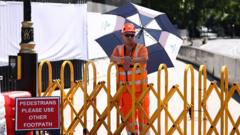
The immediate answer to how long the current heatwave will last depends on your local meteorological grid, but the systemic response is far more unsettling. Most regional heat domes now lock into place for two to three weeks at a time, driven by a severely disrupted jet stream. However, treating these events as temporary disruptions is a fundamental error. The infrastructure, energy grids, and economic models we rely on were built for a climate that no longer exists, meaning the baseline emergency is now permanent.
We are trapped in a cycle of reactive reporting. Every summer, headlines ask when the mercury will drop, treating extreme thermal events as freak anomalies. They are not. They are predictable features of a buckling atmospheric system. To understand why these heatwaves are stretching from days into weeks—and eventually months—we have to look beyond simple weather forecasts and examine the fraying systems behind the scenes.
The Broken Atmospheric Engine
To understand the duration of modern heatwaves, you have to look at the jet stream. This high-altitude river of wind used to move weather systems along at a steady clip. It kept hot air moving.
It is slowing down. As the Arctic warms at an accelerated pace, the temperature differential between the pole and the equator shrinks. This weakens the jet stream, causing it to meander in wide, sluggish loops. When one of these loops stalls over a continent, it creates a high-pressure system known as a heat dome.
The high pressure acts like a concrete lid. It pushes sinking air down, compressing it and heating it up. It repels clouds, ensuring unbroken, brutal sunlight bakes the earth day after day. Because the jet stream lacks the energy to push the dome away, the system sits stationary. The ground dries out completely. Without moisture in the soil to evaporate and absorb thermal energy, every watt of solar radiation goes directly into raising the air temperature.
This creates a compounding feedback loop. The hotter the soil gets, the more it reinforces the high-pressure system above it. This is why a heatwave that would have broken after four days in the 1990s now lingers for twenty.
The Concrete Kiln Effect
Cities do not just experience heatwaves; they amplify them. The urban heat island effect is frequently mentioned in weather broadcasts, but its structural malice is rarely scrutinized.
Modern urban centers are constructed from asphalt, concrete, and steel. These materials possess high thermal mass, meaning they are incredibly efficient at absorbing and storing heat during the day. When the sun goes down, rural areas cool rapidly. Cities do not. They radiate that stored heat back into the local environment all night long.
+-----------------------------------------------------------------+
|                    THE URBAN THERMAL TRAP                       |
+-----------------------------------------------------------------+
|  Daytime: Solar Radiation absorbed by asphalt/concrete          |
|  Nighttime: Stored heat radiated back into the air              |
|  Result: No nocturnal cooling -> Compounded thermal stress      |
+-----------------------------------------------------------------+
This lack of nocturnal cooling is the hidden killer. The human body requires a drop in ambient temperature to recover from daytime thermal stress. When the nighttime temperature stays above 80°F (27°C), the cardiovascular system remains under constant strain.
Furthermore, consider the sheer volume of waste heat generated by air conditioning units. To cool the interior of a skyscraper, commercial HVAC systems must dump massive amounts of heat directly into the surrounding streets. In a dense metropolis, this creates a localized microclimate where the ambient air temperature can be up to 15°F hotter than nearby rural baselines. We are effectively air-conditioning our interiors by turning our streets into furnaces.
The Grid Collapse Paradox
The primary weapon against extreme heat is air conditioning, which creates a terrifying vulnerability in our energy infrastructure. When a heatwave hits a continent, tens of millions of cooling units power on simultaneously.
The electrical grid is balanced on a razor's edge. Demand spikes to unprecedented levels just as the efficiency of the grid itself degrades. Transformers degrade faster under high thermal loads. High-voltage transmission lines sag and lose carrying capacity as they heat up. Even the power plants generating the electricity face operational bottlenecks. Thermal and nuclear power stations rely on nearby rivers or lakes for cooling water; when that water becomes too warm, the plants must throttle production or shut down entirely to prevent catastrophic failures.
The Vulnerability Loop: As ambient temperatures rise, power grid capacity drops by roughly 1% for every 5°F increase, precisely when demand hits its peak.
If a major grid experiences a rolling blackout or a cascading failure during a prolonged heat dome, the casualties would dwarf those of most natural disasters. Imagine a city like Phoenix or Dubai losing power for 48 hours during a 115°F spell. Within hours, high-rise apartments would transform into thermal traps. Water pumps would fail. Emergency services would be overwhelmed by heatstroke cases. We are subsidizing our immediate survival with an energy infrastructure that grows more fragile with every degree the thermometer rises.
The Economic Mirage of Adaptation
Market analysts like to talk about adaptation as a simple capital expense. They suggest that we will build our way out of this through smarter architecture, reflective pavements, and localized cooling centers.
This view ignores basic physics. True adaptation requires a complete overhaul of global supply chains and labor productivity models. Agriculture cannot be air-conditioned. Crop yields drop precipitously when pollen grains abort due to extreme heat during the flowering stage. Livestock mortality rates skyrocket during prolonged thermal events, disrupting meat and dairy supply chains.
Outdoor labor faces a hard biological wall. The human body cools itself through the evaporation of sweat. When the ambient temperature and humidity reach a specific threshold—known as a wet-bulb temperature of 95°F (35°C)—the body can no longer shed heat, even when stripped bare and drenched in water. Sitting in the shade with unlimited water will not save you. If you are working outside under those conditions, you will die of heatstroke within hours.
Large swaths of the global construction and agricultural workforces are already losing productive hours to mandatory heat breaks. Shifting work hours to the middle of the night offers a temporary reprieve, but it introduces severe logistical friction and safety hazards. The economic toll is not a future projection; it is a current drain on productivity that compounds with every week a heatwave persists.
The Illusion of the Temporary
The fundamental flaw in our collective approach to extreme heat is the psychological reliance on the concept of a season. We treat summer as a discrete block of time with a predictable beginning and end.
The data shows otherwise. The shoulder seasons are evaporating. Spring is arriving weeks earlier, characterized by premature heat spikes that trigger early snowmelts and alter ecosystem lifecycles. Autumn is lingering, delaying the winter cooling period that ecosystems require to reset.
This extension of the thermal window means that when a heatwave occurs, it is no longer operating against a backdrop of moderate seasonal temperatures. It is building upon an already elevated baseline. A heat dome forming in June is now weaponized by soil that has been drying out since March.
Re-engineering the Survival Metric
If we want to survive the true duration of modern thermal crises, we have to abandon the standard thermostat reading as our primary metric of danger. Measuring air temperature alone is a relic of an era when humidity and atmospheric stagnation were within historical norms.
We must pivot to prioritizing the Wet-Bulb Globe Temperature (WBGT). This metric combines dry air temperature, humidity, wind speed, and solar radiation into a single value that reflects the actual physiological strain on a human body. A dry 105°F day in the desert is dangerous; a humid 95°F day in the subtropics can be lethal. Our warning systems, labor laws, and emergency responses must be hard-coded to these physiological limits rather than arbitrary numbers on a local news broadcast.
Urban design needs a scorched-earth rewrite. The reliance on glass-faced skyscrapers that act as greenhouses must end. We need to mandate external shading, integrated green roofs that utilize graywater for evaporative cooling, and the mass deployment of ultra-reflective, non-toxic coatings on all horizontal surfaces.
Air conditioning must be reclassified from a consumer luxury to a critical public utility, managed with the same regulatory oversight as clean drinking water. This means building localized, micro-grid-backed cooling sanctuaries in every neighborhood, capable of operating independently when the main electrical grid inevitably falters under the strain.
The question of how long a specific heatwave will last misses the broader point entirely. The atmospheric conditions that allow these events to stall over our heads are locked in for the foreseeable future. The heat is not a visitor; it has moved in, and our survival depends on rewriting the rules of how we build, work, and protect human life in a permanently hotter world. Stop looking at the weekly forecast and start looking at the foundations of your city.