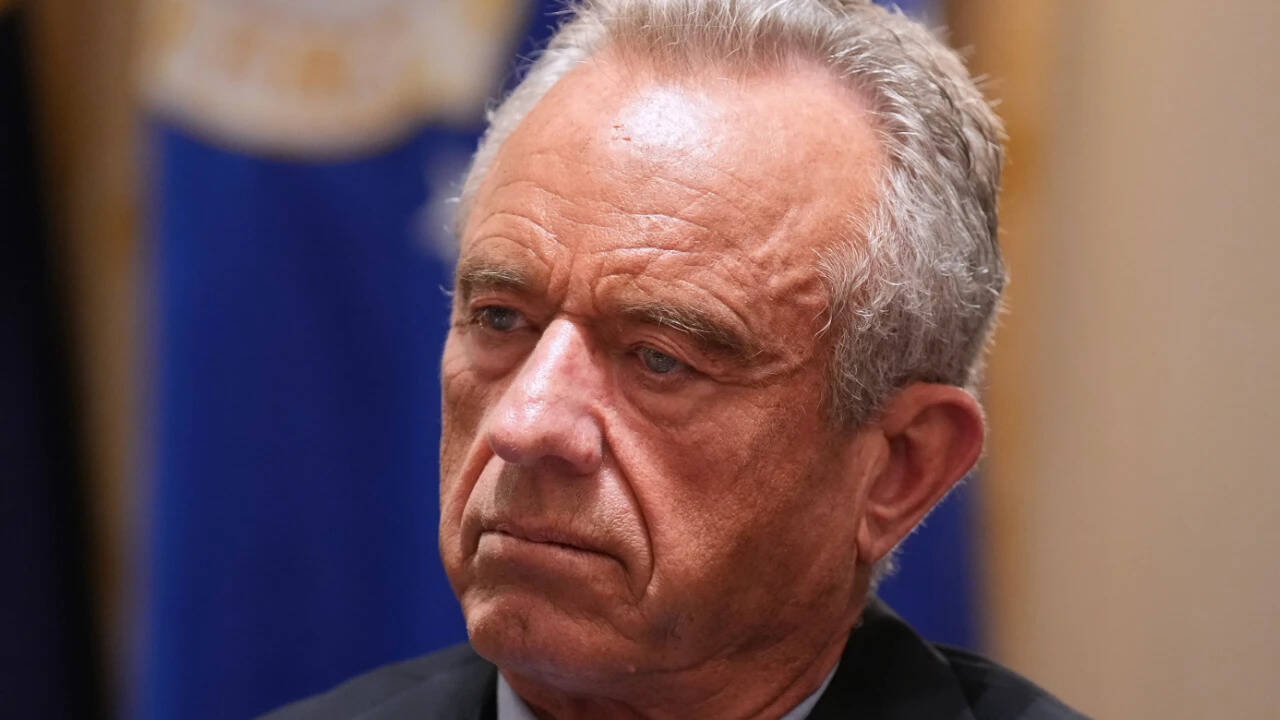
Two Democratic U.S. senators have launched a formal investigation into whether Health and Human Services Secretary Robert F. Kennedy Jr. gave false testimony to Congress about his 2019 trip to Samoa, which took place months before a deadly measles outbreak swept the island nation. Senators Ron Wyden of Oregon and Angela Alsobrooks of Maryland opened the probe after investigative reporting by The Associated Press and The Guardian surfaced records contradicting Kennedy's repeated claim during his 2025 confirmation hearings that the trip had "nothing to do with vaccines". The senators set a December 4, 2026 deadline for Children's Health Defense to turn over records tied to the Samoa visit, his 2024 campaign, and his confirmation process.
A probe rarely starts over a single disputed memory. It starts when paper trails collide with sworn or formal assurances made under the klieg lights of Capitol Hill. Also making headlines lately: Why Veteran Benefits Are Failing Because We Treat Symptoms Instead of Systems.
Why Testimony Became the Flashpoint
During his early 2025 confirmation hearings before Senate committees, Kennedy faced sharp questioning over his past statements on immunization and his travel to Samoa in 2019. Asked directly by lawmakers whether his purpose in visiting Samoa involved vaccines, Kennedy insisted it did not. He told senators he went to introduce a medical informatics system aimed at digitalizing health records and improving delivery efficiency.
That framing mattered enormously at the time. A handful of skeptical Republican senators held decisive votes in a tight confirmation fight, and assurances about policy boundaries and past conduct helped clear his path to lead the Department of Health and Human Services. Additional information on this are explored by The Guardian.
Then came the documents. Reporting by The Associated Press and The Guardian in 2026 examined correspondence and records connected to Kennedy's 2019 involvement in Samoa, including a multi-page letter to Samoa's prime minister in which Kennedy used words tied to vaccination multiple times and floated unproven claims about vaccine safety during a crisis. Diplomatic and international health officials had already privately discussed the vaccine dimension of his visit back in 2019.
Once a cabinet official's explanation of a trip looks selective or contradicted by contemporaneous writing, congressional oversight shifts quickly. What began as a debate over historical vaccine activism turns into a question of candor before the Senate.
Anatomy of a Fragile Public Health System
To understand why a 2019 visit still resonates years later, you have to look at the conditions on the ground in Samoa before the outbreak exploded. Public health failures rarely stem from a single external voice alone. They usually grow out of an existing fracture that gets widened at the worst possible moment.
In 2018, a tragic medical error in Samoa involving two nurses led to the deaths of two infants after vaccines were improperly mixed. Two nurses faced criminal charges shortly afterward and later pleaded guilty to manslaughter. Samoan authorities suspended the vaccination program for roughly ten months into spring 2019 while investigating and rebuilding protocols.
That pause left a large pool of unprotected children. Measles is among the most contagious respiratory viruses known to medicine, requiring high community immunity—typically around 95 percent—to stop sustained transmission. When routine immunization stalls and confidence erodes, herd protection drops fast.
Into that nervous environment stepped high-profile messages questioning vaccine safety and promoting alternative explanations. Even when activists argue they are merely asking questions or offering information, skeptical messaging lands differently on an island reeling from an infant tragedy and a suspended immunization drive. Fear feeds on uncertainty.
When a community has already lost two babies to a preventable medical error, every rumor about needles and medicine carries extra weight.
Public health historians have seen versions of this dynamic elsewhere. Trust is slow to build and quick to fracture. Once fear takes hold among parents, rebuilding coverage takes sustained clinical outreach, clear communication, and political discipline—not mixed signals from prominent figures.
What Investigators Are Actually Chasing
Senators Wyden and Alsobrooks did not launch their inquiry in a vacuum. Their move comes after Democrats regained control of Congress in the 2026 midterm elections, signaling a broader wave of oversight targeting executive branch officials and administration records.
By demanding records from Children's Health Defense ahead of the December 4 deadline, the senators are testing several distinct threads at once:
- Trip planning and purpose: Who organized the 2019 itinerary, what meetings took place, and how much of the visit centered on immunization debates rather than health record software?
- Communications with officials: What messages were exchanged with Samoan leaders, local advocates, or U.S. embassy personnel before, during, and after the trip?
- Alignment with confirmation answers: Whether internal records show Kennedy knew his characterization during the 2025 hearings omitted material facts or misstated his core focus.
Watchdog analysts note that congressional inquiries carry real leverage even when criminal prosecution faces steep hurdles. Legal observers point out that a Justice Department aligned with the Trump administration is unlikely to pursue criminal charges against a sitting cabinet secretary over disputed testimony.
Still, politics and law operate on different tracks. Document requests can escalate into committee subpoenas if recipients stonewall. Public hearings can put uncomfortable exhibits on the record. And critics in Congress have already floated harsher political remedies, including impeachment talk or sustained oversight pressure, depending on what the documents show.
Competing Narratives and Gray Areas
Any honest assessment of this dispute has to account for why supporters and critics read the exact same timeline so differently. In Washington's current climate, almost every fact gets pulled into a larger ideological tug-of-war.
Kennedy and his defenders have long contended that he does not tell people not to vaccinate, that his focus has been on safety testing, regulatory transparency, and chronic disease, and that his Samoa trip involved broader health initiatives such as medical record systems. From a hypothetical example standpoint, imagine a consultant who travels abroad to pitch an IT platform while also meeting local critics of an existing policy; depending on which hat is emphasized later, two people can describe the trip's main purpose in sharply different terms.
Critics counter that selective framing is not the same as accuracy. When a nominee tells senators a trip had "nothing to do with vaccines," yet written records show extensive engagement with vaccine-related claims and messaging in that exact setting, lawmakers view the gap as more than semantics.
There is also a broader political calculation at play. Many Democrats strongly oppose Kennedy's posture on vaccines, yet some lawmakers have weighed whether to clash with him or find common ground on food additives, farming, and environmental health. The Samoa probe cuts against quiet accommodation—it forces a direct reckoning over credibility and public health responsibility.
Why Samoa Still Shadows HHS Today
The Samoa inquiry matters beyond a single 2019 trip or a single set of emails. As head of Health and Human Services, Kennedy oversees agencies that shape immunization guidance, outbreak response, and public trust across the United States.
In late 2026, measles activity and questions around vaccine confidence have once again drawn scrutiny from health officials and lawmakers. When outbreaks flare or immunization rates slip, credibility becomes the currency of crisis management. People look to health leaders not just for data, but for straight answers they can trust when stakes are high.
If the records turned over to the Senate reveal a wider gap between Kennedy's confirmation testimony and his actual involvement in Samoa, the political fallout will reverberate well beyond Capitol Hill. Every future policy shift at HHS—on vaccine schedules, advisory panels, or outbreak warnings—will be read through the lens of whether the secretary leveled with the Senate when it counted most.
Watch the December 4 document deadline and see whether subpoenas follow, because the paper trail from 2019 is now the sharpest weapon aimed at the top of America's health apparatus.