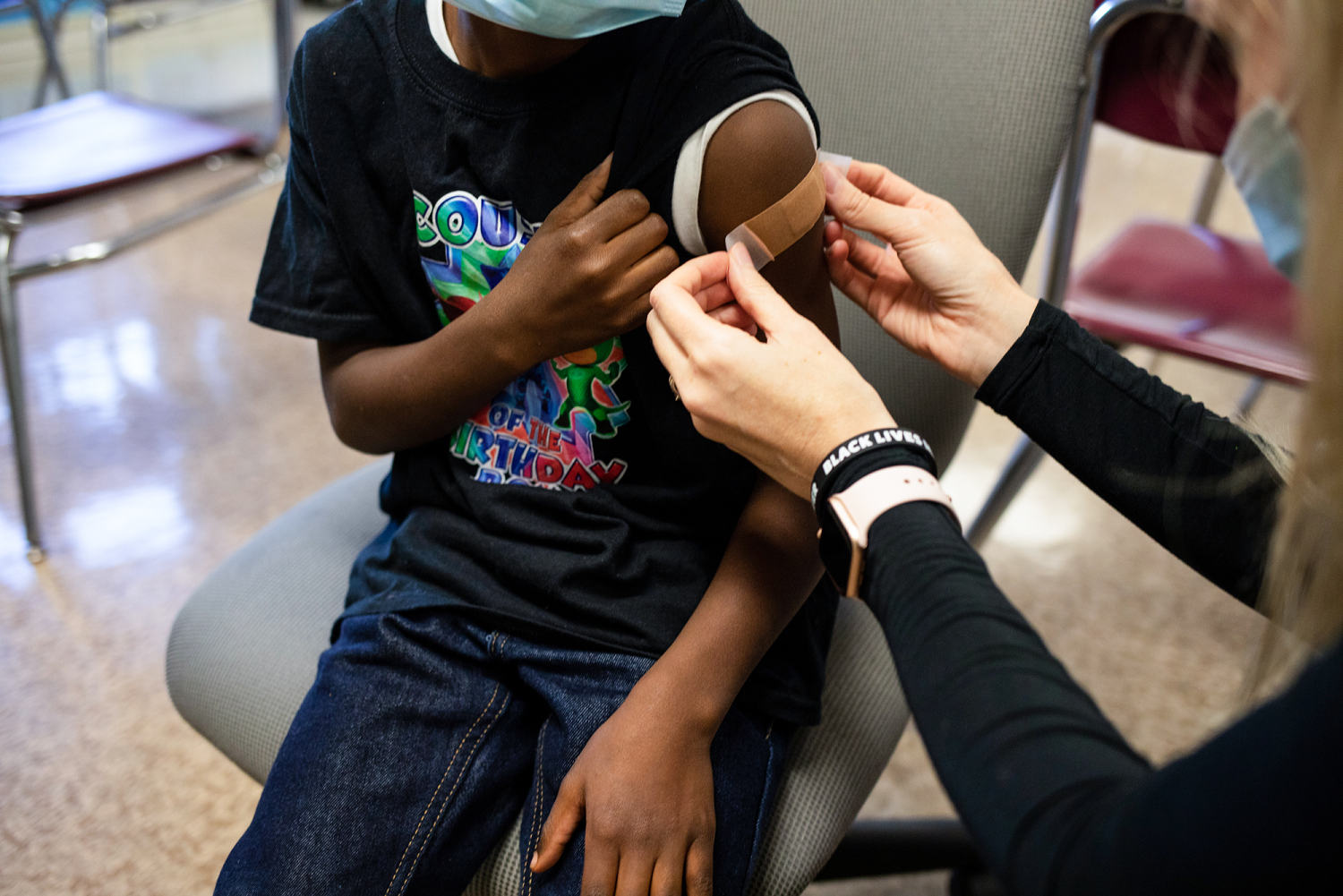
During the latest academic term, national kindergarten vaccination coverage rates dropped again while nonmedical exemptions climbed to an unprecedented 4.2 percent, leaving roughly 155,000 children across the country legally excused from standard immunization requirements. This steady erosion is not an accident of geography or a sudden spasm of administrative oversight. It is the predictable outcome of an institutional breakdown where federal health communications have fractured, state enforcement has fragmented, and public health authorities have largely surrendered the narrative to organized ideological friction.
For decades, the American public school system acted as an invisible shield. By tying enrollment to mandatory documentation of shots for measles, mumps, rubella, polio, and diphtheria, states maintained a reliable baseline of community immunity. That baseline hovered safely near the critical 95 percent threshold required to prevent community outbreaks. Today, that threshold has been breached in large swaths of the map. Twenty-four states now report kindergarten exemption rates exceeding 5 percent, and more than a quarter of a million children entered classrooms without adequate protection against highly contagious pathogens.
The Anatomy of a Fragmented System
To understand how a public health standard collapses, look closely at the patchwork of state laws that govern attendance. While federal agencies collect and publish the data, they do not dictate school entry policies. That authority belongs entirely to state legislatures and local health departments.
When federal guidance becomes muddled or contested by political appointees who amplify skepticism, state leadership must choose between alignment with historical scientific consensus or capitulation to local pressure. More than thirty state health departments have recently announced they are cutting ties with federal advisory pathways entirely, opting instead to lean on external medical organizations for protocol direction.
This bifurcation creates geographical anomalies that defy simple explanation. Consider a hypothetical child entering kindergarten in a county with strict statutory limits on nonmedical opt-outs versus one just across a state line where philosophical exemptions are granted upon request. In the restrictive district, coverage remains high and outbreaks are contained. In the neighboring jurisdiction, clustered exemptions create localized vulnerabilities where a single imported case of measles can ignite a multi-county transmission chain.
The statistics underscore this vulnerability. The vast majority of exemptions are driven by nonmedical choices, and they are heavily concentrated. In certain states, exemption figures dwarf the national average by factors of four or five, turning particular school districts into demographic fault lines.
Administrative Fatigue and the Paperwork Loophole
Securing an exemption is often simpler than completing a multi-dose vaccination series. Parents navigating insurance hurdles, appointment scheduling delays, and the administrative friction of modern healthcare find an expedient release valve in philosophical or religious waiver forms.
School nurses and administrative registrars are caught in the middle. Most schools lack the personnel to audit immunization records with forensic precision. When a standardized form is submitted citing a personal conviction, overworked staff frequently process the paperwork without secondary review. The system treats compliance as a check-the-box exercise rather than a substantive public health safeguard.
Furthermore, medical exemptions have remained statistically flat, hovering near a steady 0.2 percent for years. This stark contrast proves that the surge in unprotected children is entirely behavioral and institutional. It reflects a growing willingness among parents to opt out of collective safety protocols, emboldened by an information ecosystem that treats established immunological science as a matter of personal lifestyle preference.
The Cost of Institutional Silence
The response from federal oversight bodies has shifted from active advocacy to passive observation. Rather than aggressively promoting immunization milestones through traditional public health channels, federal agencies have relegated vital coverage data to static web postings accompanied by minimal commentary.
This institutional retreat leaves local pediatricians and state-level health secretaries to fight a rear-guard action against misinformation. When the entity responsible for national health defense stops championing the primary tool of disease prevention, public trust fractures further. Parents looking for clear directives encounter contradictory messaging, opening the door wider for administrative avoidance.
The consequences are visible in emergency rooms and public health registries. Measles case counts have surged to levels not seen in decades, driven primarily by clusters among unvaccinated populations. Pertussis and other vaccine-preventable ailments are following similar trajectories.
Reversing this decline requires more than hand-wringing over annual data releases. It demands that states close the legislative loopholes that treat community health as an optional elective, while rebuilding the institutional credibility necessary to make compliance the cultural norm once again. Until lawmakers summon the political will to treat immunization as a fundamental pillar of educational infrastructure, the exemption numbers will continue their steady, destructive climb.