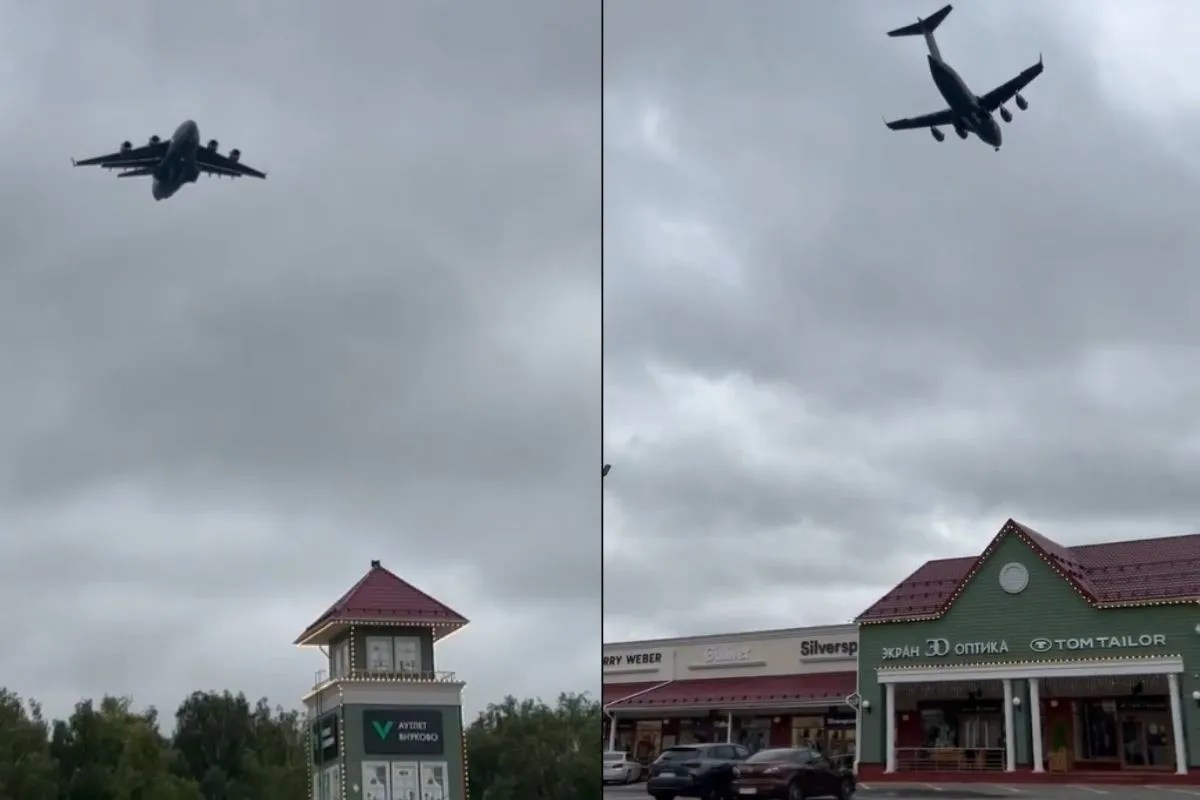
A heavy-lift military transport aircraft touched down on the tarmac at Moscow’s Vnukovo Airport, instantly breaking years of rigid geopolitical protocol.
The flight path of the Boeing C-17A Globemaster III, bearing registration number 07-7181, was tracked across open networks from Joint Base Andrews near Washington through a stopover in Riga, Latvia, before making its descent into the Russian capital. Official channels from both superpowers offered a masterclass in calculated denial. Kremlin spokesman Dmitry Peskov claimed absolute ignorance of the arrival, while defense commands across the Atlantic offered standard stonewalling. Don't miss our earlier article on this related article.
Military transport giants do not wander into hostile airspace by accident. Understanding the true weight of this arrival requires stripping away official rhetoric and examining the mechanics of high-stakes backchannel diplomacy.
The Anatomy of a Ghost Transit
Commercial aviation between the West and Russia has remained virtually frozen since the outbreak of full-scale conflict in Eastern Europe. When a military asset bearing US insignia cuts through European airspace and lands at a heavily guarded Moscow hub, it signals a breakdown of public posturing and the urgent necessity of private communication. To read more about the context of this, BBC News provides an in-depth breakdown.
The aircraft's routing offers critical clues. Originating from Camp Springs, Maryland—the primary staging ground for executive transport and military logistics supporting the highest levels of the American government—the C-17 paused in Latvia before completing the final leg. This staging pattern mirrors historical precedents used during sensitive intelligence handoffs, security preparations, or unannounced high-level visits where conventional diplomatic aircraft would draw unwanted scrutiny.
While public speculation immediately targeted stalled peace frameworks regarding Ukraine or potential backchannel envoys, the physical presence of a strategic cargo aircraft points to logistical requirements. A C-17 is built to haul heavy equipment, secure communication suites, and specialized advance security teams. Heads of state do not typically travel inside the cavernous, unpadded cargo hold of a Globemaster, but their security details and secure comms gear frequently do.
Decoding the Official Silence
The immediate response from Moscow—insisting that administration officials had no knowledge of any incoming delegation—serves a dual purpose. Plausible deniability protects both governments from domestic political fallout. In Washington, open negotiations with Moscow remain a radioactive political hazard. In Moscow, admitting that a direct military transport from the heart of the American defense apparatus has arrived unannounced disrupts the narrative of total self-reliance and geopolitical defiance.
Subsequent intelligence reports leaking through domestic and international media pointed toward high-level security personnel on the ground, indicating that the flight carried key national security figures for urgent closed-door consultations. Yet, the deliberate friction between what flight trackers verified and what governments admitted exposes the fragile reality of modern great-power crisis management. When formal diplomatic channels atrophy, communication shifts to opaque military vectors.
The presence of a US military transport in the heart of Russia lays bare the reality that behind the public facade of total severance, channels remain active precisely because the cost of total darkness is too high. The C-17 taxied back out into the global spotlight, leaving behind a trail of unanswered questions about what was traded, promised, or warned behind closed doors in Moscow.