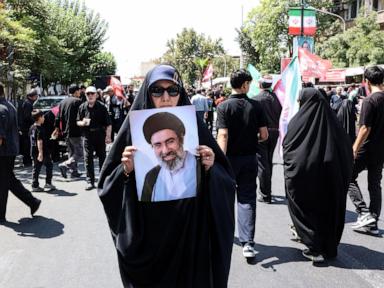
US President Donald Trump recently declared that Tehran faces its final opportunity to sign a comprehensive diplomatic accord, warning of severe military escalation and utilizing phrases like a "last chance before decapitation". Behind these stark White House proclamations lies a grinding, high-stakes crisis centered on the closure of the Strait of Hormuz, persistent regional proxy frictions, and deep diplomatic disconnects between Washington and the Iranian leadership. While the administration insists direct talks are active despite public denials from Tehran, the commercial reality on the ground—and on the water—tells a story of calculated attrition rather than imminent resolution.
The Chokepoint Mechanics
The immediate catalyst for the current cycle of brinkmanship is control over the Strait of Hormuz, through which a significant portion of global energy supplies traditionally flows. When earlier ceasefires collapsed, Tehran reimposed a functional blockade, forcing commercial carriers either to navigate restricted channels hugging the Iranian coast or to bypass the region entirely. In similar developments, we also covered: The Empty Vault and the Billion Dollar Distance.
Washington has countered with a naval counter-blockade, aiming to squeeze Iranian maritime access completely. The core dispute is not merely about navigation rights; it is about sovereignty and economic leverage. Iran insists on vetting vessels and controlling traffic lanes, while the United States and its Gulf allies reject any arrangement that grants Tehran unilateral authority over international commercial transit.
This creates a dangerous operational environment. Maritime security agencies continue to report suspicious projectiles and kinetic strikes impacting cargo vessels and tankers near Omani and Gulf waters. Every commercial vessel transiting these coordinates serves as a potential trigger for a wider regional conflagration. NBC News has analyzed this critical issue in great detail.
The Gulf Dilemma and Regional Diplomacy
Behind the public exchange of ultimatums, a shadow diplomacy is being orchestrated by regional capitals. Saudi Arabia, the United Arab Emirates, and Qatar find themselves caught in an intolerable position. While these nations rely on Washington's security umbrella, they also bear the immediate brunt of any retaliatory spiral.
Senior officials in Riyadh and Doha have actively pressed Western leadership to pull back from catastrophic military strikes, fearing that an expanded aerial campaign would immediately target Gulf energy infrastructure and desalination plants. Simultaneously, secondary actors like Oman are quietly attempting to carve out temporary, pragmatic solutions for safe shipping corridors, bypassing the rigid posturing of both Washington and Tehran.
This tension explains the recurring pattern of sudden presidential pullbacks from planned military interventions. White House assertions that regional partners requested restraint highlight the profound anxiety gripping the Arabian Peninsula. Gulf monarchies want the Iranian threat neutralized, but they refuse to serve as the collateral damage in a campaign of maximum pressure.
Beyond the Rhetoric of Total Surrender
The demand for complete denuclearization remains a foundational pillar of US policy, framed by officials as a non-negotiable prerequisite for lasting regional stability. Yet, Iranian state actors treat such demands as an existential challenge designed to force regime capitulation rather than genuine security compromise.
When Washington frames the diplomatic track as an ultimatum between a negotiated settlement or total economic and military strangulation, it closes the breathing room required for quiet, incremental compromise. Tehran’s public denials of ongoing direct talks reflect domestic political survival strategies as much as strategic defiance. Leaders in the Islamic Republic cannot appear to bend the knee to explicit American threats without inviting severe internal instability.
Meanwhile, peripheral actors continue to exploit the chaotic baseline. Periodic Houthi operations targeting infrastructure in southern Saudi Arabia demonstrate that regional flashpoints operate independently of primary superpower negotiations. Even as state-level actors posture over shipping lanes, decentralized allied networks maintain a constant pressure that keeps the entire theater on edge.
The ultimate trajectory depends heavily on whether backchannel intermediaries can convert temporary maritime workarounds into durable commercial rules. Until a workable formula for the Strait of Hormuz is agreed upon by both sides, the threat of catastrophic escalation remains an active variable, ticking quietly beneath the surface of diplomatic posturing.