Federal prosecutors in the United States have charged three men with conspiring to carry out coordinated terror attacks, including a planned assault on a Royal Air Force base in the United Kingdom. The indictments, unsealed by the Department of Justice, detail an alleged network spanning the Atlantic that relied on encrypted messaging applications, decentralized radicalization pipelines, and tactical reconnaissance of sensitive military installations. While the immediate threat was neutralized through joint intelligence operations between American and British security services, the mechanics of the plot expose a critical shift in how transnational extremist cells recruit, organize, and select high-value targets.
For decades, counterterrorism strategies focused on dismantling rigid hierarchies with clear command-and-control structures. That era is over. What investigators uncovered in this case is a textbook example of modern, networked extremism—a fluid, leaderless model that presents unique challenges for law enforcement agencies operating across international jurisdictions.
Anatomy of a Transatlantic Conspiracy
The criminal complaint paints a stark picture of operational progression. This was not a group of isolated individuals venting frustration in obscure corners of the internet. According to federal filings, the suspects moved rapidly from ideological consumption to concrete logistical planning.
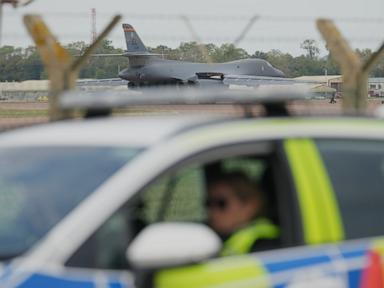
The core of the conspiracy involved selecting targets that would yield maximum symbolic and strategic impact. A UK airbase—specifically one hosting joint allied operations and critical aviation infrastructure—represented an ideal objective for individuals seeking to strike at Western military capability. Bases in the United Kingdom, particularly those with historic ties to United States Air Force deployments, sit at the intersection of domestic British security and American power projection. Attacking such a facility sends a dual message.
To execute the plan, the suspects allegedly engaged in several distinct phases of operational security and preparation:
- Digital Compartmentalization: The men utilized end-to-end encrypted platforms to communicate, frequently migrating between applications to evade digital surveillance. They employed operational security protocols typically associated with state-sponsored actors rather than grassroots extremists.
- Target Reconnaissance: Investigators found evidence of detailed mapping, analysis of perimeter defenses, and assessments of shift changes at the targeted UK installation. Open-source intelligence, including commercial satellite imagery and publicly available flight tracking data, played a significant role in their preliminary planning.
- Resource Acquisition: The indictment outlines efforts to secure financing and procure materials necessary for an assault, utilizing peer-to-peer payment networks and covert dead-drops to obscure the financial trail.
The speed with which the cell transitioned from online radicalization to physical reconnaissance is what alarms veteran intelligence officials. In previous eras, the logistical friction required to plan an international attack created numerous tripwires for intelligence agencies. Today, commercially available technology compresses that timeline dramatically.
The Intelligence Handshake
Disrupting a plot that originates in one jurisdiction and targets another requires seamless coordination between sovereign intelligence apparatuses. In this instance, the arrest of the three men demonstrates the enduring efficacy of the Five Eyes intelligence alliance, specifically the bilateral relationship between the FBI, the CIA, and British security services including MI5 and Counter Terrorism Policing.
However, behind the public statements of mutual congratulations lies a far more complicated reality. Cross-border counterterrorism investigations are fraught with legal, procedural, and evidentiary hurdles.
When the FBI gathers intelligence on a threat directed at British soil, the transition from intelligence gathering to criminal prosecution requires meticulous handling. Information obtained through foreign intelligence surveillance authorities—such as Section 702 of the Foreign Intelligence Surveillance Act (FISA) in the United States—cannot always be easily introduced into a civilian courtroom without compromising sensitive collection methods.
To bring these charges, federal prosecutors had to construct an evidentiary chain that satisfies the strict standards of the American judicial system while protecting the operational secrets of their British counterparts. This often involves parallel construction, where law enforcement agencies use intelligence tips to independently gather admissible evidence through traditional policing methods, such as physical surveillance, confidential human sources, and court-authorized wiretaps.
The timing of the arrests is equally revealing. Counterterrorism officials face a perennial dilemma: intervene early to guarantee public safety, or allow a plot to mature to gather overwhelming evidence for a conviction. Arresting suspects too soon risks a failed prosecution due to a lack of overt acts proving criminal intent. Waiting too long invites catastrophic failure. In this case, the transition from digital chatter to active surveillance of the UK airbase forced the hand of investigators. Once a cell begins physical reconnaissance of a military target, the risk threshold is breached.
Why Military Installations Remain Prime Targets
To understand why three men operating out of the United States would fixate on a UK airbase, one must examine the strategic calculus of modern extremist movements. Hardened military targets are notoriously difficult to penetrate. Perimeter security, armed patrols, and advanced surveillance systems make a successful assault statistically improbable compared to soft civilian targets like transit hubs or public gatherings.
Yet, military bases remain magnetic to terror cells for three primary reasons.
First is the propaganda value. An attack on a civilian target is universally condemned and easily framed by governments as an act of cowardly violence against the innocent. An attack on a military installation, conversely, allows extremist groups to frame themselves as combatants engaged in asymmetric warfare against a legitimate military adversary. Even a failed assault that causes minimal damage can be spun within extremist networks as a daring strike against the heart of Western military power.
Second is the operational vulnerability of the perimeter. While the interior of an airbase is heavily fortified, the surrounding geography often presents soft spots. Military airfields require vast expanses of flat land, resulting in perimeters that stretch for miles, frequently bordering rural roads, farmland, or suburban developments. Aircraft on approach or takeoff are uniquely vulnerable outside the immediate wire of the base. Furthermore, the daily influx of civilian contractors, delivery drivers, and off-base personnel creates predictable patterns of movement that patient observers can exploit.
Third is the symbolic weight of the US-UK alliance. Airbases in the United Kingdom—such as RAF Lakenheath, RAF Mildenhall, or RAF Fairford—serve as vital logistical hubs and forward operating bases for American air power in Europe and the Middle East. Striking a UK base with a heavy American footprint is a direct assault on the transatlantic security architecture.
The Evolution of the Decentralized Cell
The profile of the three charged men challenges outdated assumptions about who becomes a domestic or transnational terrorist. Law enforcement can no longer rely on predictable demographic profiles or clear ties to established foreign terrorist organizations like al-Qaeda or ISIS.
Modern extremism operates like an open-source software project. Ideological grievances, tactical manuals, and operational security guides are uploaded to encrypted channels and decentralized forums. Individuals then download these components, adapt them to their local environment, and form ad-hoc cells with like-minded peers they may have never met in person.
This phenomenon, often referred to by analysts as salad bar extremism, allows individuals to blend disparate ideological motivations. A cell might draw inspiration from militant jihadism while simultaneously adopting the tactical aesthetics and accelerationist tactics of domestic anti-government movements. The unifying thread is rarely a coherent political manifesto; rather, it is a shared desire for violent disruption and a deep-seated hostility toward state institutions.
For investigators, this lack of centralized command is a double-edged sword. On one hand, decentralized cells lack the sophisticated training, heavy weaponry, and deep financial backing that state-sponsored or hierarchical terror groups once possessed. Their plots are frequently improvised and prone to amateur mistakes.
On the other hand, the absence of a central hub means there is no single network to infiltrate. Shutting down one encrypted chat group simply causes the participants to scatter and reform on another platform within hours. The sheer volume of violent rhetoric online creates a massive signal-to-noise problem for intelligence analysts, making it extraordinarily difficult to distinguish between keyboard warriors indulging in violent fantasies and operational cells actively preparing for an attack.
The Encryption Dilemma and the Surveillance Gap
A critical subtext of the Department of Justice indictment is the ongoing friction between national security agencies and the technology sector over end-to-end encryption. As detailed in court documents, the suspects relied heavily on encrypted applications to shield their planning from law enforcement.
Intelligence officials have warned for years that the widespread adoption of default encryption has created a "going dark" problem. Even when the FBI secures a court-authorized warrant to monitor a suspect's communications, the intercepted data is often unreadable gibberish.
To bypass this hurdle, agencies have increasingly turned to alternative investigative techniques:
- Undercover Operations: Placing undercover agents or confidential human sources directly inside encrypted chat rooms to gain the trust of suspects and document their intentions from the inside.
- Device Exploitation: Utilizing specialized forensic tools or court-authorized hacking warrants (known as Network Investigative Techniques) to access data directly on a suspect's physical device before it is encrypted or after it is decrypted.
- Metadata Analysis: Tracking the patterns of communication—who is talking to whom, when, and from what general location—even when the content of the messages remains hidden.
While these methods proved successful in dismantling this specific plot, they are resource-intensive and do not scale easily. Monitoring a single three-man cell requires dozens of agents, analysts, and technical specialists working around the clock. Multiply that effort across hundreds of active investigations nationwide, and the strain on counterterrorism resources becomes glaringly apparent.
Legal Ramifications and the Material Support Statute
As the three defendants prepare to face the American justice system, the prosecution will rely heavily on 18 U.S.C. § 2339A and § 2339B—the federal statutes prohibiting the provision of material support to terrorists and designated foreign terrorist organizations.
These laws are the bedrock of modern American counterterrorism prosecutions. Enacted and expanded in the wake of the September 11 attacks, the material support statutes allow prosecutors to intervene long before a bomb is built or a trigger is pulled. Under these provisions, providing funds, training, tactical advice, or even one's own personnel to a terror plot is a severe federal felony, carrying decades in prison.
However, the application of these statutes to decentralized, homegrown cells often sparks intense legal debate. Defense attorneys frequently argue that their clients' online activities constitute protected speech under the First Amendment, or that undercover FBI agents entrapped impressionable individuals by encouraging them to escalate from rhetoric to action.
To overcome an entrapment defense, federal prosecutors must demonstrate predisposition—proving beyond a reasonable doubt that the defendants were ready and willing to commit the crime before any government agent made contact. The physical reconnaissance of the UK airbase and the independent acquisition of tactical materials cited in the indictment are specifically designed to neutralize any future claims of government coercion.
The Illusion of Total Security
The disruption of the UK airbase plot is an undeniable tactical victory for American and British intelligence. Lives were likely saved, and a major geopolitical incident was averted. Yet, treating this arrest as proof that the system is impenetrable would be a dangerous miscalculation.
The modern threat environment is defined by persistence and asymmetry. Counterterrorism agencies must succeed every single day; an extremist cell only needs to succeed once. The same commercial technologies that have revolutionized global commerce—encrypted communications, high-resolution satellite mapping, peer-to-peer finance, and unmanned aerial systems—have effectively democratized the tools of asymmetric warfare.
Furthermore, the geopolitical landscape continues to generate fresh grievances that fuel recruitment. Ongoing conflicts in the Middle East, heightened tensions between major global powers, and deep domestic political polarization in Western democracies provide an endless supply of propaganda material for extremist recruiters.
Security forces at military installations across the United Kingdom and the United States have undoubtedly adjusted their posture in response to the intelligence gathered during this investigation. Perimeter patrols have been tightened, counter-drone systems recalibrated, and vetting procedures for base access scrutinized. Those physical measures are necessary, yet they address only the symptoms of a much deeper structural vulnerability: the ease with which small, self-radicalized groups can now project lethal intent across borders without ever stepping foot in a traditional training camp.