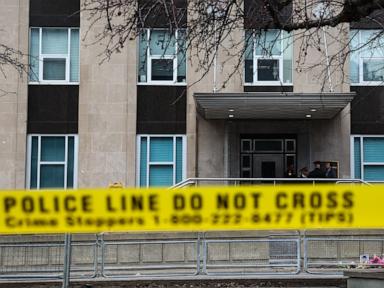
When a barrage of gunfire struck the United States Consulate on Toronto’s University Avenue in March, the immediate instinct of international intelligence agencies was to look for a sophisticated geopolitical operative. The Royal Canadian Mounted Police declared it a national security incident. The FBI stepped in. Yet, the actual mechanics behind the trigger were far from the work of seasoned foreign agents.
Toronto police investigators dismantled the illusion, revealing that the attack was executed by local teenagers recruited over encrypted messaging phone applications, paid menial bounties, and ordered to film the shooting to secure their payout.
This is not an isolated act of political extremism. It is a manifestation of a highly organized, weapon-sharing criminal infrastructure that has turned street-level gun violence into a gig economy. Law enforcement leaders confirmed that the consulate attack is inextricably tied to a sprawling network responsible for at least 28 shootings across the Greater Toronto Area. The targets reflect a calculated campaign of psychological warfare, hitting Jewish day schools, synagogues, and even commercial waste management facilities.
The strategy is simple yet terrifyingly effective. Unknown financiers utilize local criminal intermediaries to insulate themselves, purchasing cheap, deniable labor from young men who view international diplomacy and community terror through the same casual lens as a food delivery app notification.
The Shared Arsenal Economy
For decades, forensic ballistics followed a predictable trajectory. A firearm belonged to a specific gang, or a single criminal, used until it became too hot to keep and was dumped in a lake or buried. That operational manual has been rewritten.
During recent high-risk raids in northwest Toronto, emergency task force officers recovered two specific handguns: a .45-caliber pistol and a 9mm semi-automatic. Ballistic matching algorithms instantly flagged them. These two pieces of steel were not trophies hidden away; they were community tools, linked to nearly 30 distinct shooting incidents across multiple jurisdictions.
+------------------+-----------------------------+------------------------+
| Weapon Type      | Documented Shootings Linked | Target Profile Range   |
+------------------+-----------------------------+------------------------+
| .45-Caliber      | 21 Incidents                | Consulates, Synagogues |
| 9mm Handgun      | 7 Incidents                 | Commercial Properties  |
+------------------+-----------------------------+------------------------+
This structural shift relies on a pool distribution model. Street gangs and contract brokers maintain control of the physical assets, renting or assigning the weapons to different shooters for specific, time-limited operations. Once a hit is completed, the firearm returns to the network inventory, ready for the next recruit.
By cycling the same weapons through dozens of hands, the coordinators maximize their investment while compounding the investigative nightmare for police. A single gun no longer points to a single suspect. It points to an entire ecosystem.
Bounties and Smartphone Proof of Work
The recruitment pipeline targets young adults who are heavily online, economically desperate, and fundamentally disconnected from the gravity of their actions. Handlers contact these recruits through platforms like Telegram or Signal, offering financial compensation that veteran investigators note is shockingly low for the risk involved.
There is a strict corporate-style verification protocol required to collect the bounty. The recruit must film the shooting.
This mandatory video recording serves two purposes for the anonymous organizers. First, it provides undisputed proof of execution, verifying that the rounds actually struck the intended building rather than being fired into the air. Second, it generates content that can be passed up the chain of command to the ultimate financial backers, demonstrating performance metrics in real time.
The teenager holding the phone in one hand and the .45-caliber pistol in the other is rarely driven by ideological zeal. They are working for a paycheck, entirely oblivious to the fact that their digital footprint is being analyzed by international counter-terrorism units.
The Fatal Cost of the Investigation
The human cost of tracking this decentralized network became devastatingly clear during a pre-dawn search warrant execution in the city's northwest corridor. Officers breached an apartment connected to the firearm distribution ring, meeting immediate, heavily armed resistance.
Constable Marc Pinizzotto, a 43-year-old veteran of the Toronto Police Service, was shot and killed during the confrontation. The suspect, 19-year-old Nicholas Bennett, was wounded by return fire and remains under heavy guard in a hospital, facing charges of first-degree murder.
The arrest of teenagers like Bennett, alongside 18-year-old Sheldon Tracey-Stewart—who stands accused of direct involvement in the U.S. Consulate attack—highlights the stark demographic reality of this crisis. The frontline soldiers are barely out of high school, while the primary architecture remains intact. Zara Jabbi, another 19-year-old sought in connection with the consulate shooting, remains at large, demonstrating the fluid, transient nature of these operations.
The Ultimate Question for Global Intelligence
While local police can trace the ballistics and lock up the trigger pullers, the ultimate origin of the funding remains an open, critical void. The FBI, the RCMP, and national security agencies are left chasing a financial ghost.
The selection of targets points toward a deliberate effort to stoke civil unrest and community fear within Canada, specifically exploiting existing geopolitical fault lines. By targeting an American diplomatic outpost alongside Jewish cultural and educational institutions, the organizers achieve maximum media amplification and societal friction for a remarkably low financial investment.
Law enforcement sources have dropped hints that sections of this network overlap with ongoing, highly violent turf wars within Ontario's multi-million dollar commercial towing industry. This suggests a hybrid threat landscape where traditional organized crime figures, corporate saboteurs, and potentially hostile foreign influence networks may be utilizing the exact same mercenary pipeline to accomplish distinct goals.
Until intelligence agencies can disrupt the digital payment mechanisms and identify the elite buyers funding these digital contracts, locking up individual teens will do little to stem the tide. The firearms will simply be passed to the next willing recruit with an encrypted app and a point to prove.