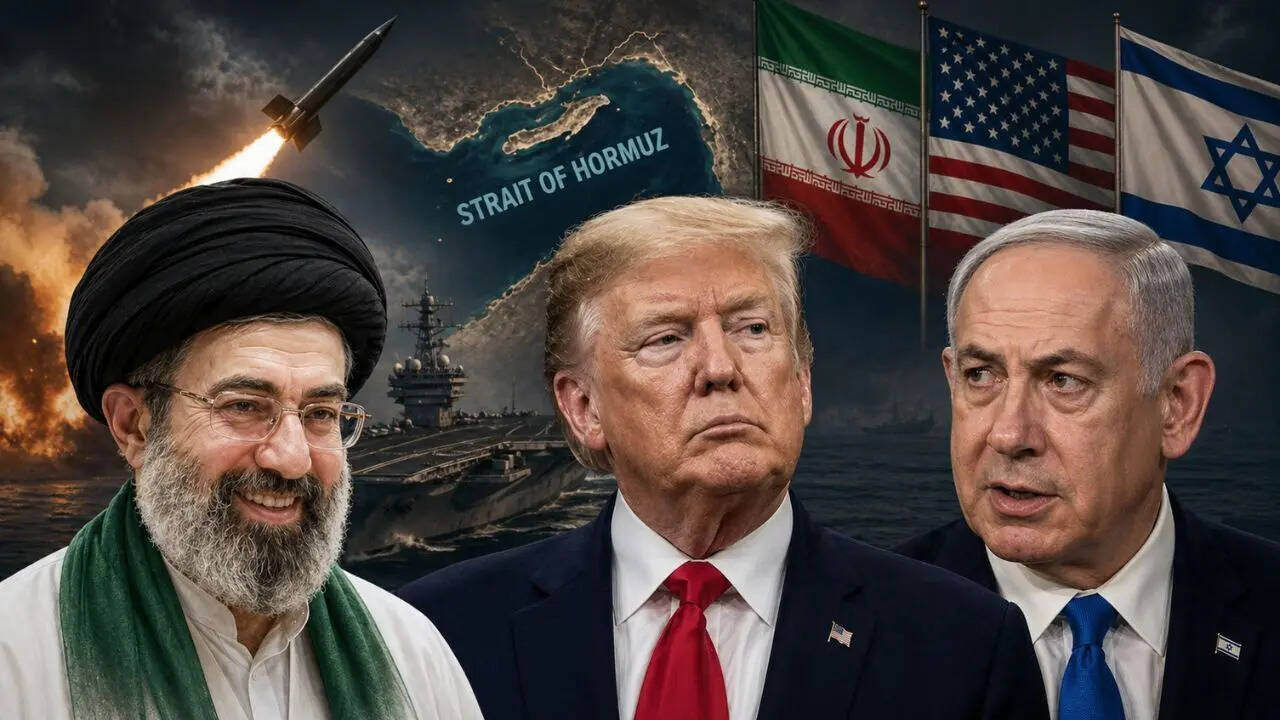
The white smoke rising from Islamabad and Washington signals a provisional end to three months of devastating kinetic warfare between the United States and Iran, but the breakthrough is built on a high-stakes diplomatic gamble. Under the 14-point framework announced by President Donald Trump and Pakistani mediators, both nations have agreed to a permanent ceasefire on all fronts, the immediate lifting of the American naval blockade, and the reopening of the strategic Strait of Hormuz by Friday. Yet, beneath the triumphant social media posts and the promises of tumbling oil prices lies an unsettling truth. The memorandum of understanding scheduled for a formal signing in Switzerland on June 19 is not a final treaty, but a hyper-fragile truce that leaves the most explosive regional triggers completely unresolved.
By rushing to secure a grand diplomatic victory, negotiators have deferred the thorniest issues—including Iran’s advanced uranium enrichment and its regional missile network—to a grueling 60-day window. What state media in Tehran proclaims as a total Western capitulation is viewed by Washington as a strictly conditional, performance-based experiment. This deep structural friction suggests the war has not truly ended. It has merely entered a volatile corporate-style negotiation phase where any minor misstep on the ground could trigger a rapid return to full-scale military conflict.
The Asymmetrical Friction of the 14 Points
The core vulnerability of this agreement stems from the wildly divergent interpretations of the text circulated by Iranian state media and the parameters leaked by Washington officials. Tehran's state-affiliated Mehr News Agency published a 14-point document framing the deal as a sweeping strategic retreat by the United States. According to this version, the agreement requires an immediate end to military operations across all fronts—explicitly including Lebanon—alongside an outright American commitment to withdraw forces from areas surrounding Iran and a promise not to interfere in domestic Iranian politics.
The economic concessions detailed in the Iranian draft are staggering. The text outlines the total suspension of sanctions on Iranian crude oil and petrochemical products, giving Tehran unhindered access to its energy revenues. Furthermore, it details the release of $24 billion in frozen Iranian assets during the upcoming 60-day negotiation period, explicitly stipulating that half of this sum ($12 billion) must be unfrozen and handed over before detailed diplomatic talks even begin. Most ambitiously, the Iranian text calls for the United States and its international allies to present a comprehensive economic reconstruction package for Iran worth at least $300 billion to repair the damage inflicted during the three-month conflict.
Washington presents a radically different narrative. American officials describe a highly conditional framework where front-loaded economic relief is entirely off the table. According to these Western briefings, the lifting of the naval blockade and the rollback of secondary sanctions are strictly performance-based. The United States maintains that Iran will receive no major financial windfalls until it completely decommissions key nuclear sites, destroys or exports its stockpile of highly enriched uranium, and accepts an intrusive international verification regime.
This creates an immediate, dangerous bottleneck. Iran has declared that it will not even enter the room for the 60-day technical negotiations until the naval blockade is gone, oil sanctions are waived, and the first $12 billion tranche is in its accounts. Washington insists that the money flows only after compliance is verified. This represents a classic diplomatic paradox. Both sides are demanding that the other blink first before the real negotiations even begin.
The Lebanon Blind Spot
The most immediate test of this diplomatic architecture will not occur in the Persian Gulf, but along the scorched border of southern Lebanon. For months, the United States has pressed Israel to curtail its intensive military operations against Hezbollah to clear a path for this broader deal with Tehran. President Trump even went as far as publicly blaming Israel for a late-stage delay in the peace talks following an intense airstrike on southern Beirut.
While the agreement mandates an immediate and permanent termination of military operations on all fronts, including Lebanon, it suffers from a fatal structural flaw. The actual combatants in Lebanon are not formal signatories to this document. Israel is not a party to this US-Iran memorandum, and Prime Minister Benjamin Netanyahu has repeatedly stressed that Israel demands total operational freedom to neutralize threats along its northern border. Conversely, the 14-point framework explicitly excludes Iran’s regional militia network and missile programs from the upcoming negotiation agenda, a concession fiercely demanded by Tehran.
This creates a dangerous disconnect. If a localized skirmish erupts between Israeli forces and Hezbollah remnants in Beirut or southern Lebanon, the entire framework could unravel in hours. Tehran could easily classify any continued Israeli military action as an American breach of the permanent ceasefire, using it as a justification to halt the reopening of the Strait of Hormuz or to resume hostile actions against shipping lanes.
The Shell Game of Uranium Enrichment
The nuclear provisions within the preliminary draft are equally precarious. The text notes that Iran reiterates its commitment under the Nuclear Non-Proliferation Treaty not to pursue or construct nuclear weapons. In return, Western officials indicate that Tehran has agreed to freeze the current status of its nuclear program—meaning a halt to expanding its uranium enrichment capacity and a pause on building out new centrifuge cascades—during the 60-day talking window.
The underlying mechanics of this freeze reveal a deeply flawed compromise. A senior Iranian official confirmed that the draft framework allows Iran to dilute its existing highly enriched uranium stocks within its own borders rather than forcing the country to ship the material to a third-party nation like Russia or Oman.
Leaving the physical enriched material inside Iranian borders means Tehran retains its latent breakout capability. The country possesses the engineering knowledge and the infrastructure required to re-enrich that material rapidly if the civil talks collapse.
By leaving the physical infrastructure completely intact and focusing merely on a temporary halt to further expansion, the agreement leaves the core driver of regional instability untouched. The deal relies entirely on a 60-day freeze that can be reversed at a moment's notice by the supreme leadership in Tehran.
The Hardline Backlash on Both Fronts
Even as Pakistani and Qatari diplomats finalize the logistics for the formal signing ceremony in Switzerland, powerful domestic political forces in both Washington and Tehran are actively working to sabotage the process. In Iran, the publication of the 14 points triggered immediate, angry protests from hardline factions and paramilitary elements who view any formal signature alongside American officials as an act of ideological betrayal. While the general staff of Iran's military issued a triumphalist statement claiming they had humiliated and forced the surrender of the "Zionist and American enemies," internal security services remain highly sensitive to accusations of weakness.
In the United States, the backlash is equally fierce. Congressional hawks and defense analysts are raising alarm over the reported $300 billion reconstruction framework and the potential release of billions in frozen assets. Critics argue that providing front-loaded sanctions relief and unlocking frozen funds essentially rewards Tehran for its maritime aggression and its blockade of the Strait of Hormuz over the past three months.
The political space for compromise is exceptionally narrow. President Trump is betting his significant political capital on a swift, high-profile victory that lowers global energy prices and fulfills his signature campaign promise of ending foreign conflicts. However, if the technical negotiations during the 60-day window require visible, permanent American concessions without the total, verifiable dismantling of Iran's nuclear infrastructure, the administration will face intense domestic resistance that could paralyze the implementation of a final treaty.
Market Realities vs Strategic Calculations
Global energy markets reacted swiftly to the peace announcement, with crude prices dropping roughly 4% immediately following the news that the Strait of Hormuz would reopen to international commerce. Shipping firms are already preparing to restart transit through the vital maritime choke point, which handles a significant portion of the world's daily petroleum supply.
This initial market optimism overlooks the complex operational reality on the water. Iranian Foreign Ministry officials have already asserted that Tehran expects to maintain strict control over maritime arrangements in the strait, hinting at potential transit fees, specialized service charges, or mandatory security coordination with the Islamic Revolutionary Guard Corps navy. The United States has insisted on a totally free, unhindered passage of global vessels without any arbitrary tolls or payments.
This friction highlights the core issue plaguing the entire 14-point framework. The document uses broad, ambiguous diplomatic language to paper over fundamental geopolitical disagreements. It achieves a temporary halt to active, kinetic warfare by granting both sides enough room to claim absolute victory to their domestic audiences. But by front-loading the benefits—such as the immediate lifting of the naval blockade and the resumption of commercial shipping—while back-loading the actual costs and verification mechanisms into an unrealistic 60-day window, the agreement sets up both nations for a bitter diplomatic collision.
The coming weeks will reveal whether this framework is the foundation of a lasting regional settlement or merely a brief pause in an ongoing war. If Tehran refuses to allow comprehensive international inspections of its nuclear sites, or if localized violence flares up again in Lebanon, the provisional peace of June 15 will quickly disintegrate, forcing a return to open hostilities in the world's most volatile energy corridor.