The global narrative surrounding Venezuela focuses heavily on the dramatic January capture of Nicolás Maduro by U.S. forces, leaving a vacuum that the international community assumed would automatically fill with democratic reform. Five months into the interim administration of Delcy Rodríguez, that assumption has shattered, revealing an intricate gridlock where Washington prioritizes oil stability over a swift return to the ballot box. Nobel Peace Prize laureate María Corina Machado used her recent address at the Oslo Freedom Forum to issue a stark warning to both the interim regime and its corporate backers, stating that Venezuela cannot be stabilized or governed indefinitely without recognizing the democratic majority. Machado pitched a transition explicitly stripped of surrender or revenge, but her proposal faces an unexpected hurdle: a U.S. administration that appears remarkably content with the status quo.
By offering a path explicitly devoid of political retribution, the Venezuelan opposition is attempting to dismantle the existential fear that keeps the ruling socialist apparatus entrenched. Yet this calculated olive branch highlights a deeper, more uncomfortable reality. The primary obstacle to Venezuelan democracy is no longer just the remnants of the old guard, but a shift in geopolitical priorities that favors predictable state control over unpredictable democratic transitions.
The Price of Stability
When U.S. military forces extracted Maduro to face drug trafficking charges in New York, the political calculus in Caracas shifted overnight. Power devolved to Delcy Rodríguez, the former Vice President who quickly assumed the interim presidency. Rather than pushing for the immediate constitutional requirement of new elections within 30 days, Washington chose a path of economic pragmatism.
The current U.S. administration has found a surprisingly compliant partner in Rodríguez. Eager to preserve her hold on power and avoid the fate of her former boss, she has systematically bent to external demands. The result is an unspoken arrangement. The interim government has aggressively opened up Venezuela’s state-dominated oil and mining sectors to private capital, granting lucrative concessions that Western energy firms have craved for decades.
For Washington, this arrangement solves an immediate energy security puzzle. For the Venezuelan opposition, it represents a betrayal wrapped in the language of stabilization.
The strategy pursued by Machado and Edmundo González Urrutia—the 76-year-old diplomat recognized by international observers as the true winner of the rigged 2024 election—rests on convincing the current regime that survival is possible without total control. Machado’s insistence that negotiation is not an invitation to surrender, but a responsible effort to build a democratic solution, targets the mid-level military commanders and bureaucratic survivalists who keep Rodríguez in power. They need to know they will not face a purge if the palace changes hands.
The Illusion of a Quick Ballot
The constitutional framework of Venezuela dictates that a permanent vacancy in the presidency requires an immediate vote. Instead, five months have passed under a temporary custodian.
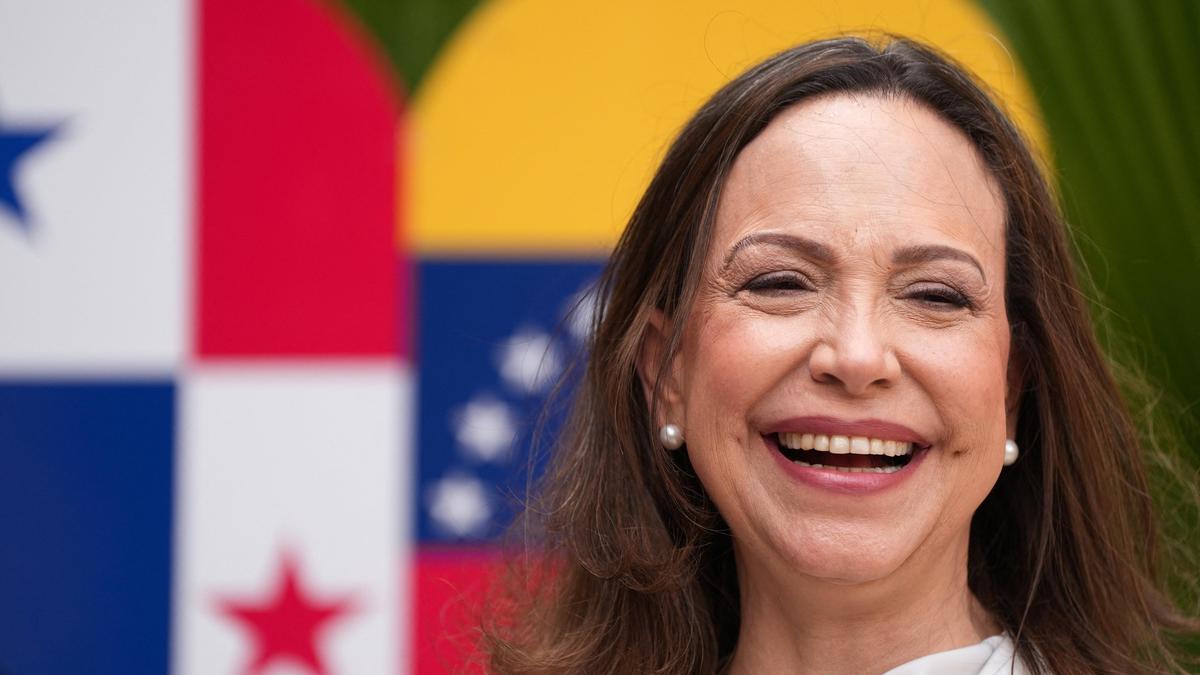
The opposition alliance, recently re-anchored during a high-stakes summit in Panama City, is demanding a fresh vote, but the logistical reality makes an immediate election impossible. Machado herself acknowledges that building a functional democratic process out of the wreckage of the state apparatus will take between seven and nine months of intense preparation.
The checklist for a viable election requires fundamental structural overhauls.
- Replacing the Electoral Authority: The current electoral council remains heavily staffed by figures loyal to the ruling party, capable of disqualifying candidates or manipulating vote tallies at a moment's notice.
- Voter Registry Overhaul: Millions of exiled Venezuelans are effectively disenfranchised by outdated registries and shuttered consulates.
- Candidate Reinstatement: Machado remains officially barred from holding office under administrative decrees that the Rodríguez government refuses to lift.
This timeline creates a dangerous window of vulnerability. The longer the interim government manages the country’s oil wealth while keeping the opposition at arm's length, the more international partners grow accustomed to dealing with an authoritarian technocracy that signs favorable contracts.
+--------------------------------------------------------+
|             THE CARACAS STALEMATE                      |
+--------------------------------------------------------+
|                                                        |
|  [Opposition Movement] --------> Demands Elections     |
|  (Machado / González)            (7-9 Month Roadmap)   |
|                                                        |
|                                                        |
|  [Interim Government]  --------> Offers Oil Assets     |
|  (Delcy Rodríguez)               (Status Quo Levers)   |
|                                                        |
|                                                        |
|  [Washington / Markets] -------> Prioritizes Energy     |
|  (External Arbiters)             (Cooling on Reform)   |
|                                                        |
+--------------------------------------------------------+
Why Washington Cooled on the Opposition
The most glaring shift in the current landscape is the quiet sidelining of the opposition by its historical ally. During the Maduro era, Western capitals routinely feted Venezuelan dissidents. Today, observers close to the state department note a distinct lack of enthusiasm for Machado’s stated goal of returning to Caracas before the end of the year.
A democratic Venezuela led by an uncompromising reformer like Machado introduces variables that global markets dislike. A transparent government would inevitably review oil contracts signed during an interim regime, audit state assets, and potentially freeze operations tainted by corruption or questionable legal foundations. Rodríguez offers a simpler transaction: compliance in exchange for survival.
The opposition's challenge is no longer just defeating a domestic political machine. They must prove to international stakeholders that a transition without revenge is more economically viable over the long term than a brittle, illegitimate dictatorship keeping the peace at gunpoint.
The Internal Pivot
To survive this diplomatic freeze, the domestic pro-democracy movement is forced to change its internal dynamics. For years, the opposition was fractured into competing political parties, frequently paralyzed by personal ambitions and disagreements over strategy. The meeting in Panama signaled an awareness that the old methods are obsolete.
Machado’s current strategy intentionally bypasses traditional party infrastructure, focusing instead on building a broad-based, bottom-up alliance. She has described this movement as an alliance for the people rather than the parties. This approach directly threatens the interim administration because it leverages the one resource Rodríguez cannot buy with oil concessions: genuine domestic legitimacy.
Yet, a photo-op in Panama or a well-received speech in Oslo cannot replace a binding, internal mechanism to force the government’s hand. The opposition has mastered the art of moral clarity, but it still lacks the structural leverage to compel a regime backed by the military and tolerated by foreign capital to step down.
The coming months will test whether an appeal to national reconciliation can fracture the alliance between the interim government and the corporate interests currently funding its survival. Without a clear mechanism to disrupt that financial lifeline, the promise of a transition without revenge remains a blueprint for a house that cannot be built.