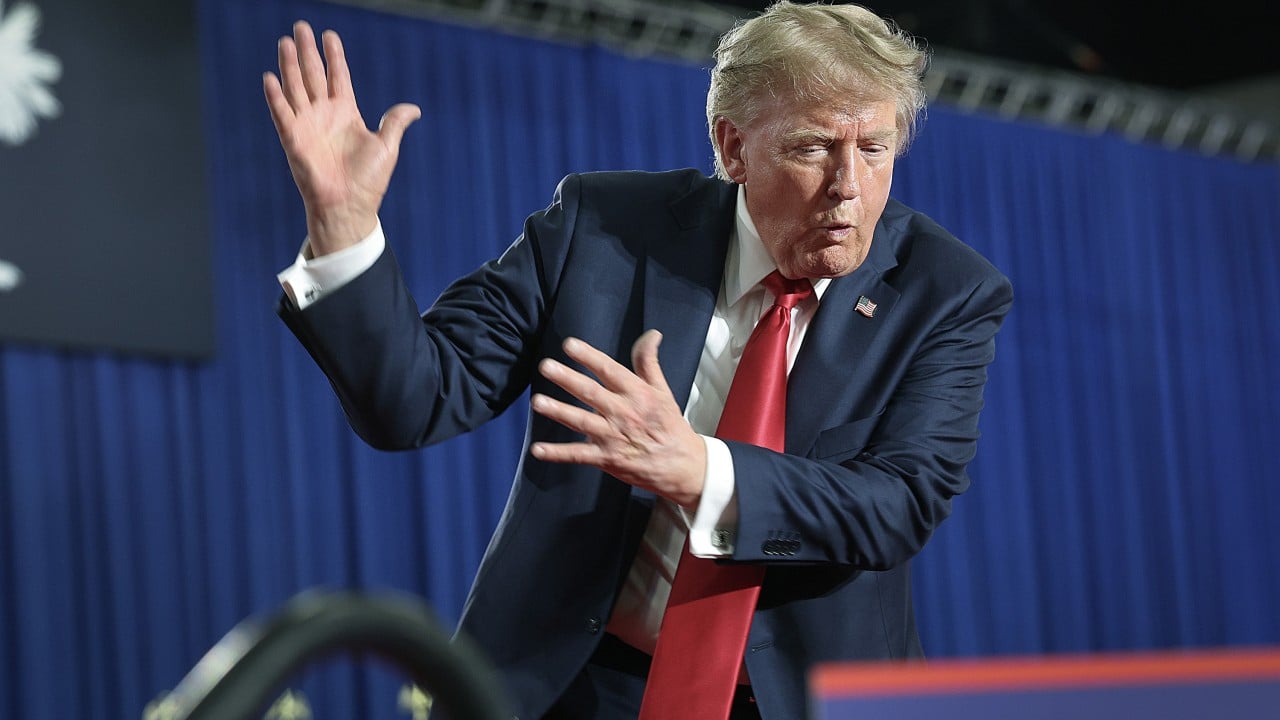
President Donald Trump’s demand that federal regulators punish NBC journalist Kristen Welker marks a dangerous escalation in a systematic campaign to bend broadcast networks to executive will. The conflict erupted after Welker, hosting Meet the Press, described the president's primary election endorsements as having yielded mixed results. For that single assessment, articulated during a local Washington affiliate broadcast, Trump took to social media to brand her a purveyor of purposeful inaccuracy, calling directly upon Federal Communications Commission (FCC) Chairman Brendan Carr to administer a rebuke.
This is not a simple war of words between an aggrieved politician and a television anchor. It represents a calculated administrative strategy designed to make the cost of independent reporting unbearably high. By dragging the machinery of federal oversight into daily editorial disputes, the administration is testing the structural boundaries of the First Amendment.
The Mechanics of Regulatory Retaliation
To understand how an offhand television comment turns into a federal regulatory crisis, one must look at the specific leverage the government holds over television networks. Major networks like NBC do not just produce national programming; they own and operate local broadcast stations that rely on public airwaves. Those local operations require periodic license renewals from the FCC.
When the head of state publicly commands an agency chairman to penalize a network journalist, the threat hangs implicitly over every upcoming license review. We saw this blueprint executed earlier in August, when Disney-owned ABC filed a federal lawsuit accusing the administration of waging an illegal retaliatory campaign. ABC was forced into premature license renewal applications after late-night commentary drew the executive ire.
The FCC was established in 1934 to manage a finite radio frequency spectrum, not to serve as an arbiter of journalistic fairness or political spin. Yet under the current commission leadership, the agency has transformed into an active pressure point. Broadcasters are caught between their legal duty to inform the public and the very real financial peril of administrative obstruction.
The Endorsement Data Battle
At the center of Trump’s fury lies a dispute over numbers. The president insists his primary endorsements boast a near-flawless success rate, citing figures approaching 98 to 100 percent in specific senate and house contests. Network analysts counter that counting uncompetitive safe-seat primaries obscures notable losses suffered by high-profile Trump-backed figures in key primary battles.
In normal political discourse, a disagreement over statistical framing results in a heated exchange on air, a published correction, or a strongly worded letter to the editor. It does not result in an appeal to a federal commissioner for state-sanctioned punishment. By labeling routine analytical disagreement as a threat to national security, the administration shifts the entire paradigm of media accountability.
NBC News responded to the attack with a brief statement defending Welker as one of the best in the profession. Behind closed doors, however, media executives are running risk assessments that go far beyond a single anchor's defense.
The Chilling Effect on Future Coverage
The ultimate objective of targeting high-profile journalists is not necessarily to secure a formal FCC censure—which would face immense constitutional roadblocks in federal court—but to create an environment of self-censorship. When anchors at major networks realize that a two-word adjective can trigger an administrative onslaught, editorial caution naturally follows. Producers begin to question whether covering controversial polling data or analyzing primary losses is worth the impending bureaucratic warfare.
This dynamic strikes at the core of the democratic infrastructure. Independent broadcast journalism relies on the absolute separation of regulatory oversight from political whim. Once public airwave licenses are weaponized to settle scores over political coverage, the free press ceases to function as an independent check on executive power.
The administration’s ongoing clashes with major networks, combined with private legal settlements and early license reviews, signal a permanent shift in how political power interacts with the media. The legal battles playing out in federal courts will ultimately determine whether broadcast regulators can be restrained by the Constitution, or if administrative intimidation becomes the new standard for American journalism.