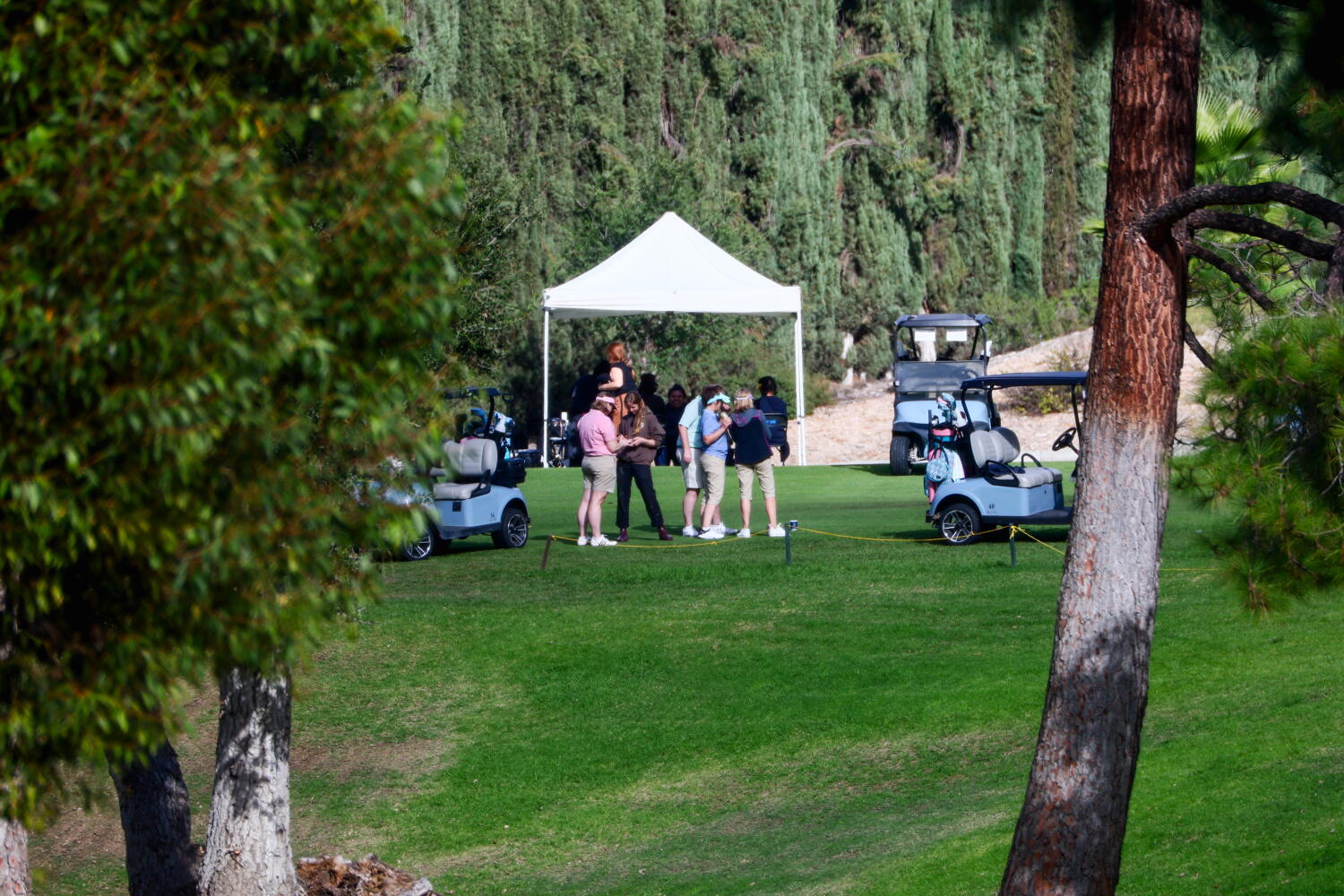
At the edge of Los Angeles, a retired Woodland Hills golf course has become the frontline in a high-stakes standoff between billionaire real estate interests and the survival of Southern California's last urban mountain lions. On one side stand developers pushing massive luxury housing and assisted-living complexes onto the defunct Warner Center and Woodland Hills Country Club properties. On the other stand wildlife biologists, conservationists, and local residents arguing that paving over these quiet, manicured fairways will sever the final biological stepping stones connecting the Santa Monica Mountains to the Simi Hills.
The stakes extend far beyond a single neighborhood rezoning dispute. For decades, Los Angeles has treated closed golf courses as blank slates for urban infill, a seemingly logical way to ease a crushing housing shortage without sprawling into pristine wilderness. Yet telemetry data from the National Park Service reveals a stark biological reality that land-use planners rarely advertise. To an apex predator hemmed in by eight-lane freeways, an unlit, irrigated golf course is not a recreational relic—it is an oasis of cover, water, and mule deer. Erase those corridors, and you accelerate the genetic collapse of an already isolated big cat population. You might also find this connected article useful: Inside the Federal Power Grab Keeping Michigan Coal Plants Burning.
How a Fairway Becomes a Lifeline
Most people picture mountain lions prowling deep, untamed canyons far removed from suburban cul-de-sacs. In the western Santa Monica Mountains, that luxury vanished generations ago. Bounded by the Pacific Ocean to the south, the Oxnard Plain to the west, the dense urban grid of Los Angeles to the east, and the Ventura Freeway (US-101) to the north, the region's cougars live inside an ecological island.
When a young male mountain lion reaches dispersal age—typically between 12 and 18 months—he must leave his mother's territory to find his own range and avoid being killed by his father. Without safe passage across the valley floor, these young males turn inward, mating with their own mothers and sisters. National Park Service biologists have documented severe inbreeding depression in the Santa Monica Mountains population, resulting in kinked tails, low sperm count, and congenital heart defects that threaten the cats with localized extinction within decades. As extensively documented in detailed articles by The Guardian, the effects are worth noting.
This is where the Woodland Hills golf course enters the equation. Situated in the southwestern San Fernando Valley, just north of the Santa Monica Mountains and within striking distance of the Simi Hills, the open acreage functions as a critical buffer zone.
- Nocturnal cover: Mature eucalyptus groves, ornamental oaks, and dense perimeter landscaping allow big cats to move unseen during twilight and night hours.
- Prey concentration: Irrigated turf attracts mule deer, coyotes, raccoons, and rabbits, providing reliable calories without forcing lions into residential backyards.
- Acoustic shielding: Wide expanses of grass dampen the sensory overload of suburban traffic, lowering stress hormones in transient wildlife.
Developers frequently dismiss golf courses as artificial monocultures with negligible ecological value. While it is true that heavily fertilized turf lacks the biodiversity of native coastal sage scrub, that argument misses how wildlife actually navigates fragmented cities. A mountain lion does not care whether a corridor is certified native habitat; it cares whether it can cross three miles of suburbia without getting hit by a delivery van or cornered by a pack of domestic dogs.
The Economics of Disappearing Open Space
To understand why Woodland Hills has erupted into such a fierce political fight, you have to follow the balance sheets of Southern California golf clubs. Across Los Angeles County, private and semi-private courses are sitting on land worth exponentially more than greens fees and membership dues can ever generate.
Water costs in California have climbed steadily, driven by multi-year droughts and stricter groundwater management rules. Maintaining 100 to 150 acres of lush turf in the San Fernando Valley requires millions of gallons of water annually, alongside rising labor costs and property taxes. Meanwhile, the surrounding real estate market rewards high-density residential and senior-living projects with massive returns on investment.
For a landowner or private equity group, holding onto a struggling golf course makes zero financial sense when zoning variances can unlock hundreds of millions of dollars in development value.
| Factor | Operating Golf Course | Luxury Mixed-Use Redevelopment |
|---|---|---|
| Annual Water Demand | High (continuous turf irrigation) | Moderate to High (landscaping and high-density occupancy) |
| Impervious Surface Cover | Less than 10 percent | 60 to 85 percent |
| Nocturnal Wildlife Permeability | High (open sightlines, zero nighttime human traffic) | Near Zero (security fencing, 24-hour lighting, vehicle traffic) |
| Municipal Tax Revenue | Low to Moderate | Very High |
City officials face an equally lopsided incentive structure. Los Angeles is under intense state pressure to meet aggressive housing quotas, particularly in affluent, job-rich neighborhoods like Warner Center and Woodland Hills that have historically resisted dense construction. Approving a sprawling housing complex on an underutilized golf course checks multiple political boxes at once. It generates construction jobs, boosts property tax rolls, avoids demolishing existing single-family homes, and allows politicians to claim victory on housing affordability.
Wildlife corridors do not pay property taxes. They do not fund municipal pensions or campaign committees. When a city planning commission weighs a concrete housing target against the abstract probability of a mountain lion crossing a fairway at two in the morning, the developer wins almost every time.
The Illusion of the Single Wildlife Crossing
Public discourse around Los Angeles mountain lions has largely centered on the Wallis Annenberg Wildlife Crossing at Liberty Canyon in Agoura Hills—the massive vegetated overpass spanning the 101 Freeway. While that project represents a historic engineering triumph, its high-profile construction has inadvertently created a dangerous misconception among policymakers and the public.
Many assume that once the Liberty Canyon bridge opens, the mountain lion connectivity problem is solved. It is not.
A wildlife overpass is only as effective as the funnel of open space feeding into both ends of it. If residential subdivisions, commercial complexes, and walled senior communities systematically swallow the golf courses, equestrian properties, and vacant hillsides along the northern and southern approaches to the Santa Monica Mountains, animals will never reach the bridge in the first place.
Furthermore, a single crossing point creates a predictable bottleneck. Dominant adult males aggressively defend territories around choke points, meaning dispersing juveniles and females still rely on secondary, permeability-based routes through the western San Fernando Valley—including Woodland Hills—to bypass established territories. Relying on one multi-million-dollar bridge while allowing developers to pave every remaining green wedge in the foothills is like building a state-of-the-art airport runway and bulldozing all the roads leading to the terminal.
What Developers Get Right and Where the Argument Breaks Down
Dismissing the development side as pure greed ignores the very real pressures reshaping California cities. Los Angeles genuinely needs housing, including assisted-living facilities for a rapidly aging population. Building infill housing inside existing urban boundaries is widely recognized by environmental planners as far superior to bulldozing untouched chaparral on the urban fringe. In theory, repurposing a water-guzzling golf course aligns with smart-growth principles.
The flaw lies in treating every golf course as identical. An 18-hole course hemmed in on all four sides by dense commercial boulevards, miles from the nearest mountain range, offers minimal value to wide-ranging mammals. Converting that land into apartments and neighborhood parks is sound urban planning.
Woodland Hills sits in an entirely different geographic reality. Located directly against the foothills of the Santa Monica Mountains, it acts as a biological hinge. When developers propose high-density structures, perimeter security walls, and bright nighttime lighting on this specific footprint, they are not merely building infill housing—they are slamming shut an ecological valve.
Developers often attempt to bridge this gap by offering token open-space set-asides: a manicured walking trail along the property edge, a pocket park, or a narrow strip of native landscaping wedged between parking structures. Biologists call these "ecological traps." Narrow greenbelts funnel wildlife directly into human-dominated zones where artificial lighting disrupts nocturnal navigation, rodenticides poison the food chain from the bottom up, and domestic pets spark violent encounters. A 50-foot landscaped buffer next to a four-story apartment building is an amenity for joggers, not a corridor for a 130-pound predator.
The Regulatory Blind Spot in California Environmental Law
How do projects on critical wildlife linkages clear environmental review in a state famous for strict ecological regulations? The answer sits inside the mechanics of the California Environmental Quality Act (CEQA).
Under CEQA, developers hire private environmental consulting firms to draft Environmental Impact Reports (EIRs). While these consultants must follow state guidelines, they are paid directly by the project applicant, creating an inherent structural bias toward finding that impacts can be "mitigated to a level of insignificance."
In practice, biological surveys conducted for EIRs frequently rely on brief, daytime site visits or limited camera-trap deployments that fail to capture how transient apex predators use a property across different seasons or drought cycles. A mountain lion might pass through a Woodland Hills property only four or five times a year—yet those handful of crossings could represent the exact genetic exchange needed to keep a subpopulation viable. If a consultant's cameras miss those rare nocturnal transits, the resulting report concludes that the site is not an active wildlife corridor.
Even when state agencies like the California Department of Fish and Wildlife (CDFW) submit formal comment letters warning that a project will sever regional connectivity, city councils retain the legal authority to override those warnings by adopting a "Statement of Overriding Considerations." Essentially, local politicians can legally acknowledge that a development will cause severe, irreversible harm to regional wildlife, and approve it anyway on the grounds that housing or economic growth outweighs the ecological loss.
The Poison Cascade Nobody Talks About
Concrete and fencing are the visible threats to Woodland Hills wildlife, but the invisible threat may be just as lethal. Whenever dense residential and commercial complexes replace open space, the use of second-generation anticoagulant rodenticides surges.
Property managers deploy black plastic bait boxes around new buildings to control rats and mice. Rodents consume the poison, become sluggish, and wander out into the open, where they are easily caught by owls, hawks, bobcats, coyotes, and mountain lions. The toxins bioaccumulate in the predators' livers, destroying their ability to clot blood and compromising their immune systems.
National Park Service necropsies have found anticoagulant rodenticides in nearly every mountain lion tested in the Santa Monica Mountains. Worse, exposure to these poisons weakens the cats' immune response to notoedric mange—a parasitic skin disease that has killed multiple radio-collared cougars in the region, including famous animals like P-22.
Expanding dense development deeper into the Woodland Hills foothills guarantees an exponential rise in bait boxes, outdoor lighting, and vehicle traffic. Even if a mountain lion manages to thread the needle past new apartment buildings, the chemical footprint of that development lingers in its bloodstream.
A Blueprint for Genuine Coexistence
Stopping every development proposal in Los Angeles is neither realistic nor legally sustainable, particularly when private landowners hold vested property rights. However, allowing unmitigated build-out on critical foothill parcels is an irreversible mistake. If Los Angeles wants to keep mountain lions in its backyard while addressing its housing crunch, land-use strategy has to shift from reactive battles to proactive acquisition and strict design mandates.
First, municipal and state conservation funds must prioritize purchasing conservation easements or full title to strategic foothill golf courses before rezoning applications hit the planning desk. Organizations like the Santa Monica Mountains Conservancy have successfully used state bond money to acquire key parcels, converting defunct fairways into restored native oak woodlands and public open space. Once a developer invests millions in architectural plans and entitlements, the price tag for conservation skyrockets out of reach.
Second, any development approved within designated wildlife linkage zones must be held to binding, science-backed permeability standards rather than voluntary guidelines:
- Dark-sky lighting mandates: All exterior fixtures must be fully shielded, downward-facing, and restricted to warm-spectrum wavelengths that do not blind nocturnal mammals.
- Rodenticide bans: Homeowner associations and commercial property managers must be legally barred from using anticoagulant poisons in their CC&Rs, relying instead on structural exclusion and mechanical traps.
- Contiguous dark corridors: Instead of fragmented pocket parks, open space must be consolidated along the natural topographical contour of the foothills, completely free of fences, roads, and human trails after dusk.
Third, city planners must decouple housing targets from ecologically sensitive foothill edges. The San Fernando Valley contains thousands of acres of underutilized strip malls, surface parking lots, and aging commercial corridors along Ventura Boulevard and Topanga Canyon Boulevard that are already completely urbanized. Concentrating high-density housing on paved commercial arteries delivers far more units near transit and jobs without trading away irreplaceable wildlife habitat.
The fight over the Woodland Hills golf course is a preview of a battle that will play out across dozens of suburban edges over the next decade. Once concrete covers a wildlife corridor, no amount of mitigation money can peel it back, leaving Los Angeles to decide whether it wants to remain the only megacity on Earth where big cats still roam wild—or just another concrete sprawl mourning what it paved over.