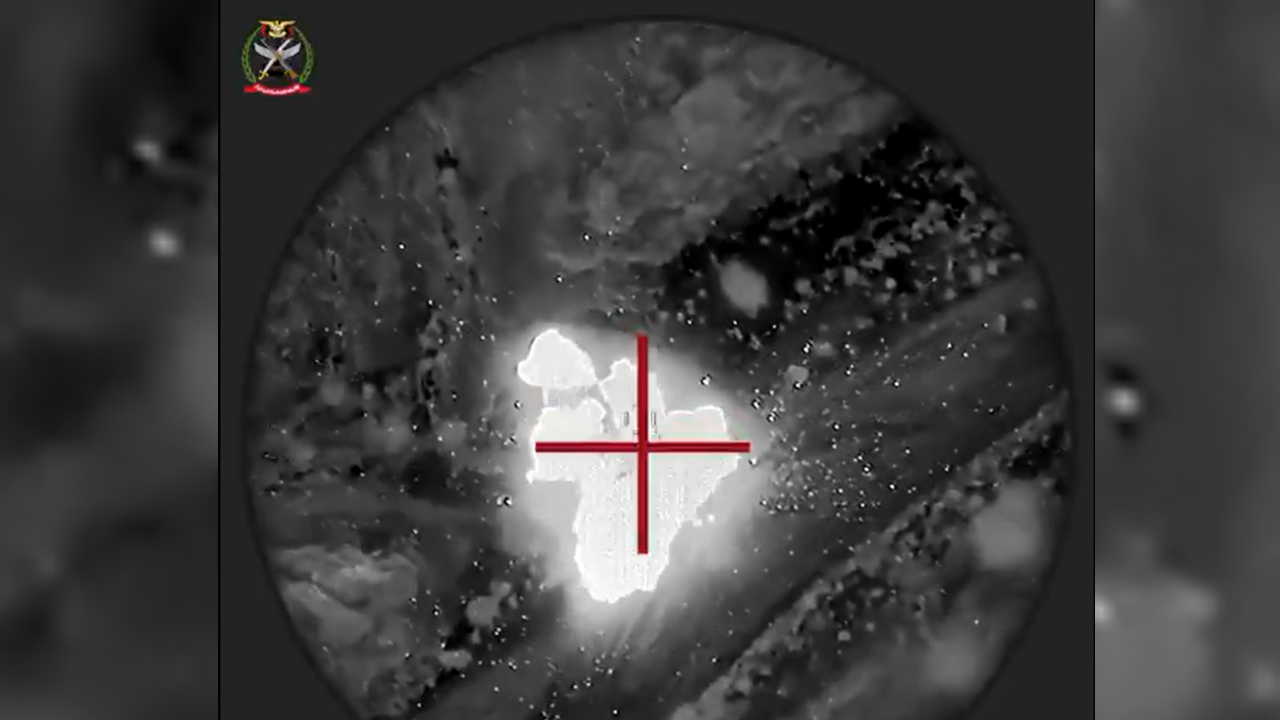
Yemeni government forces claimed they killed or neutralized roughly 700 Houthi fighters across 1,250 strikes within a single 24-hour window during the autumn escalation of Operation Dawn of Yemen. No independent observer on the ground verified that single-day body count, and in modern warfare, massive strike tallies paired with round-number casualty claims rarely survive contact with physical reality.
Anyone who has covered Middle East battlefields for two decades knows the rhythm of wartime press releases. A military spokesman steps up or posts a bulletin, lists hundreds or thousands of strikes, attaches a neat tally of "neutralized" militants, and frames the day as a turning point. Sometimes the numbers reflect genuine artillery barrages, drone sorties, and airstrikes across multiple governorates. Often they bundle every mortar shell, rocket volley, and reconnaissance-to-strike sortie into a single headline metric designed for morale and diplomatic leverage.
How a Single-Day Strike Claim Is Built
War math has its own rules, and they seldom match what a forensic team would find in a crater.
When Yemeni armed forces aligned with the Presidential Leadership Council report 1,250 strikes in 24 hours, they are not usually describing 1,250 separate manned fighter-jet drops. In multi-front campaigns spanning areas like Taiz, Marib, Al-Jawf, Al-Bayda, and Lahj, military spokesmen routinely aggregate airstrikes, armed drone hits, multiple-launch rocket salvos, and field artillery rounds under one umbrella count. One battery firing dozens of shells at a ridge line can register as dozens of individual engagements on a tally sheet.
When a command counts every artillery round and rocket volley alongside air and drone strikes, a busy day on a fractured front quickly turns into a four-digit statistic.
Casualty figures face an even steeper credibility hurdle. Frontline commanders rarely have time or line-of-sight to count bodies inside fortified trenches, wadis, or bombed buildings while under return fire. Estimates often blend confirmed kills with wounded fighters, unverified intelligence reports, and pre-existing attrition assumptions.
Consider a hypothetical example of how an overstatement happens without anyone sitting in a room inventing a lie from scratch. Suppose a battalion calls in artillery and drones on three suspected Houthi assembly points, spots ten fighters running toward cover, and hears over radio chatter that a truck was hit. By the time raw field reports pass through regional commands to a central media desk, ten suspected hits can morph into dozens of casualties—and if multiple fronts submit overlapping updates, the totals balloon fast.
Why These Numbers Matter Right Now
Claims of 700 dead fighters in a day do not land in a vacuum. They arrive amid the sharpest unraveling of Yemen's relative calm since the 2022 truce collapsed in July 2026.
Fighting has spilled across governorates and dragged regional powers deeper back into the fray. Houthi forces have pushed hard along western and southern axes, contested key routes around Taiz, and launched ballistic missiles, cruise missiles, and drones toward Saudi territory—striking infrastructure, airports, and high-profile sites in Riyadh while prompting Saudi-led coalition air strikes inside Yemen. At the same time, the broader regional crisis tied to the 2026 Iran war and shipping pressures around the Bab al-Mandab Strait and Strait of Hormuz has turned every local clash into a bargaining chip.
In that environment, inflated or unverified casualty claims serve three clear purposes:
- Domestic and allied reassurance: High strike and kill counts signal to backers and domestic audiences that government forces are hitting back hard rather than merely absorbing blows.
- Psychological pressure: Announcing heavy losses aims to rattle Houthi ranks, discourage reinforcements, and bolster public appeals for defections or surrender.
- Negotiating posture: Showing momentum on paper helps faction leaders argue they hold leverage whenever external mediators push for talks.
What High Strike Counts Miss on the Ground
Even if every single strike in a 1,250-strike claim hit a legitimate military target, sheer volume does not equal strategic collapse.
Over more than a decade of war, the Houthis have proven remarkably adept at absorbing punishment and fighting a dispersed, adaptive war. They dig deep into mountainous terrain, disperse launchers and small units, rely on mobile crews rather than static bases, and replace losses through recruitment and mobilization networks. Heavy bombardment can disrupt supply lines, destroy vehicles, and force tactical pauses, yet a movement built on ideological discipline and rugged geography rarely folds from a single 24-hour barrage.
| Battlefield Metric | What Spokesmen Emphasize | What Analysts Actually Watch |
|---|---|---|
| Daily Strike Count | Raw volume of air, drone, rocket, and artillery hits | Whether strikes degraded specific supply roads, launchers, or command nodes |
| Fighter Casualties | Large daily "neutralized" totals | Verified territorial shifts, unit cohesion, and frontline reinforcement rates |
| Equipment Losses | Vehicles and depots damaged or destroyed | Remaining missile, drone, and rocket launch capacity against nearby fronts and Saudi targets |
| Civilian Impact | Assertions of precision and restraint | Displacement waves, hospital strain, and aid access blocked by active shelling |
There is also a human cost that big military tallies obscure. Every surge in bombardment and cross-border retaliation brings fresh displacement, shuttered clinics, and tighter bottlenecks for relief agencies already struggling with severe funding gaps and hazardous routes. When headlines focus on 700 dead fighters in a day, civilian suffering and hundreds of thousands of newly uprooted people slip toward the margins.
How to Read Wartime Claims Without Getting Played
Skepticism does not mean dismissing every government statement out of hand. Militaries do conduct large operations, and fighters do die in heavy exchanges. The mistake is treating an unverified press claim as settled fact.
When reading any report of hundreds of strikes and hundreds of casualties in a single day, look for corroboration rather than drama. Check whether independent monitors, satellite imagery, local residents, or rival accounts confirm actual movement along front lines—such as a contested ridge changing hands, a supply road opening, or a major camp falling—because territory and verified logistics tell you far more than a press release's body count.
Watch the pattern over weeks rather than a single day. A genuine shift in battlefield momentum shows up in sustained pressure, altered troop deployments, and measurable changes in missile or ground tempo, not in a lone 24-hour number that vanishes from the story the next morning.