The realization of a cultural monument relies less on symbolic momentum than on rigorous capital formation, logistical execution, and spatial programming. When community infrastructure transitions from advocacy to physical execution, the governing challenge shifts from mobilizing public awareness to managing project finance, site development liabilities, and long-term operational sustainability. The commencement of the National Juneteenth Museum in Fort Worth, timed with the centennial birthday of civil rights activist Opal Lee, illustrates the mechanics of institutionalizing grassroots advocacy into a permanent civic asset.
Decades of campaigning by Lee successfully altered federal policy standards, culminating in the formal codification of Juneteenth as a national holiday. However, legislative recognition represents a policy milestone rather than an economic endowment. The transition from a distributed social movement to a centralized brick-and-mortar institution requires a structured capital campaign, rigorous stakeholder alignment, and a strategic real estate footprint. Read more on a connected issue: this related article.
The project's financial architecture centers on a targeted capital accumulation model. Operating within Fort Worth’s historic Southside—a neighborhood historically characterized by rich cultural commerce and subsequent economic shifts—the development functions as an urban renewal catalyst. Capital requirements for cultural institutions of this scale typically demand diversified funding streams, balancing philanthropic contributions, corporate sponsorships, and public sector grants. Project leadership established a capital baseline with a substantial fundraising threshold, securing over fifty million dollars against a broader seventy-million-dollar target before breaking ground. This funding strategy mitigates immediate cash flow vulnerabilities and ensures that construction phases align with verified liquidity rather than speculative projections.
Site selection dictates long-term viability. The choice of the former Southside Community Center site anchors the museum within a historical locus of civic engagement, maintaining continuity with the neighborhood's past utilization as a community hub and polling location. Demolition of the aging structure serves a dual operational purpose: clearing the physical footprint for modern structural engineering while synchronizing programmatic milestones with high-visibility public events to maintain donor engagement and media momentum. More reporting by The Washington Post explores similar views on the subject.
The physical design of the institution addresses a functional mandate: housing history while generating ongoing economic velocity. Unlike traditional archival facilities, modern cultural centers must integrate multi-use spaces that support educational programming, community events, and economic incubation. The strategic integration of commercial and cultural programming addresses the structural deficit that affects many single-purpose museums. By designing the facility to function as an epicenter for economic opportunity alongside historical preservation, the institution creates a sustainable revenue model that reduces reliance on volatile endowment returns or annual philanthropic inflows.
Risk management remains central to the project lifecycle. Cultural developments face distinct vulnerabilities, including construction inflation, supply chain constraints, and post-opening operational deficits. Mitigating these variables requires disciplined phase gating, wherein subsequent construction tiers remain contingent upon strict budget adherence and milestone verification. Furthermore, community stakeholder integration ensures that the institution remains responsive to the demographic it represents, protecting against the risk of cultural displacement that often accompanies neighborhood revitalization.
Establish an integrated capital monitoring framework. Track incoming philanthropic disbursements against projected construction milestones on a monthly cadence, establishing strict liquidity buffers to absorb potential supply chain variances before they impact structural completion timelines.
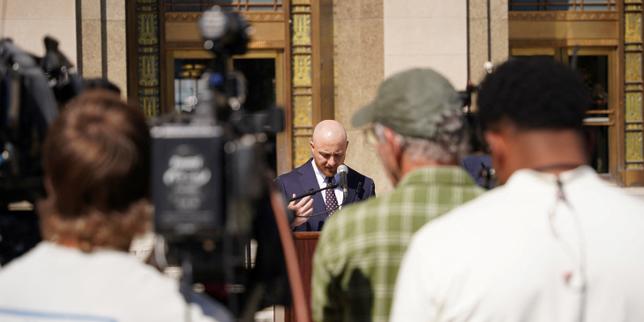
Opal Lee celebrates 100th birthday, marks beginning of construction of Juneteenth museum
This video provides a direct look at the groundbreaking ceremony and community events held in Fort Worth for Opal Lee's centennial milestone.