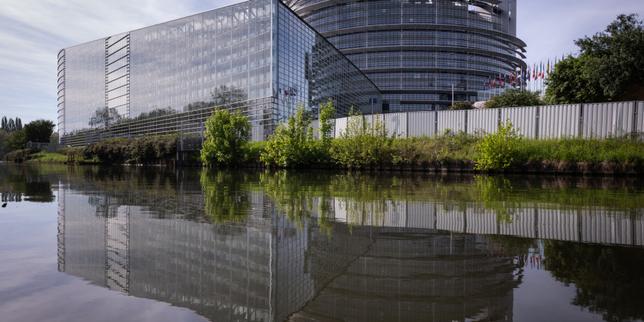
When controversial exhibits make it past administrative screening inside transnational legislative buildings, you know the battle over fundamental rights has shifted to the corridors. A recent display inside the European Parliament in Strasbourg pushed the limits of institutional neutrality, triggering an immediate and fierce pushback from progressive lawmakers who refuse to let anti-choice lobbying masquerade as objective science.
Left-wing, green, and social-democratic groups didn't just grumble in private. They mobilized fast, firing off formal letters to parliamentary leadership demanding the immediate removal of content they argue violates the core values of the European Union. Building on this topic, you can also read: What the Latest Kabul Airport Attack Sentencing Actually Means.
Inside the Strasbourg Controversy
The exhibition, promoted by conservative and anti-choice networks such as the Italian organization Pro Vita & Famiglia, arrived in the parliamentary building under the guise of an educational project focusing on human development. But lawmakers quickly realized the framing was deeply ideological. Panels advanced the assertion that life begins at conception, wrapping a political agenda in pseudo-scientific language designed to undermine the legal right to abortion.
For critics, the location matters just as much as the message. When an institution like the European Parliament grants physical space to an event, it implicitly lends credibility to the content. Analysts at Associated Press have shared their thoughts on this situation.
Prominent figures like Manon Aubry for The Left, alongside representatives from the Greens and the Socialists and Democrats, drew a hard line. They pointed out that housing such displays inside a house of European democracy turns the building into a platform for rights rollbacks. They took their case straight to Parliament President Roberta Metsola, demanding accountability for how the authorization cleared administrative hurdles in the first place.
The Loophole of Institutional Approvals
How do partisan campaigns secure exhibition spaces in a building meant to represent all citizens? That is the question keeping legal scholars and ethics committees busy.
The application process for cultural events inside the European Parliament relies on sponsorships by individual members of European Parliament. A supportive MEP can sponsor an external organization's request, bypassing tighter internal scrutiny. Once stamped, the event gains legitimacy, utilizing public resources to showcase messaging that often directly contradicts resolutions passed by the very same assembly.
The European Parliament has voted repeatedly to enshrine reproductive freedom as a fundamental human right. Seeing an opposing campaign hosted under its own roof exposes a glaring disconnect between legislative resolutions and administrative oversight. Critics argue that administrative inertia shouldn't serve as a backdoor for culture-war tactics imported from national battlegrounds into the heart of Brussels and Strasbourg.
Why This Fight Matters Now
Reproductive rights across Europe are far from secure, despite public perception. While some nations have moved to constitutionalize abortion access, others face intense pressure from organized conservative lobbies backed by well-funded international networks.
When groups target European institutions, they aren't just looking for local press. They're trying to shift the continental Overton window. Normalizing anti-choice rhetoric in official European spaces is a deliberate strategy to test institutional boundaries and soften resistance.
Left-wing coalitions understand this playbook well. That's why their reaction was swift and uncompromising. They know that once an exception is made for one campaign, the floodgates open for continuous erosion of institutional neutrality.
The controversy also puts parliamentary leadership under an uncomfortable microscope. President Metsola, whose personal stance against abortion is well-documented, faces intense pressure to prove she can manage the House fairly without letting personal convictions or administrative loopholes compromise the rights safeguarded by EU treaties.
Neutrality isn't about giving equal airtime to those who want to strip away bodily autonomy. It's about protecting the baseline framework of human rights that the European project was built to defend. Until internal vetting processes tighten up, expect similar clashes every time outside actors try to turn legislative hallways into ideological battlefields.
Anti-abortion exhibit at the European Parliament
This video provides an on-the-ground look at the controversy surrounding the anti-abortion display inside the European Parliament and captures the immediate reactions from progressive lawmakers.


