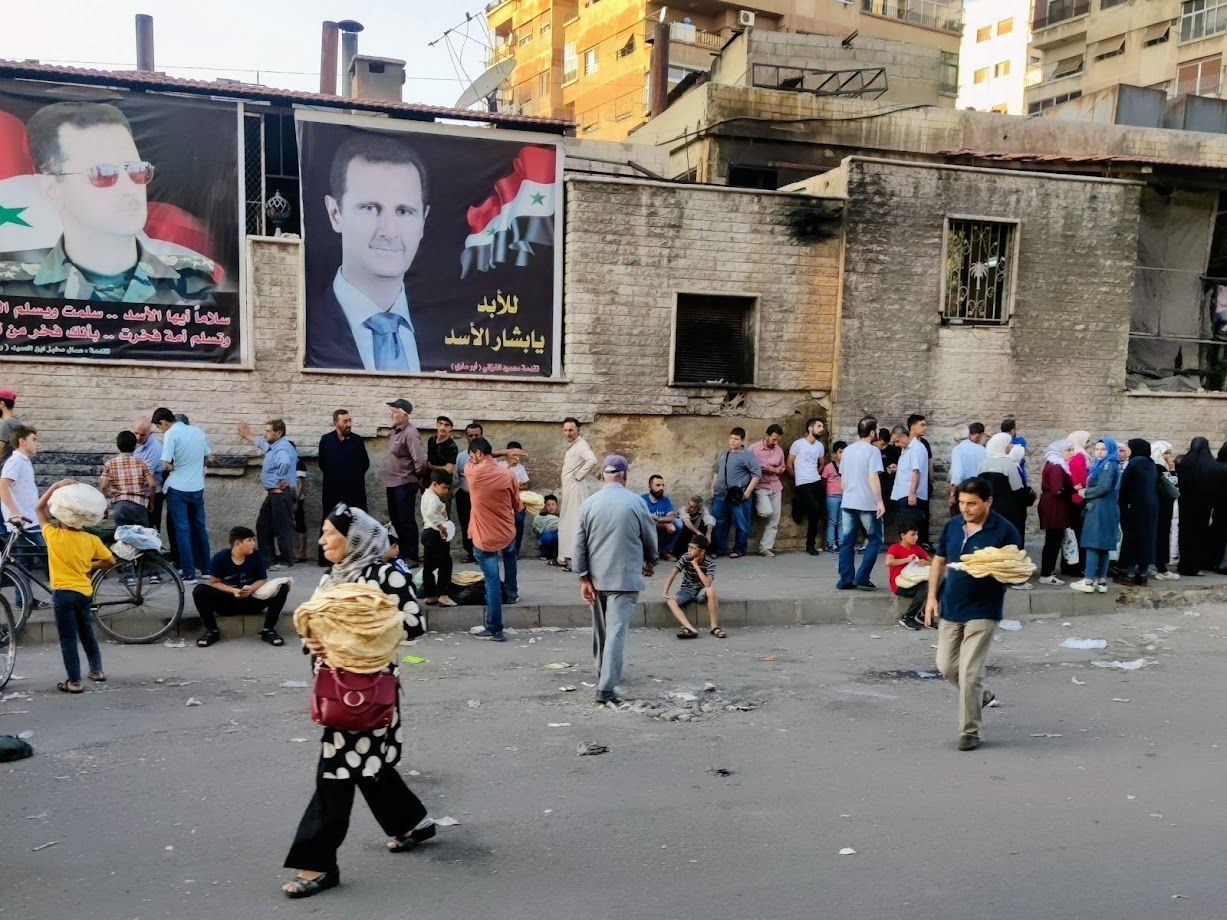
The air in Ahmedabad doesn’t just sit. It presses. It is a physical weight, a humid blanket that smells of dust and exhaust, and on a Tuesday in mid-May, it feels like it might actually catch fire.
Anil is thirty-four. He delivers packages on a motorcycle that has seen better decades. By 2:00 PM, the metal of his handlebars is hot enough to raise blisters. He wipes a grimy sleeve across his forehead, but the sweat is evaporating before it can even cool his skin. He is living through a statistical anomaly that has become a daily routine. He is the human face of a thermal crisis that the world is only just beginning to name.
When the Natural Resources Defence Council (NRDC) prepares to convene its second Global Heat and Cooling Forum in India, they aren't just talking about thermometers. They are talking about Anil. They are talking about the millions of people trapped in an "urban heat island," a phenomenon where concrete and asphalt soak up the sun’s rage all day and bleed it back into the night air.
The stakes are often framed in degrees Celsius, but the reality is measured in heartbeats. Heat is a silent killer because it doesn't leave a trail of broken buildings like a hurricane. It simply waits for the body to give up.
The Geometry of a Warming World
Most of us view cooling as a luxury—a hum in the background of a modern office. In reality, cooling is a fundamental requirement for human survival in a changing climate. But here is the paradox that the forum aims to dismantle: the more we cool ourselves using traditional methods, the hotter we make the planet.
Consider the standard air conditioning unit. It works by moving heat from inside a room to the outside. On a grand scale, we are effectively trying to air-condition the indoors by setting the outdoors on fire. The refrigerants used in these machines, specifically hydrofluorocarbons (HFCs), are thousands of times more potent at trapping heat than carbon dioxide.
We are caught in a feedback loop. We get hot, we turn on the AC, the AC leaks chemicals and guzzles coal-fired electricity, the planet gets hotter, and we reach for the remote again.
Breaking this cycle requires more than just better machines; it requires a complete reimagining of how we build the places where we live and work. India has become the global laboratory for this experiment. Because the country faces some of the most extreme heat on Earth, it is also the place where the most radical solutions are being tested.
Lessons from the Mud and the Sky
Long before the first compressor was ever built, people knew how to stay cool. They used thick walls of mud and stone that acted as thermal sponges. They built courtyards that pulled cool air from the ground and vented hot air through the roof.
We forgot these lessons in our rush toward glass skyscrapers and concrete blocks. We built cities that act like ovens. Now, organizations like the NRDC are working with local governments to reintroduce "cool roofs." It sounds deceptively simple: you paint a roof white or apply a reflective coating.
But the results are staggering. A white roof can stay 30°C cooler than a traditional black tar roof in the midday sun. For someone like Anil, coming home to a small room under a reflective roof means the difference between a night of fitful, feverish sleep and actual rest. It is a low-tech solution to a high-stakes problem.
But paint isn't enough. The Global Heat and Cooling Forum is leaning into the "Cooling Action Plan," a policy framework that India pioneered and that other nations are now desperate to copy. This isn't just about comfort. It is about the cold chain—the invisible network of refrigerated trucks and warehouses that keeps vaccines from spoiling and food from rotting.
Think about a farmer in rural Maharashtra. Without a reliable way to keep his produce cold, he has to sell his crops for pennies the moment they are harvested. If he waits a day, they wilt. If he had access to sustainable, solar-powered cooling, his economic reality would shift overnight. This is where business meets survival.
The Invisible Divide
There is a growing "cooling gap" that mirrors the wealth gap. If you are wealthy, heat is an inconvenience you solve with a button. If you are poor, heat is an inescapable predator.
During the upcoming forum, experts aren't just looking at the engineering of fans and chillers. They are looking at equity. They are asking why the poorest neighborhoods always have the fewest trees and the most asphalt. They are looking at how heat affects a child’s ability to learn in a classroom where the air is a stagnant 40°C.
Logic dictates that we cannot simply give everyone on Earth a 20th-century air conditioner. The grid would collapse. The atmosphere would buckle. Instead, the focus has shifted to "district cooling"—imagine a central plant that sends chilled water through underground pipes to cool an entire neighborhood, much like a city-wide radiator system. It is 40% more efficient than individual units. It turns cooling into a public utility rather than a private luxury.
The Fever Must Break
The data is clear, even if it is uncomfortable to read. The last decade has seen record after record shattered. We are no longer talking about "global warming" as a future threat; we are talking about a permanent fever.
The NRDC’s gathering in India serves as a war room for this crisis. They are bringing together the people who design the refrigerants, the people who write the building codes, and the people who fund the infrastructure. They are trying to solve a puzzle where every piece is moving.
We often talk about the environment as something "out there"—the polar bears, the rainforests, the melting glaciers. But the environment is also the hallway of a tenement building in Mumbai. It is the warehouse floor where workers are fainting. It is the pharmacy where life-saving insulin is losing its potency because the power flickered out.
The struggle to cool the world without destroying it is perhaps the greatest engineering challenge of our time. It requires us to be smarter than our ancestors but humbler toward nature. It requires us to realize that a thermometer is actually a pulse check for our civilization.
As the sun finally begins to dip below the horizon in Ahmedabad, the heat doesn't leave. It lingers in the walls. It radiates from the ground. Anil parks his bike and walks into his home. He reaches for a glass of water that isn't quite cold, but it is enough. He doesn't know about the forum. He doesn't know about HFCs or district cooling. He only knows that the night is too short and the sun will be back tomorrow, demanding everything he has left to give.
The fire is already here. We are just deciding how many of us have to burn.