A single, high-pitched whine in the dark is enough to make any traveler in the tropics freeze. It is a sound thinner than a needle, yet it carries more weight than any predator on the planet. For a mother in a rural village in Malawi or a farmer in the Mekong Delta, that sound isn't just an annoyance. It is a roll of the dice with a child’s life.
We often talk about war in terms of steel and fire. But the longest war in human history is being fought with microscopes and modified genes. At the center of this global struggle is an unlikely command center: the United Kingdom.
While the world was distracted by the loud, crashing crises of the last decade, Britain quietly transformed into the primary engine room for malaria research. This wasn’t an accident of history. It was a calculated, gritty, and often frustrating pursuit of a goal that has eluded humanity for millennia.
The Weight of a Speck of Dust
To understand why this matters, you have to look past the spreadsheets. Malaria is a thief. It doesn’t just kill; it hollows out entire economies. It keeps children out of classrooms and parents out of the fields. It creates a cycle of poverty that is as difficult to break as the fever itself.
[Image of the life cycle of the Plasmodium parasite]
The enemy is Plasmodium. It is a parasite of wicked complexity, a shapeshifter that hides inside human liver cells and then explodes into the bloodstream, hijacking red blood cells until they burst. For decades, we tried to fight it with bed nets and sprays. These tools saved millions of lives—the numbers are staggering—but the parasite is clever. It began to evolve. The mosquitoes started biting earlier in the day, before people were under their nets. They developed resistance to the chemicals we threw at them.
The front lines began to buckle. This is where the British scientific community stepped in, not with more nets, but with a total rewrite of the playbook.
The Oxford Breakthrough
For thirty years, the quest for a malaria vaccine was considered the "graveyard of careers." Scientists would spend their entire lives chasing a protein that could trigger an immune response, only to watch the parasite dance around it.
Then came the R21/Matrix-M vaccine, developed at the University of Oxford.
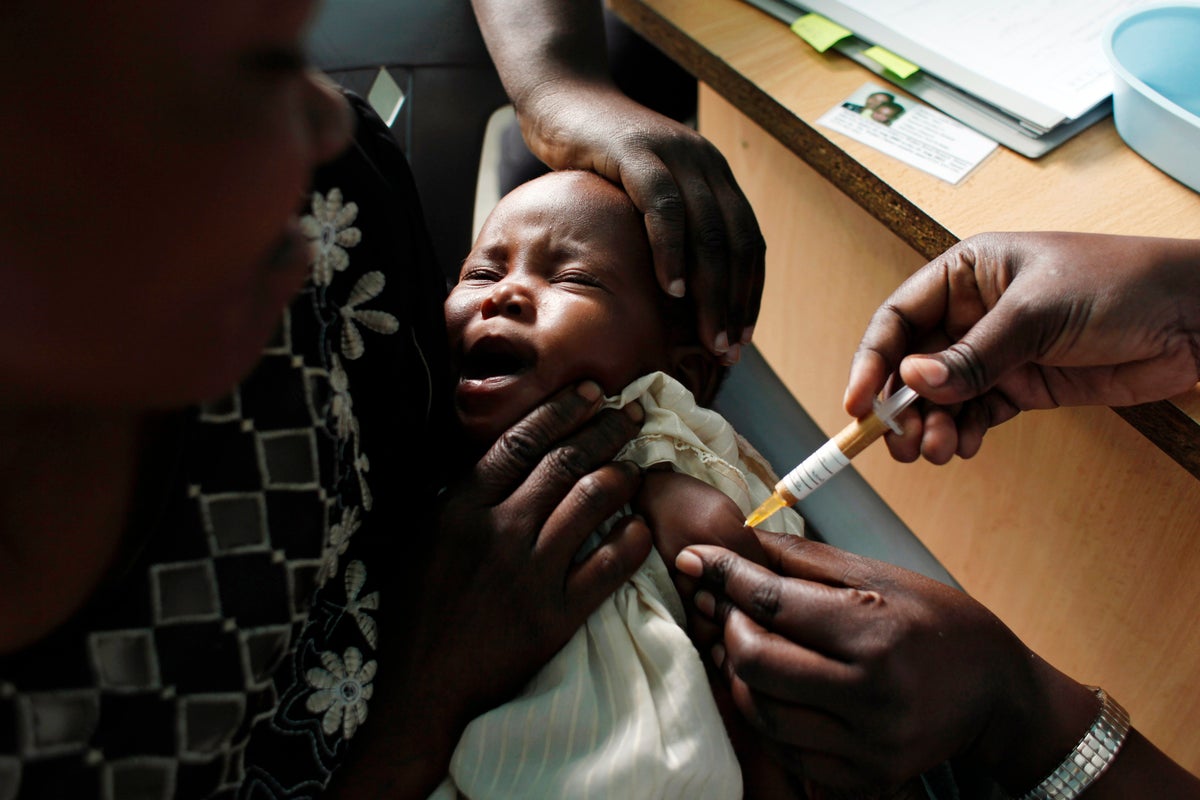
Think of the R21 vaccine as a precision-guided message sent to the human immune system. Instead of trying to fight the parasite once it has already invaded the blood—which is like trying to catch a swarm of bees with your bare hands—the vaccine trains the body to intercept the parasite the moment it enters the skin from a mosquito bite.
The data was a revelation. In trials, it showed upwards of 75% efficacy. In the world of malaria, those aren't just digits on a page. They represent hundreds of thousands of children who will grow up to be doctors, farmers, and parents instead of becoming a statistic in a WHO report.
But a vaccine in a glass vial is useless if it costs fifty dollars and needs to be kept in a high-tech freezer. The UK team knew this. They partnered with the Serum Institute of India to ensure the shots could be produced for a few dollars a dose. It was a marriage of British innovation and global manufacturing muscle.
Rewriting the Genetic Code
While Oxford was tackling the human immune system, another group of British scientists was looking at the source: the mosquito itself.
In laboratories in London, researchers are working on something that sounds like science fiction. It’s called a gene drive. Using a tool known as CRISPR, scientists can "edit" the DNA of mosquitoes so that they can no longer carry the parasite or, in some cases, so that they can only produce male offspring.
Imagine a single mosquito released into the wild. As it mates, the edited gene spreads through the population like a wildfire. Within a few generations, the local population of malaria-carrying mosquitoes collapses.
It is a terrifyingly powerful tool. The ethical weight of it is heavy, and the scientists involved are the first to admit it. They aren't just playing with biology; they are potentially removing a link from an ecosystem. But when you balance that risk against the reality of 600,000 deaths a year—mostly children under five—the moral calculus shifts. The UK has become the global hub for these difficult conversations, balancing the frantic need for a cure with the cautious necessity of safety.
The Liverpool Connection
Then there is the logistical heart of the operation. The Liverpool School of Tropical Medicine (LSTM) has been around since 1898, a relic of the colonial era that has reinvented itself as a modern powerhouse of equity.
Walk through their halls and you won’t just find British professors. You’ll find researchers from across Africa and Asia, using British funding and facilities to solve problems in their own backyards. This isn't "charity" in the old, condescending sense of the word. It is a high-level collaboration.
One of their most vital projects involves testing new types of insecticide-treated nets. Since the mosquitoes started becoming immune to the old chemicals, LSTM researchers have been developing "dual-action" nets that use two different chemicals to knock the insects down. It sounds simple. It is actually a complex game of chemical cat-and-mouse. If the UK provides the data and the testing, the world gets a product that actually works when it hits the ground in Tanzania or Nigeria.
The Invisible Stakes
Why does a rainy island in the North Atlantic care so much about a tropical fever?
Part of it is history. Britain’s past is deeply entwined with the regions where malaria is most prevalent. But the modern motivation is more pragmatic. In a globalized world, a health crisis anywhere is a threat everywhere. A robust UK research sector creates jobs, drives technological leaps in genomics, and cements the country's "soft power" on the world stage.
But there is a deeper, more human reason.
I remember speaking to a researcher who spent months in a field clinic. She described the silence of a pediatric ward where malaria has taken hold. It isn't a place of screaming; it’s a place of profound, heavy lethargy. The children are too tired to cry. Their bodies are working so hard to fight the invaders in their blood that they simply go still.
When a scientist in a lab in Bristol or Cambridge looks through a lens, they aren't just looking at cells. They are looking at the possibility of ending that silence.
The Fragility of Progress
Victory is not guaranteed. The parasite is still evolving. Funding is always a political football, subject to the whims of budgets and shifting priorities. If the UK pulls back, the global pipeline of new drugs and vaccines doesn't just slow down—it breaks.
We are currently in a race between human ingenuity and biological evolution. For the first time in history, the humans are winning. We have the vaccines. We have the gene-editing tools. We have the data-tracking systems that can predict an outbreak before it starts.
The UK’s role as a powerhouse isn't about pride or flags. It’s about the fact that we have finally found the parasite's Achilles' heel. We are no longer just reacting to a disease that has plagued us since the dawn of time. We are hunting it.
The next time you hear about a breakthrough in a lab in Oxford or a new trial in Liverpool, remember that it isn't just "science news." It is a move on a chessboard that involves billions of lives. The tiny assassin is still out there, humming in the dark, but the lights are finally coming on in the room.
The goal is no longer just "management." The goal is the zero. A world where the sound of a mosquito is just a nuisance, not a death sentence. We have never been closer.
Everything depends on not looking away now.