The Weight of a Passport
Sunlight hits the dusty asphalt of the Sunauli border crossing differently depending on which side of the metal barricade you stand. To the south lies Uttar Pradesh, sprawling, loud, and familiar. To the north rises the quiet majesty of the Himalayan foothills. Millions of feet cross this threshold every single year without a stamp, without a visa, bound by a decades-old treaty of open borders and shared breath.
Step across, and you are family. That is the promise.
Yet, for a young man named Ramesh, who lives just twenty kilometers deep inside the Rupandehi district of Nepal, that open door has a habit of slamming shut the moment he needs to board a domestic flight within India or check into a hotel in New Delhi. He holds a citizenship card issued by Kathmandu. He holds a national identity card. But in the bureaucratic architecture of modern security, these credentials often evaporate into thin air the second he steps onto foreign soil.
Consider what happens next: a simple family emergency requires a hurried journey through Indian transit hubs. Suddenly, a journey meant to celebrate shared heritage becomes an exercise in friction. Passports must be brandished. Bureaucratic red tape thickens.
Paperwork dictates dignity.
A Protocol Born in Another Era
The 1950 Indo-Nepal Treaty of Peace and Friendship was forged in a world that looks nothing like ours. Back then, borders were porous lines drawn on fading maps, and identities were recognized by the tilt of a hat, a local dialect, or a trusted acquaintance in the village square. Citizens of both nations could move freely, work on either side, and build lives without the heavy machinery of digital verification.
Times changed. The world digitized.
Today, security demands proof. Fast proof. Digital proof.
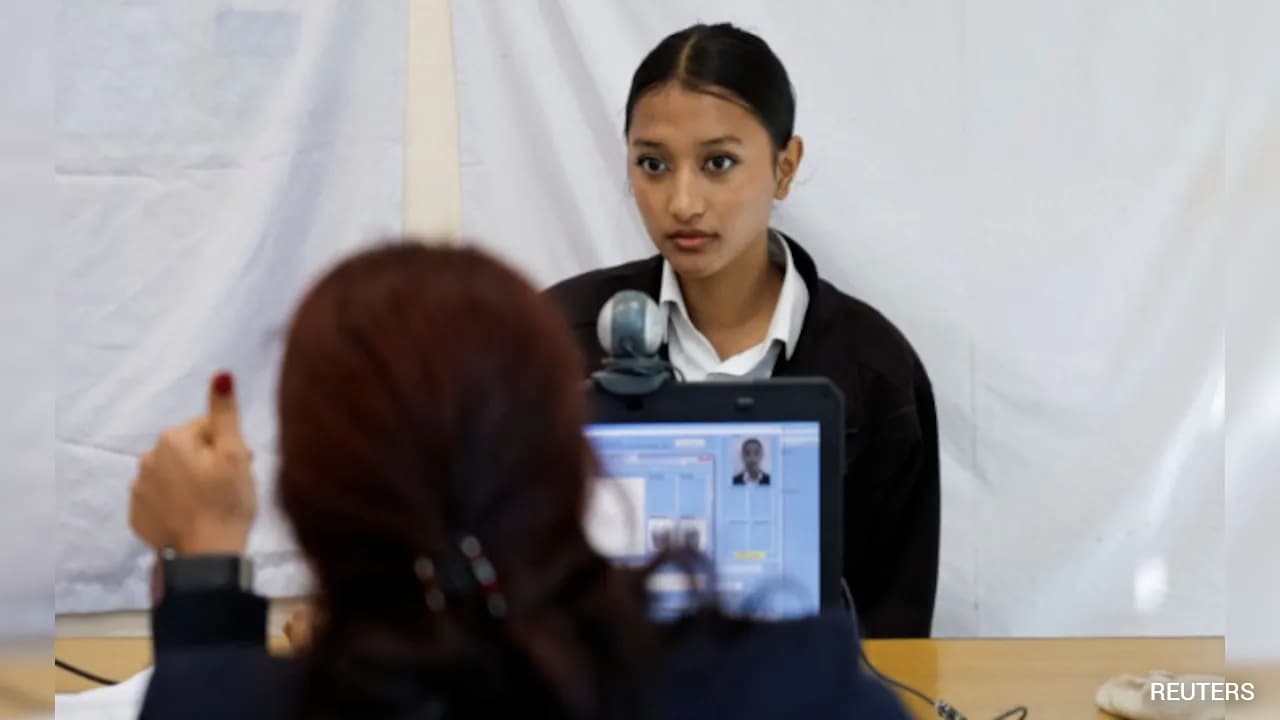
Nepal has spent years rolling out its National Identity Card, a biometric-backed credential designed to drag its administration into the twenty-first century. It captures fingerprints, retinal scans, and unique demographic markers. It is a secure vault of personal history carried in a plastic card.
Yet, traveling across the southern border still relies heavily on older, bulkier documents. Passports are heavy. Citizenship certificates tear at the folds.
Nepal’s recent diplomatic outreach to New Delhi is not merely a request for convenience. It is an appeal for recognition. Kathmandu is officially asking India to accept the National ID card as a valid travel document for cross-border transit.
Imagine the administrative machinery required to shift a policy shared by two sovereign nations. It takes months of diplomatic notes, security assessments, data-sharing protocols, and bilateral committees pouring over privacy laws. India worries about security loops, porous boundaries exploited by third parties, and data verification infrastructure. Nepal worries about the daily indignity faced by its citizens who commute, study, and trade across an invisible line every single morning.
The Human Toll of Bureaucratic Lag
Stand at the border for an hour. Watch the commerce unfold.
Trucks laden with fresh vegetables rumble south. Students carrying backpacks push north after classes in Gorakhpur. Elderly relatives visit shrines across the border. For them, the border is not a geopolitical chasm; it is a commuter lane.
When a system fails to keep pace with daily reality, the burden falls on the ordinary person.
Ramesh remembers the time his uncle fell ill in Lucknow. Getting to the hospital should have been a matter of catching the next bus across the border and booking a train. Instead, the lack of an officially recognized digital identity document turned a three-hour transit decision into a day-long maze of identity verification at local police outposts.
Delays cost time. Delays cost money. Sometimes, delays cost health.
This is why the push for National ID recognition matters. It is an attempt to bridge the gap between high-level diplomacy and ground-level humanity. If accepted, millions of citizens would no longer need to carry bulky passports for routine regional travel. The biometric card would speak for them.
The Road Ahead
Diplomacy moves at the speed of caution. Security protocols are not rewritten overnight.
India’s Ministry of Home Affairs must weigh the ease of transit against the imperatives of regional security. Counter-terrorism measures, illegal migration concerns, and database integration are real hurdles. You cannot simply flip a switch and trust a foreign biometric database without robust verification pathways.
Yet, the momentum is undeniable.
Bilateral talks have intensified. Committees are meeting. Technical teams are studying how Nepali biometric systems can securely interface with Indian checkpoint scanners without compromising national sovereignty or citizen privacy.
The friction is frustrating. The stakes are high.
A piece of plastic sits in a wallet in Kathmandu. Across the border, a gate remains closed to it. But every conversation between New Delhi and Kathmandu brings that gate a millimeter closer to swinging wide open, matching the promise of the wind that sweeps down from the mountains unchecked, carrying no papers at all.


