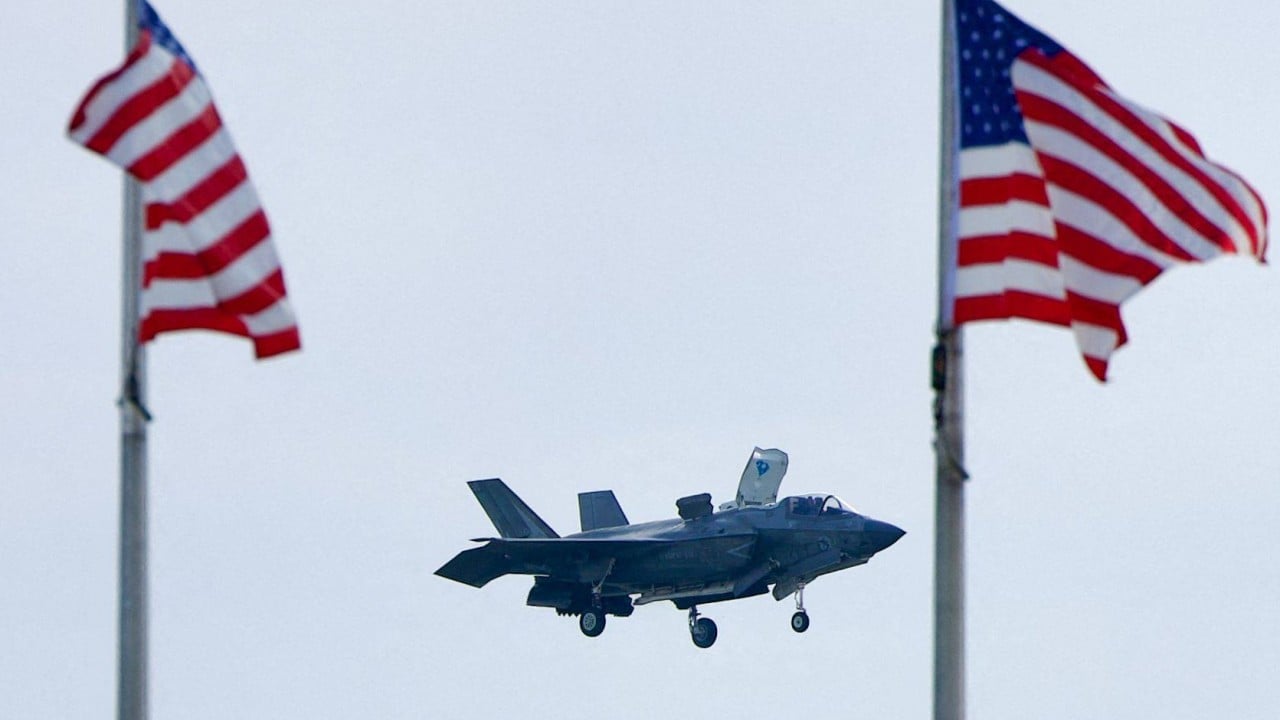
Every Tuesday morning for a decade, a specialized auditor at the Government Accountability Office—let’s call her Sarah—sat at a dual-monitor workstation in Washington, D.C., doing the least glamorous, most vital job in national defense. She tracked the reality of the F-35 Lightning II.
Sarah didn't look at sleek promotional videos of stealth jets carving through the clouds. She looked at logistics spreadsheets. She stared at data points showing that the components of a $100 million aircraft were wearing out faster than promised. She tracked the agonizingly slow rollout of software upgrades. When the Pentagon spent millions in taxpayer-funded "incentive fees" to reward defense contractors for performance that failed to meet the military’s actual readiness goals, Sarah was the one who noted it down for the public record.
For over twenty years, this dull, unyielding ledger of accountability was published every summer like clockwork. It was a hard, cold mirror held up to the most expensive weapons platform in human history—a program now ballooning toward a lifetime cost of $1.6 trillion.
Then, the mirror was shattered. Or rather, painted over.
The Pentagon quietly invoked a administrative label called Controlled Unclassified Information (CUI). With the stroke of a pen, they blocked the public release of the GAO's annual F-35 review. The report isn't classified; it contains no state secrets that would aid a foreign adversary. It is simply restricted. For the first time since Congress mandated these independent reviews in 2005, the public is barred from seeing how their money is being spent, and how the weapon meant to protect them is actually performing.
All the public is allowed to see this year is a sterile, nine-word title: “F-35 Joint Strike Fighter: Update on Production and Modernization Efforts.”
The Weight of the Unseen
To understand why a missing spreadsheet matters, consider a mechanic on a sun-baked tarmac in Arizona, working on an actual F-35 flight line. Let's call him Staff Sergeant Miller.
Miller doesn't think about global geopolitics or Wall Street stock tickers. He thinks about spare parts. He thinks about the fact that his squadron is cannibalizing parts from one multi-million-dollar fighter jet just to keep another one capable of taking off.
Recent unclassified watchdogs reports have hinted at a staggering reality: the full mission capable rate for the F-35 fleet—the metric that determines if a jet can actually execute all of its intended combat roles—had plummeted to just 25 percent. One in four.
Think about that math. If a commercial airline had a fleet where three out of every four planes couldn't fly their designated routes, the company would go bankrupt by nightfall. But in the world of defense procurement, a 25 percent success rate is met with a request for an extra $13.7 billion to fix the logistical tailspin.
When the Pentagon seals these reports away under the guise of "unclassified security," it doesn't just hide numbers from foreign adversaries. It hides the systemic friction felt by the Millers of the military from the citizens who fund their work.
The Iron Triangle of Accountability
Defense procurement is built on a delicate, three-sided foundation: the military that specifies the need, the corporate contractor that builds the technology, and the independent watchdog that verifies the truth.
When the independent watchdog is silenced, the triangle collapses.
Jon Ludwigson, the director who supervised the blocked GAO report, noted with bureaucratic restraint that this was unprecedented. In twenty years of auditing the most complex engineering project on Earth, the agency had always found a way to balance national security with public transparency. They stripped out the blueprints, kept the financial realities, and gave the public a report card.
The sudden pivot to total omission signals a profound shift in institutional psychology. It suggests an environment where the narrative surrounding a technology has become more critical to protect than the technology itself.
Consider what happens next: without public scrutiny, the momentum of the status quo becomes unstoppable. Lawmakers on closed defense committees still get to read the redacted pages, yes. But politicians rarely cut funding for projects that employ thousands of constituents across hundreds of congressional districts. The public report was the only mechanism that forced uncomfortable conversations into the daylight.
The Anatomy of a $1.6 Trillion Illusion
Every complex system failure follows a predictable arc. First come the ambitious design promises: a single, miraculous airframe that can land vertically on an amphibious assault ship, launch from an aircraft carrier, and fly stealth missions deep behind enemy lines. It was sold as a Swiss Army knife for modern warfare.
But a tool designed to do everything frequently struggles to do any single thing exceptionally well.
The F-35 has run into a wall of pure engineering gravity. Software upgrades known as Block 4 are years behind schedule and billions over budget. The intricate engines are running hot, degrading faster than the industrial supply chain can build replacement parts.
The true danger of the Pentagon's new secrecy isn't that it hides a broken machine. It's that it institutionalizes an illusion. When the public cannot see the cost, the cost ceases to be a political liability. The program transitions from a defense asset into a permanent financial utility, insulated from the regular laws of performance and consequence.
The jet was designed to be invisible to enemy radar. It was never supposed to be invisible to the people paying for it.