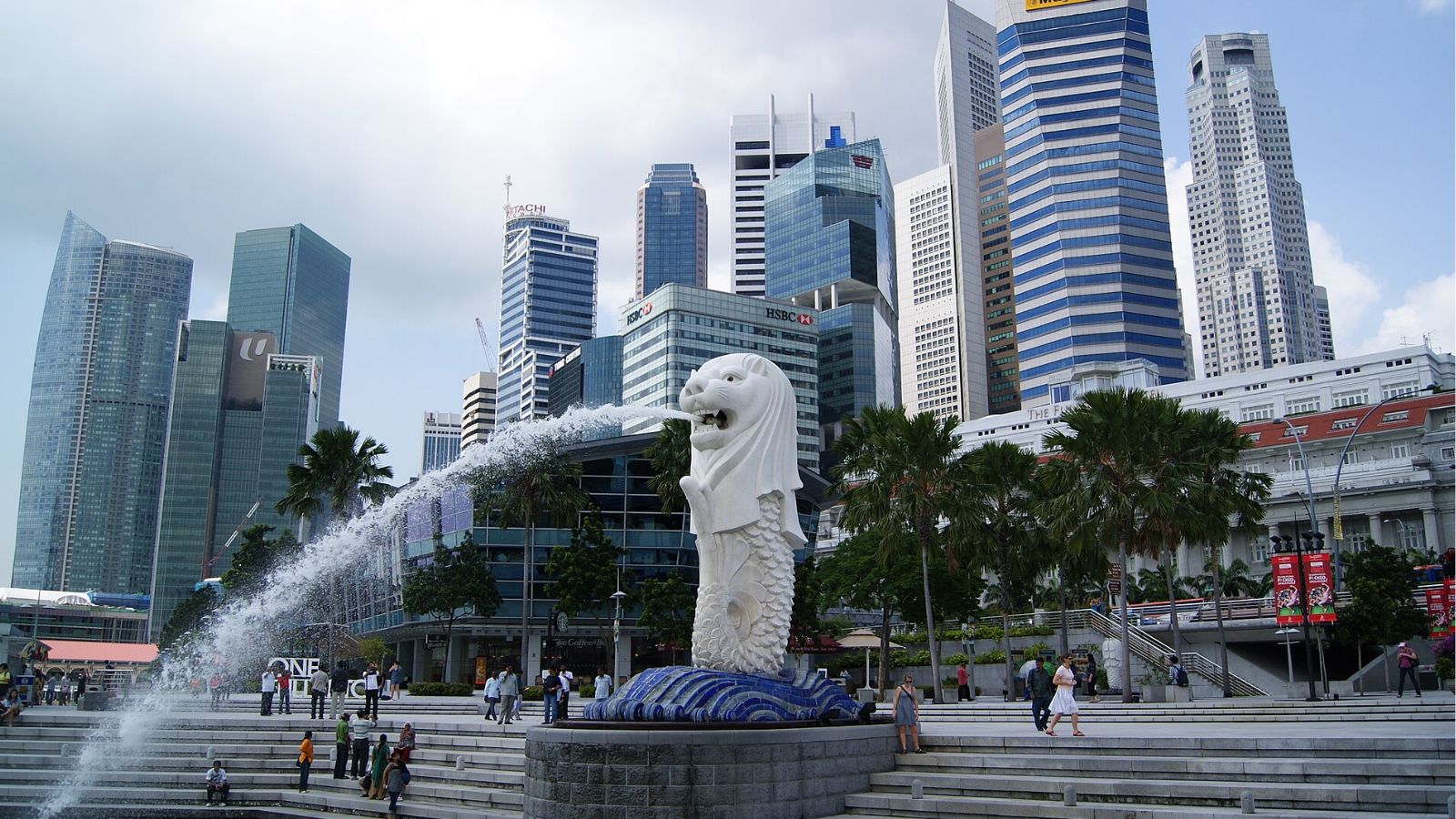
The morning air in Singapore usually carries the scent of damp pavement, strong black coffee, and the quiet urgency of a city that never really sleeps.
Mei stands behind the stainless-steel counter of her hawker stall, her hands moving with practiced rhythm. She cracks an egg, drops it onto a sizzling plate, and flips it before the steam can obscure her glasses. She has run this stall for twenty-two years. She knows the exact price of chili paste down to the cent. Or, rather, she used to.
Lately, the math has changed.
The cooking oil she buys in bulk costs more than it did last month. The electricity bill for the refrigeration unit climbs higher, creeping up like an unwelcome tide. Mei does not read central bank policy reports. She does not discuss policy rate corridors or foreign exchange liquidity over morning tea. But she feels the weight of them. Every single day.
Across the island, in gleaming glass towers downtown, financial analysts stare at Bloomberg terminals with quiet intensity. They are tracking a different kind of weather report. Numbers flash red and green. A decision has been made. For the second consecutive time in a sudden sequence of defensive moves, the Monetary Authority of Singapore has tightened monetary policy.
It sounds abstract. It sounds like the sterile language of economists in airtight rooms.
It is not. It is a shield.
The Island Paradox
To understand why a small island nation takes a hammer to its own money supply, you have to look at how Singapore survives.
Singapore produces almost nothing of its own. It has no vast oil fields, no endless agricultural plains, no sprawling domestic timber forests. It is an importer of life itself. Food, fuel, raw materials, technology—everything crosses the ocean or drops from the sky to land on these shores.
When global inflation runs hot, it does not knock politely at the border. It kicks the door down.
Imagine a tiny boat caught in a hurricane. The waves are global price shocks, supply chain bottlenecks, and the rising cost of energy. If the boat has no anchor, it spins wildly, tipping water over the sides until the passengers drown in expenses they cannot control.
Most countries anchor themselves by raising domestic interest rates. They make borrowing expensive so people stop spending, slowing the domestic engine down.
Singapore plays a completely different game.
Because the nation relies entirely on imports, the most dangerous thing isn't just high interest rates—it's a weak local currency. If the Singapore dollar loses its purchasing power against the currencies of its trading partners, the price of imported rice, electricity, and steel skyrockets instantly.
So, the central bank uses a weapon almost no one else employs. They manage the exchange rate directly. They allow the Singapore dollar to appreciate against a basket of currencies belonging to its major trading partners.
It is a deliberate, calculated strengthening of the local currency.
Consider what happens next. A stronger dollar acts as a discount coupon on everything the island imports. When global oil prices surge, the stronger local currency blunts the blow. It acts as an invisible shock absorber.
The Heavy Cost of Stability
Nothing comes for free in economics. Every choice carries a scar.
When the Monetary Authority of Singapore tightens policy by pushing the currency higher, local businesses feel the squeeze from the export side.
Take David, who runs a precision engineering firm in the industrial west of the island. His company manufactures micro-components used in medical devices shipped all over the world.
When the Singapore dollar appreciates, David’s products suddenly become more expensive for buyers in America or Europe. To an overseas hospital purchasing his equipment, the price tag just went up, not because David raised his prices, but because the local currency grew stronger.
David sits at his desk late at night, staring at order sheets.
"We are fighting on two fronts," he says, his voice tired, the hum of the warehouse cooling system echoing in the background. "My input costs—materials, rent, skilled labor—are rising because of global inflation. But my revenue takes a hit because our currency is too strong for international buyers. We are squeezed from the top and the bottom."
This is the central tension of the island's monetary strategy.
By tightening back-to-back, the central bank chose to protect Mei over David's export margins. They chose to defend the purchasing power of the everyday consumer against imported inflation, accepting the reality that exporters would have to hustle harder, cut costs, or innovate faster to stay competitive.
It is a brutal balancing act. Lean too far one way, and the cost of living crushes the working class. Lean too far the other, and the export engine that drives the nation's wealth stalls out.
Reading Between the Lines
Why back-to-back tightening? Why act with such swift, uncharacteristic aggression?
Because inflation is a thief that steals quietly in the night.
When inflation expectations become unanchored—when people start believing that prices will rise forever—they change their behavior. Workers demand higher wages immediately. Businesses raise prices preemptively. A psychological spiral takes hold, turning a temporary supply shock into a permanent economic fever.
The central bank saw the fever rising.
By stepping in with consecutive tightening moves, they sent an unmistakable signal to the market. They said, essentially: We see the storm, and we are holding the line.
It is an exercise in credibility. A central bank's most powerful tool is not its balance sheet or its regulatory authority. It is trust. If the public trusts that the currency will hold its value, stability follows.
Back home, Mei does not know what a trade-weighted exchange rate basket looks like. She does not know the exact mathematical formula the monetary authority uses to manage its policy band.
She only knows that when she goes to the market to buy ingredients for tomorrow, the price is higher than it was last month, but lower than it would have been if the shield had not been raised.
The tightening cycle is not a headline on a financial blog. It is the invisible current keeping a tiny boat steady while the rest of the world battles the waves.
The sun dips below the Singapore skyline, casting long shadows across the concrete housing estates and the gleaming towers of the financial district alike. The lights flicker on. The hawker stalls fire up their burners for the dinner rush. The math remains hard, the margins remain tight, but the anchor holds.