The boarding gate at José Martí International Airport smells like burnt espresso, floor wax, and anxiety.
Watch the faces in line for a moment. A grandmother clutches a plastic bag stuffed with blister packs of blood pressure medication. Two rows behind her, a young software engineer stares at a boarding pass on his cracked phone screen, refreshing an airline portal that seems to change its mind every forty-eight hours. Neither of them cares about diplomatic communiqués issued from air-conditioned offices in Washington, Beijing, or Havana. They care about whether the plane actually leaves the tarmac.
We tend to read foreign policy like a box score. One country signs a memorandum; another launches an investigation; a third adjusts a tariff schedule. The headlines land in our feeds as dry, disconnected bullet points—a cancelled flight route in the Caribbean, a trade dispute over Central American shrimp, an audit of a port concession in Panama. We skim them over morning coffee and move on, convinced these are distant chess moves played by people in dark suits.
They aren't. They are the invisible architecture of daily life across the Western Hemisphere. When the diplomatic plates shift beneath Latin America, the tremors don't stay inside ministries. They rattle the kitchen tables of families from San José to Santiago, dictating who gets to travel, what a bushel of grain costs, and which superpower owns the pier where your goods arrive.
To understand what is actually happening in Latin America right now, you have to step away from the podiums and follow the friction.
The Runway as a Political Barometer
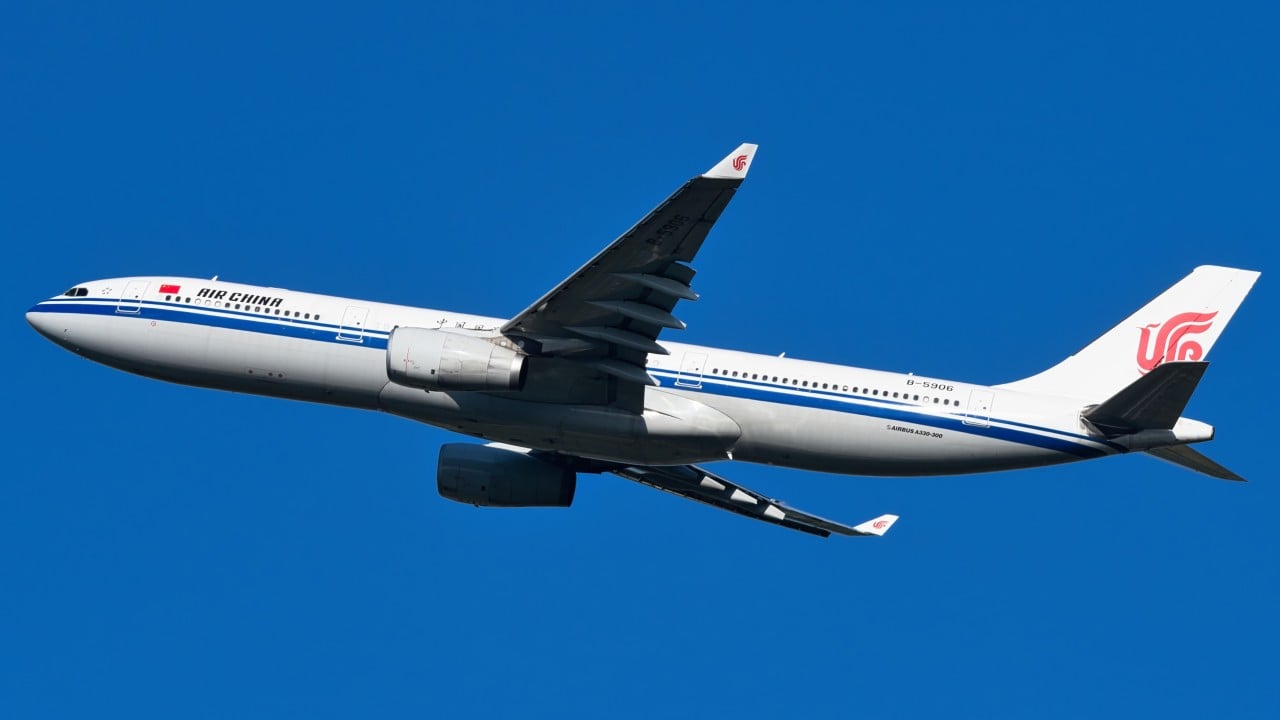
Consider the commercial flight corridor between the United States and Cuba. On paper, aviation agreements are dull affairs governed by bilateral treaties, fuel surcharges, and Federal Aviation Administration safety audits. In practice, a flight schedule between Miami and Havana is the most sensitive emotional barometer in the Caribbean.
Imagine—as a composite of thousands of real travelers—a nurse named Elena living in Hialeah, Florida. For three years, she has saved overtime shifts to send remittances and visit her aging father in Matanzas. When Washington tightens aviation restrictions or airlines quietly slash routes due to fuel shortages and regulatory friction on the island, Elena doesn't read a policy brief. She sees a $280 ticket balloon into a $900 multi-stop odyssey through Nassau or Cancún.
Airlines operate on razor-thin margins, usually hovering around two to three percent globally, and routes into politically volatile jurisdictions carry unique operational hazards. Jet fuel availability at Cuban airports has repeatedly faltered amid the island's severe liquidity crisis, forcing carriers to tanker extra fuel from Florida—burning more money just to carry the weight of the return trip. Add to that the constant tug-of-war over U.S. sanctions, crew visa rules, and insurance liabilities, and every flight becomes a high-wire act.
When a route gets cut or investigated, it isn't merely an aviation story. It is a valve closing on the diaspora. Remittances—which have historically accounted for billions of dollars flowing into the Cuban economy, far outstripping most traditional exports—depend on physical couriers and family visits when formal banking channels freeze. A grounded plane means fewer medicines in suitcases, fewer dollars in pockets, and a quiet, suffocating isolation that no diplomatic statement ever captures.
The Price of Choosing a Flag
Now shift your gaze south and west, across the Caribbean Sea to the shrimp farms of Choluteca, Honduras, or the coffee cooperatives of Central America. Here, the friction isn't about airspace. It is about loyalty, and loyalty has a brutal invoice.
For decades, a handful of Latin American nations maintained official diplomatic ties with Taiwan. It was a relationship built on historical alignment, agricultural aid, and quiet scholarship programs. Then came the gravitational pull of Beijing's checkbook—infrastructure loans, stadium builds, and promises of boundless consumer markets.
When Honduras severed ties with Taipei in 2023 to recognize Beijing, the diplomatic press releases glowed with optimism about new trade horizons. Two years on, the reality on the ground reads like a cautionary tale about geopolitical whiplash.
Take the Honduran whiteleg shrimp industry. Before the diplomatic switch, Taiwan absorbed roughly forty percent of Honduras's shrimp exports, buying them at preferential tariff rates under a bilateral free trade agreement. Once Tegucigalpa broke with Taipei, that treaty evaporated. Tariffs snapped back into place. Overnight, Honduran producers lost their most reliable, high-margin buyer.
Beijing promised to step in and buy the surplus. Yet Chinese importers demanded steeper discounts, enforced stricter sanitary inspections, and moved far slower than the political speeches had suggested. By late 2024 and into 2025, export volumes to Taiwan had cratered by more than eighty percent, while sales to mainland China covered only a fraction of the loss. Processing plants in southern Honduras laid off thousands of workers—mostly women working on packing lines—while cold-storage warehouses filled with unsold crustaceans.
This is the pushback happening across the region's trade corridors. Whether it is Central American seafood, South American lithium, or Caribbean infrastructure, countries caught between Washington, Beijing, and Taipei are discovering a hard truth: in global trade, switching partners isn't like changing phone carriers. Supply chains are built over decades on trust, phytosanitary standards, and credit lines. When politicians tear them up for a headline, farmers and factory workers pay the breakage fee.
The Tollbooth of the World
If you want to see where all these currents collide, stand on the banks of the Panama Canal at Miraflores Locks.
Watch a Neo-Panamax container ship—a floating city stacked twelve containers high with electronics from Shenzhen, auto parts from Busan, and soybeans from Iowa—slide through the concrete chamber with less than two feet of clearance on either side. Roughly five percent of all global maritime trade squeezes through this fifty-mile strip of water. For the United States, it is an economic artery; nearly seventy percent of cargo transiting the canal is either coming from or heading to a U.S. port.
So when Panama launches a formal probe into port concessions—specifically scrutinizing the long-term contracts held by Hong Kong-based conglomerate CK Hutchison at the Atlantic and Pacific entrances of the canal—the tremors reach the highest levels of national security.
To understand why a Panamanian audit matters to a shopper in Ohio or a manufacturer in Monterrey, think of the canal not as a ditch, but as a tollbooth on the world's busiest highway. Panama controls the road, yet for nearly three decades, foreign firms have operated the service stations and loading docks at either end. In 2021, Panama automatically renewed a twenty-five-year concession for Panama Ports Company, a subsidiary of CK Hutchison, to run the ports of Balboa and Cristóbal.
Critics inside Panama argued the renewal shortchanged the state of hundreds of millions of dollars in revenue and lacked transparency. Meanwhile, in Washington, defense analysts looked at the same piers and saw something else entirely: a strategic chokepoint flanked by companies answering to Beijing's national security laws.
When Panamanian auditors walk into those port offices with subpoenas and ledger requests, they are walking a tightrope over an abyss. Push too hard against Chinese-linked operators, and Panama risks triggering retaliatory trade pressure or costly international arbitration that could drain its public treasury. Do nothing, and Panama faces intense diplomatic heat from Washington, where lawmakers openly question whether American security guarantees are subsidizing a rival's foothold on the canal.
For the dockworker operating a gantry crane in Cristóbal, the geopolitics are invisible until they aren't. Contract uncertainty freezes capital investment. Shipping lines start hedging their bets, routing vessels around Cape Horn or through Mexican land bridges. A probe in Panama City isn't local legal housekeeping; it is a stress test on the plumbing of global commerce.
The Myth of the Backyard
There is an old, arrogant habit in North American commentary of treating Latin America as a passive stage—a "backyard" where outside powers act and local populations merely react. That framing isn't just condescending; it is dangerously inaccurate.
Walk through the financial districts of São Paulo, Mexico City, or Bogotá today, and you will meet a generation of diplomats, central bankers, and business leaders who have zero interest in Cold War nostalgia. They have lived through the debt crises of the 1980s, the commodity booms of the 2000s, and the supply-chain shocks of the 2020s. They remember what happens when a region bets its entire future on a single patron.
Consider how Brazil manages its diplomatic posture. It sells massive volumes of iron ore, crude oil, and soybeans to China—its largest trading partner by far—while simultaneously courting American technology investment and European green-energy financing. Look at Mexico, which has overtaken China as the top exporter of goods to the United States, turning nearshoring into an industrial boom across Nuevo León and Querétaro, even as Chinese automakers and component suppliers scramble to set up shop south of the Rio Grande to access the North American market.
This is what foreign policy specialists call "active non-alignment," though any street vendor in Lima or San José could explain it more simply: never put all your fruit in one basket, especially when the buyers are throwing rocks at each other.
Yet hedging has limits. Small and mid-sized economies don't have Brazil's scale or Mexico's border with Texas. When Costa Rica restricts high-risk vendors from bidding on its 5G telecommunications rollout, it earns praise from Washington and icy silence from Beijing. When Nicaragua deepens security and surveillance ties with Russia and China while cracking down on domestic dissent, it invites sweeping U.S. sanctions that choke off access to international development banks.
Every choice carries an immediate, tangible cost. A delayed 5G network means slower digital infrastructure for local startups. Sanctions on a state bank mean higher borrowing costs for small businesses trying to buy equipment.
Why the Fine Print Matters
It is easy to feel numb reading seven separate news briefs about Latin American diplomacy. A visa restriction here, a lithium nationalization debate there, a migration pact signed in Darién, a tariff dispute over steel. Taken one by one, they look like administrative clutter.
I used to read them that way myself, scanning wire reports for dramatic flashpoints while skipping the regulatory footnotes. Then I spent time talking to logistics managers in Central America and small-scale exporters in the Andes, and my perspective inverted completely. The real story is never in the summit photo-op. It is always in the footnote.
Think of regional geopolitics like the electrical wiring behind plaster walls. When everything works, you never think about gauge, voltage, or circuit breakers. You flip a switch, and the light comes on. You book a flight, and the plane takes off. You harvest shrimp, and a refrigerated container carries them to market.
Right now, across the Americas, the load on that wiring is surging. Climate stress—like the severe droughts that forced the Panama Canal to slash daily ship transits in 2023 and 2024, costing global shippers billions in delays—is colliding with great-power rivalry and fragile post-pandemic fiscal budgets. Governments are strapped for cash, voters are impatient with inflation and insecurity, and outside powers are demanding clearer allegiances.
When a wire overheats in one room, the breaker trips three hallways away. A regulatory probe into a Panamanian port concession ripples into shipping insurance rates in Miami. A diplomatic break with Taiwan empties out packing plants on the Gulf of Fonseca. A dispute over aviation rules in Havana leaves a grandmother staring at a departure board, wondering if she will hold her grandson before winter ends.
The Human Ledger
Step back into that airport terminal in Havana, or onto the dock in Cristóbal, or beside the shrimp ponds of Choluteca.
In every one of these places, ordinary people are doing the quiet, exhausting math of survival around decisions made thousands of miles away. They are adjusting shipping routes, rewriting invoices, pooling family savings for pricier plane tickets, and learning new languages to sell old harvests to unfamiliar buyers.
Diplomacy is often described as the art of the possible, a grand dialogue between sovereign states. Down at ground level, it looks much simpler and far more fragile. It is a narrow bridge suspended over deep water, swaying with every gust of wind from Washington, Beijing, or Brussels, while millions of people walk across it every day just trying to get to work and back home again.
The next time a headline flashes past your screen about a flight audit in the Caribbean, a trade dispute in Central America, or a port investigation in Panama, don't treat it as distant noise. Look closely at the fine print. Someone's livelihood is hanging on the signature at the bottom of the page.