Silence.
At seventeen thousand feet, that is the first thing you notice when you step off the beaten dirt track of the Khumbu Valley, the way the thin, razor-sharp Himalayan air swallows sound whole until all you can hear is the rhythmic thud of your own racing heart and the crunch of frozen gravel beneath your boots. For decades, reaching the foot of the highest peak on Earth required earning that silence through blistered feet, hypoxic headaches, and two grueling weeks of slow, methodical acclimatization along rocky moraines.
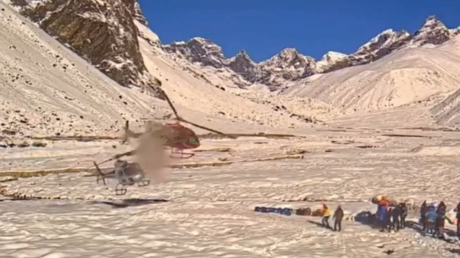
Today, that silence is shattered every few minutes by the violent, rhythmic thump of rotor blades slicing through air too thin to properly hold them.
When two helicopters collided near Everest Base Camp, killing a tourist on the ground and sending shockwaves through the global mountaineering community, the headlines treated it like a freak mechanical anomaly. A tragic roll of the dice in an unforgiving environment. Those of us who have spent years walking the stone staircases of Nepal, watching the sky above Lukla and Lobuche transform from a pristine sanctuary into a chaotic highway, knew immediately that this disaster was not an accident of nature.
It was a collision of economics, vanity, and physics.
The Shortcut Economy
To understand how two multi-million-dollar machines managed to occupy the exact same patch of sky over one of the most remote places on the planet, you have to understand how we fundamentally broke Himalayan adventure.
Consider a hypothetical traveler—let us call him David, a forty-two-year-old software executive from Austin who has always dreamed of standing in the shadow of Sagarmatha, the Nepali name for Everest. David has the money, the ambition, and the expensive down jacket, but he does not have twenty-one days to spare from his quarterly board meetings. Twenty years ago, David’s dream would have remained just that—a dream deferred until retirement.
Today, David buys a "breakfast at Everest" package.
At six in the morning in Kathmandu, he steps into a sleek Eurocopter AS350, sips coffee while soaring past terraced hillsides and jagged glacial valleys, lands on a makeshift helipad near Kala Patthar or Base Camp for fifteen minutes of breathless selfies, and is back at his five-star hotel in the capital before lunch. No frostbite. No dysentery. No two-week slog through freezing teahouses.
Multiply David by tens of thousands of affluent tourists every single climbing season, and you begin to see the invisible architecture of the tragedy. What used to be an emergency lifeline—a high-altitude rescue service reserved strictly for climbers suffering from cerebral edema, broken limbs, or avalanches—has quietly morphed into an airborne taxi service.
The numbers tell a stark story of unchecked escalation. During peak spring and autumn windows, the tiny airstrip at Lukla and the narrow glacial corridors leading up to the 17,598-foot Base Camp routinely handle dozens of helicopter sorties every single day. On clear mornings, before the afternoon winds sweep up from the valleys and shroud the peaks in blinding whiteout clouds, the sky above the Khumbu glacier resembles a frantic swarm of metal dragonflies.
Flying on a Knife's Edge
If you have never flown in a helicopter above fifteen thousand feet, it is almost impossible to grasp just how precarious the physics really are.
Think of the atmosphere as an ocean of invisible water that gets thinner and lighter the higher you climb. At sea level, that air is dense, giving a helicopter’s spinning rotor blades plenty of substance to bite into and push downward, generating the lift that keeps the cabin aloft. Up near Everest Base Camp, the air density drops by nearly half. The blades have to spin furiously just to tread water, operating perilously close to their aerodynamic limits with virtually zero margin for error.
A sudden downdraft spilling off the sheer ice wall of Nuptse, a slight miscalculation in payload weight, or a brief distraction in the cockpit does not give a pilot five hundred feet to recover. It gives them fractions of a second.
Now, strip away the modern infrastructure you take for granted at any regional airport back home. In the high Khumbu, there is no radar coverage tracking every aircraft in real time. There is no centralized air traffic control tower orchestrating neat, separated flight paths across the valleys. Pilots rely heavily on visual flight rules—meaning they look out the window—and informal radio chatter on shared frequencies to announce their positions as they weave through narrow, steep-walled canyons.
Imagine driving a sports car at eighty miles an hour down a winding, single-lane mountain road with blind corners, relying entirely on honking your horn to make sure nobody is coming the other way. That is what peak-season aviation in the Everest region looks like.
The Human Toll on the Frozen Moraine
When the collision occurred near Base Camp, the horror was immediate and visceral, stripping away every glossy brochure promise of effortless luxury.
Witnesses on the ground described the deafening screech of tearing metal echoing off the surrounding ice walls as the main rotors of one aircraft clipped the tail boom of another during approach and takeoff maneuvers. Debris rained down onto the jagged rock and glacial ice—a place where hundreds of climbers, Sherpas, kitchen staff, and trekkers live in fragile nylon tents during the spring expedition rush.
One tourist, standing on the ground where they believed they were safe, was struck and killed instantly by flying wreckage. Others scrambled desperately behind boulders and ice seracs as the crippled machines fought to stay upright or slammed into the unforgiving terrain.
I have stood on that exact stretch of shifting rock and ice, watching the rotor wash from landing helicopters whip up blinding storms of glacial dust and loose gravel, forcing trekkers to shield their faces and cling to their trekking poles just to stay upright. You can feel the concussive thump of the blades in your molars. You can smell the sharp, acrid tang of burnt aviation fuel hanging heavily over a landscape that should smell only of crisp snow and juniper smoke. And every single time two choppers pass within a few hundred yards of each other in that narrow bowl, you feel a cold knot tighten in your stomach, wondering who is watching the blind spots.
The Invisible Stakes for the Sherpa Community
Whenever a tragedy strikes on Everest, international media coverage naturally gravitates toward the foreign tourists and Western climbers whose names appear on the casualty lists. Yet the people paying the highest, quietest price for this airborne gold rush are the local mountain workers who make the entire industry possible.
For generations, the economy of the Khumbu Valley ran on footsteps. Every bag of rice, every cylinder of cooking gas, every tent pole, and every climber’s duffel bag moved up the trail on the backs of yaks, dzos, and human porters, generating vital income for dozens of villages scattered along the Dudh Kosi river. Teahouse owners invested their life savings into building lodges along the multi-day route, banking on trekkers spending money on dal bhat, ginger tea, and warm beds on their way up and down the mountain.
The helicopter boom has cannibalized that traditional ecosystem.
Why spend five days trekking back down to Lukla—paying porters, tipping guides, and staying in local lodges—when you can wire a few hundred dollars to a Kathmandu operator and fly out in fifteen minutes? Worse still, the surge in commercial flights has created immense pressure on Nepali pilots, many of whom are extraordinarily skilled aviators flying grueling schedules from dawn until the afternoon clouds roll in, pushed by tour operators eager to maximize revenue during a narrow weather window.
Local authorities and community leaders in the Solukhumbu district have repeatedly pleaded with Kathmandu to restrict commercial joyrides, arguing that helicopters should be limited strictly to medical evacuations and essential cargo transport. For years, those warnings ran headlong into a wall of bureaucratic inertia and powerful financial interests. Aviation companies argued that tourism dollars kept the economy afloat; government officials hesitated to kill a lucrative golden goose.
Why We Keep Buying the Illusion
It is easy to point fingers at reckless operators or lax regulators in Nepal, a developing nation navigating complex economic realities. Doing so, however, lets the rest of us off the hook far too easily.
The uncomfortable truth is that those helicopters are in the sky because we put them there.
We live in an era obsessed with compressing experience—with stripping away the friction, the boredom, and the physical suffering that used to be the price of admission for doing something extraordinary. We want the summit photo without the frostbite. We want the bragging rights of Everest Base Camp without spending ten days coughing up dust on the trail through Namche Bazaar and Tengboche. We treat one of the most volatile, lethal environments on Earth like an amusement park ride, assuming that because we paid for a ticket, someone else has engineered away the danger.
Mount Everest does not care about our itineraries. Gravity does not negotiate with VIP packages.
In the wake of the fatal collision, Nepal’s civil aviation authorities once again announced stricter rules, bans on non-essential commercial flights in the Base Camp corridor, and heightened oversight of helicopter operations. Whether those measures survive the immense commercial pressure of the next climbing season remains an open, deeply uncertain question. History in the Himalayas has a stubborn habit of repeating itself once the headlines fade and the spring sun melts the snow off the landing zones.
What the Mountain Demands
If you ever decide to go to Everest—and I hope you do, because standing beneath those towering walls of granite and ice will rearrange your sense of what it means to be alive—leave the helicopter for the people who are bleeding, broken, or dying.
Lace up your boots in Lukla. Walk across the swaying suspension bridges draped in faded prayer flags. Feel your lungs burn as you climb the endless stone steps to Namche, letting your body adapt slowly, humbly, to the thinning air. Drink salty butter tea with the lodge owners whose families have guarded these valleys for centuries.
When you finally round that last rocky bend of the Khumbu Glacier and see the prayer flags fluttering above Base Camp, you will understand something no fifteen-minute sightseeing flight could ever teach you. The point of going to the top of the world was never to conquer the distance as fast as possible.
It was to let the distance change you along the way.
High above the glacier, the wind still sweeps down off the West Ridge of Everest, scouring the loose scree and erasing the footprints of everyone who passed through the day before. Beneath the snow and the shifting ice, the mountain keeps its own slow, indifferent time, waiting to see if we will finally learn to listen before the sky falls again.