At 35,000 feet, the human mind makes a silent pact with physics and strangers. You sit in a pressurized aluminum tube, sipping lukewarm coffee from a paper cup, trusting that the people in the cockpit know the math and the people on the ground checked the cargo.
Then the plane banks sharply. Not the gentle, lazy banking of a standard approach, but a steep, urgent tilt that presses your shoulder against the plastic window shade. For an alternative view, check out: this related article.
Consider a hypothetical passenger—let’s call her Elena, a structural engineer flying from London to Athens for her sister’s wedding. She watches the wingtip slice down toward the slate-gray expanse of the English Channel. The cabin goes dead quiet, save for the high-pitched whine of the engines adjusting their pitch. When the captain’s voice finally crackles over the intercom, it carries that specific, practiced flatness pilots use when they are trying very hard not to scare two hundred people. They are diverting. Security protocols. No further details at this time.
On the tarmac in Brussels, or perhaps Frankfurt, or Stansted, there are no flashing red lights at first—just a perimeter of yellow vests and German Shepherds waiting near the remote stands, far away from the glass-walled terminals. Elena doesn't know yet that her flight wasn't the only one. She doesn't know that across the continent, for the second time in a matter of days, an unseen hand has reached out and stopped the clock on European aviation. Related analysis on the subject has been shared by The Guardian.
The Architecture of a Modern Ghost
We tend to think of terrorism and aviation threats in cinematic terms. We picture metallic briefcases, frantic countdowns, and physical breaches of perimeter fences. We build multi-billion-dollar fortresses of millimeter-wave scanners and liquid restrictions to stop physical objects from crossing a threshold.
But the recent wave of bomb threats disrupting flights across Europe relies on something far cheaper and infinitely harder to confiscate. It relies on an email address, a burner account, and the absolute, unyielding rigidity of international aviation law.
In October 2023, France experienced this exact paralysis when a coordinated series of false bomb alerts forced the evacuation of nearly every major regional airport outside Paris—from Lille and Lyon to Toulouse and Nice—sometimes multiple times in a single week. Fast forward to the current wave of disruptions sweeping European air corridors, and the playbook hasn't changed; it has simply scaled. When a threat arrives at an airline operations center or an air traffic control hub, the system does not have the luxury of playing detective.
Aviation safety operates on a zero-trust architecture. Think of it like a nuclear reactor’s SCRAM button—the massive emergency switch designed to drop control rods into the core the millisecond a sensor reads an anomaly. You do not pause to ask if the sensor is malfunctioning. You slam the button, cool the core, and ask questions three hours later.
When an anonymous message claims an explosive device is aboard a commercial airliner—whether it is a Ryanair flight approaching Dublin, a Lufthansa jet crossing the Alps, or an EasyJet carrier descending into Geneva—the protocol is absolute. The aircraft must land immediately at the nearest suitable airport. Passengers must deplane, often via emergency slides or mobile stairs on isolated tarmacs. Every piece of luggage must be hauled out of the hold, lined up on the asphalt, and sniffed by explosives-detection dogs while bomb disposal units sweep the cabin.
The perpetrators know this. They don't need to build a bomb to ground a fleet. They just need to type a sentence.
The Ripple Effect in the Terminal
If you have ever been stranded in an international terminal during a security lockdown, you know the specific sensory texture of the experience. It isn't panic. Panic burns too hot and too fast to last for six hours. It is a slow, grinding exhaustion that smells like stale espresso, floor wax, and sweat.
I remember sitting on the linoleum floor of Terminal 2 at Charles de Gaulle a few winters ago during an unattended-baggage scare that escalated into a full concourse evacuation. At first, people checked their watches with mild irritation. Within an hour, the irritation curdled into a quiet, collective helplessness. A mother beside me was trying to ration her last two diapers while negotiating with a gate agent who clearly hadn't slept since the previous morning. Across the aisle, an elderly man kept staring at the departure board as the amber letters flipped from Delayed to Cancelled, his hands trembling slightly on the handle of his carry-on.
That is the hidden cost of these threats. While headlines focus on the dramatic sight of fighter jets scrambling to escort a commercial airliner down—a standard NATO quick-reaction alert procedure whenever an aircraft loses radio contact or reports a severe security threat—the true damage happens in the mundane, unglamorous machinery of daily life.
Consider the numbers behind a single diversion. According to European aviation industry estimates, diverting a narrow-body aircraft like a Boeing 737 or an Airbus A320 costs an airline anywhere from €15,000 to €50,000 in direct expenses: burned fuel, unscheduled landing fees, crew overtime, and passenger compensation. Now multiply that across dozens of flights over forty-eight hours.
The logistics fracture instantly. An aircraft stuck on a remote tarmac in Shannon or Milan isn't just missing its current arrival window; it is missing its next four scheduled legs. The flight crew hits their legal maximum duty hours and must be replaced, yet the replacement crew is stuck three countries away because their positioning flight was also grounded. Airspace becomes congested as controllers manually reroute hundreds of planes around restricted zones.
A single hoax doesn't just stop one plane. It throws a wrench into a Swiss watch where every gear is touching every other gear.
Who Pulls the Strings?
Naturally, the question echoing through every departure lounge and ministry hallway is simple: Who is doing this, and why?
When these disruptions hit for the second time in rapid succession, the pattern stops looking like a lone prankster in a basement and starts resembling asymmetric warfare. Security analysts and European intelligence agencies look at three primary profiles when dissecting coordinated hoax campaigns.
First, there is the state-sponsored gray-zone actor. Since the escalation of geopolitical tensions in Eastern Europe, intelligence services across the EU have documented a sharp rise in "hybrid" operations—low-cost, high-visibility disruptions designed to test response times, drain state resources, and erode public confidence in Western infrastructure. If a hostile intelligence agency can force NATO jets into the air and paralyze major European transit hubs using nothing more than an encrypted email server routed through a third-party country, the return on investment is astronomical.
Second, there are ideological extremists and hacktivist collectives. During the 2023 airport evacuations in France, authorities eventually traced dozens of threats not to sophisticated terrorist cells, but to radicalized youths and decentralized online networks operating through encrypted messaging apps like Telegram. They treat aviation disruption as a spectator sport, sharing screenshots of Flightradar24 showing planes making sharp U-turns mid-air as trophies in private chat rooms.
Third, there is the copycat phenomenon. Aviation hoaxes are uniquely contagious. Once the media reports that a single email forced an international flight to divert, it broadcasts a blueprint to every unstable individual looking for a fleeting sense of omnipotence.
Tracking them down is an exercise in digital forensics that rarely moves at the speed of flight. Modern threat actors bounce their communications through layers of Virtual Private Networks, Tor exit nodes, and disposable email providers headquartered in jurisdictions that do not cooperate with European law enforcement. By the time a judicial warrant clears the bureaucratic hurdles to trace an IP address, the server logs have often been wiped, and the perpetrator has moved on to a new alias.
The Vulnerability of Trust
It is unsettling to admit how fragile the system really is. We want to believe that the sprawling apparatus of modern aviation security—the biometric passports, the reinforced cockpit doors, the intelligence-sharing treaties—makes us invulnerable.
It doesn't. In fact, our very commitment to safety is the lever being used against us.
Think about the psychology of the dilemma. Imagine you are the duty manager at a European air traffic control center at 2:14 AM. A message hits the inbox. It is poorly spelled, routed through a free webmail service, and looks 99.9 percent like the forty other hoaxes that came in over the last month.
Do you ignore it?
If you ignore it and you are right, nothing happens. Nobody thanks you. No headline celebrates the flight that landed on time.
If you ignore it and you are wrong—if that 0.1 percent chance turns out to be the one time someone actually slipped a device past the perimeter—hundreds of people die, and your name becomes synonymous with catastrophic negligence.
So you never ignore it. You cannot ignore it. And because the attackers know you cannot ignore it, they hold the high ground without ever stepping foot near an airport.
How Europe is Adapting to the Noise
We cannot stop taking threats seriously, which means the solution cannot be lowering our guard. Instead, aviation authorities and law enforcement agencies across the continent are quietly shifting how they verify, trace, and punish these intrusions.
The first front is linguistic and behavioral threat assessment. Intelligence units are deploying specialized algorithms alongside human profilers to analyze the metadata, syntax, and routing patterns of incoming threats within seconds of arrival. While every threat still triggers an immediate security response, better triage allows authorities to differentiate between a mass-mailed bot campaign and a specific, targeted threat—helping airports contain evacuations to single gates or specific aircraft rather than shutting down entire terminals.
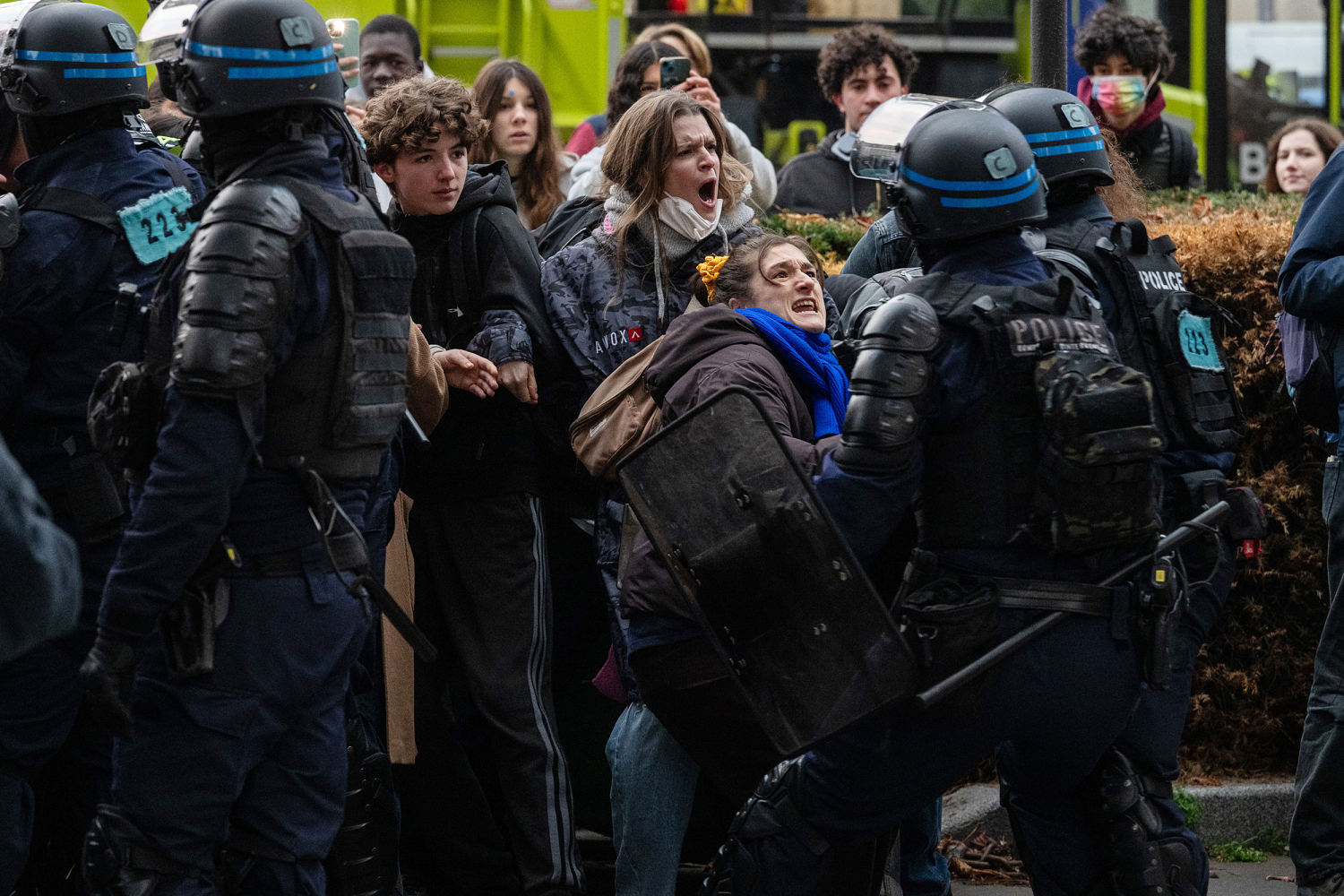
The second front is legal deterrence. Across France, Germany, and the United Kingdom, prosecutors have stopped treating false bomb threats as minor public order offenses. Under updated aviation security statutes, transmitting a false threat to an aircraft in flight carries penalties ranging from five to ten years in prison, alongside staggering financial restitution orders. In France, authorities made a deliberate public spectacle of arresting teenagers and young adults tied to the recent airport hoaxes, seizing their devices in dawn raids and billing their families for the cost of the emergency deployments. The message was blunt: anonymity on the internet has a shorter shelf life than you think.
The third front is international cooperation on digital infrastructure. European justice ministries are pressuring encrypted email providers and domain registrars to establish rapid-response channels specifically for aviation emergencies, bypassing the months-long Mutual Legal Assistance Treaties that typically slow down cross-border cyber investigations.
The Long Walk Back to the Gate
Eventually, the dogs finish their sweep. The bomb squad gives the thumbs-up. The baggage handlers load the suitcases back into the belly of the plane, one by one.
Let’s return to Elena, our hypothetical engineer on the tarmac in Brussels. Six hours after her plane banked steeply over the Channel, she is finally allowed back up the mobile stairs. She missed the rehearsal dinner. Her sister has been crying on the phone, torn between relief that Elena is safe and heartbreak that the family isn't together.
As Elena buckles her seatbelt again, she looks around the cabin. Nobody is scrolling on their phones anymore. Nobody is complaining about the lack of legroom or the price of the onboard snacks. Two hundred strangers sit in quiet, weary solidarity, bound together by an invisible threat that never physically existed, yet managed to steal a day from every single one of their lives.
The engines spool up with a familiar, rising roar. The plane rolls forward, turns onto the active runway, and lifts off into the gray European sky, leaving nothing behind on the tarmac except the faint scent of jet fuel and the quiet, stubborn refusal to stay grounded.