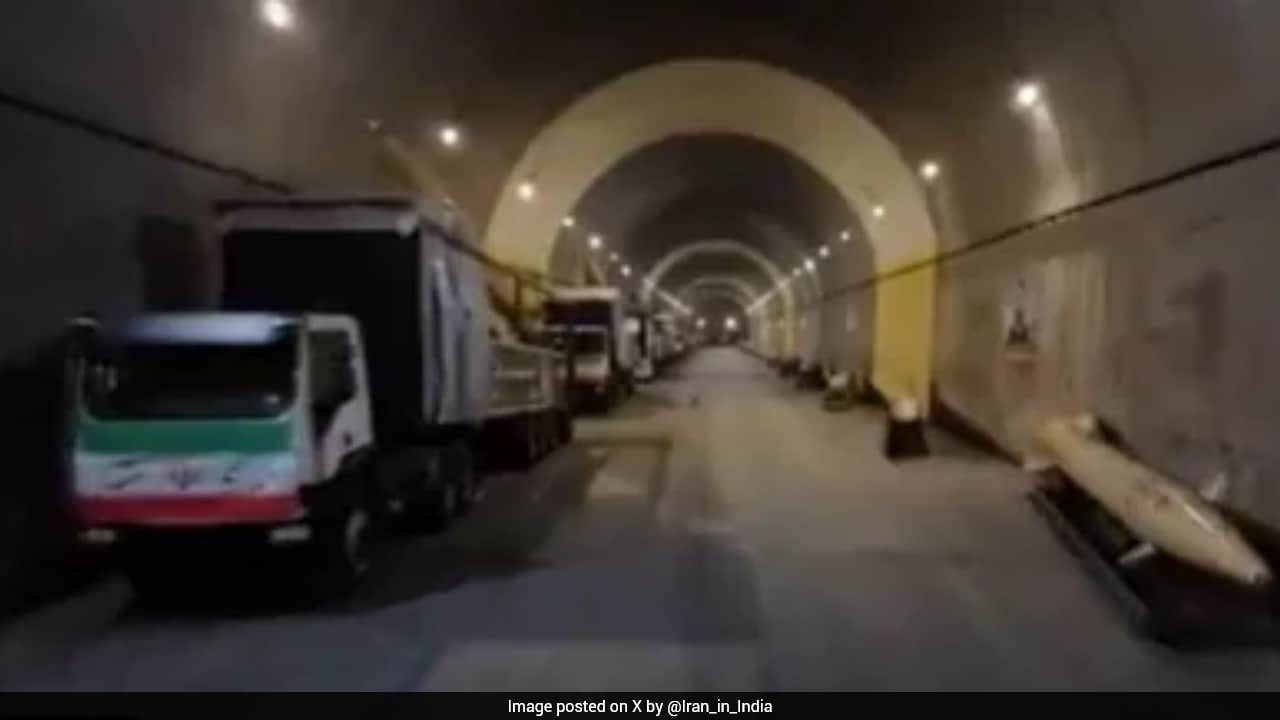
Iran’s development of a twin-tube Transporter Erector Launcher capable of firing two liquid-propellant ballistic missiles from a single vehicle is not just an incremental hardware upgrade. It is a direct tactical response to modern missile defense saturation tactics and an acute shortage of heavy-duty military chassis under international sanctions. By mounting two liquid-fueled missiles—systems traditionally known for volatile propellants, complex pre-launch fueling cycles, and massive logistical footprints—onto one mobile platform, Tehran is attempting to double its salvo density per vehicle while cutting the time its missile crews spend exposed to overhead reconnaissance.
On paper, this engineering choice looks like a contradiction. For the past decade, military analysts have watched Iran steadily pivot toward solid-propellant missiles like the Fateh-110, Zolfaghar, and Haj Qasem families. Solid-fuel rockets sit in canisters ready to fire in minutes, making them ideal for shoot-and-scoot survivability. Liquid-propellant missiles, descended from the Soviet Scud and North Korean Nodong designs, require toxic, corrosive fuels and oxidizers that must often be pumped into the airframe shortly before launch. Putting two of them on a single truck introduces immense weight, severe thermal stress during ignition, and a high-value target for enemy airpower. Yet Tehran went ahead and built it anyway.
The Logistics Trap Behind the Twin-Rail Design
To understand why Iranian engineers embraced the headaches of a dual liquid-propellant launcher, you have to look at the chassis bottleneck. A ballistic missile is useless without a heavy multi-axle truck capable of hauling dozens of tons across rugged terrain, stabilizing the airframe, and elevating it to a vertical firing position.
Sanctions have choked Iran’s access to commercial and military heavy-duty truck platforms from European and Asian manufacturers. While domestic firms have reverse-engineered and produced their own heavy prime movers, the supply of reliable, high-tonnage Transporter Erector Launchers (TELs) remains finite. Every single-missile TEL represents a massive capital and industrial investment.
If you have fifty launchers and fifty missiles, your maximum simultaneous salvo is fifty. If you modify the erector mechanism to carry two missiles side-by-side, you suddenly double your initial volley without building a single extra truck cab, axle, or hydraulic leveling system.
Salvo mass is the currency of modern missile warfare. Missile defense batteries—whether Patriot, THAAD, Arrow, or David’s Sling—operate on strict mathematical intercept ratios. Defenders typically fire two interceptors at every incoming ballistic warhead to guarantee a high probability of kill. When an attacker fires single missiles sporadically, a well-supplied defense network picks them off easily. When an attacker fires dozens of missiles simultaneously from fewer dispersed launch points, interceptor magazines empty rapidly, and radar tracking processors face saturation.
The Engineering Nightmare of Dual Liquid Fueling
Mounting two solid-fuel rockets in sealed launch tubes on one truck is standard practice globally; Russia’s Iskander-M and China’s DF-15 series have used twin-canister configurations for years. Doing the same with liquid-propellant missiles, such as variants of the Shahab, Ghadr, or Emad families, is a far riskier proposition.
Liquid-propellant rockets generally rely on hypergolic fuel combinations—typically a kerosene-based fuel or unsymmetrical dimethylhydrazine (UDMH) paired with inhibited red fuming nitric acid (IRFNA) as an oxidizer. These chemicals eat through seals, valves, and tank walls if left loaded for prolonged periods. Because of this, crews historically deployed with separate fuel and oxidizer tanker trucks, spending anywhere from forty-five minutes to two hours pumping propellants into the missile at a pre-surveyed launch site.
During that fueling window, the launch site is completely stationary and extraordinarily vulnerable. Satellites, high-altitude drones, and signals intelligence aircraft look specifically for the thermal and radar signatures of a TEL surrounded by support tankers.
To make a twin liquid-propellant launcher viable on a modern battlefield, Iranian engineers had to solve three distinct problems:
- Pre-fueled ampoulization: Borrowing older Soviet submarine-launched ballistic missile techniques, Iran has worked to seal liquid propellants inside the missile tanks using rupture discs. This allows missiles to be fueled at hardened underground depots before rolling out, drastically cutting exposure time in the field.
- Blast and thermal deflection: When the first missile ignites, its exhaust plume generates temperatures exceeding 2,500 degrees Celsius and violent acoustic shockwaves. On a twin-rail system, that blast sits mere feet away from a second missile loaded with volatile liquid chemicals. The erector frame requires heavy sacrificial thermal shielding and precision exhaust deflectors to prevent a sympathetic detonation on the launch pad.
- Center-of-gravity shifts: Firing one twenty-ton missile off the left rail while another twenty-ton missile remains clamped to the right rail creates an immediate, violent shift in weight distribution. The TEL’s hydraulic outriggers and suspension jacks must absorb that torque instantaneously without tipping or throwing the second missile’s inertial navigation system out of alignment.
Why Liquid Propellants Still Matter to Tehran
Western defense commentary often treats liquid-propellant missiles as obsolete relics waiting to be phased out by cleaner, faster solid-fuel designs. That assumption misses basic rocket physics.
Liquid propellants offer a higher specific impulse—essentially better fuel efficiency per pound of propellant—than standard solid-fuel composites. Furthermore, liquid engines can be throttled or shut down with millisecond precision.
In ballistic missile trajectory shaping, engine cutoff precision determines accuracy. By cutting fuel flow at the exact calculated velocity, a liquid-fueled missile places its reentry vehicle on a cleaner trajectory than a solid rocket motor, which continues burning until its propellant grain is completely exhausted unless equipped with complex thrust-termination ports.
For medium-range ballistic missiles (MRBMs) designed to cross 1,000 to 2,000 kilometers, liquid propulsion also allows for lighter airframe structures. A solid rocket motor casing must act as a high-pressure combustion chamber along its entire length, requiring heavy steel or carbon-composite walls. A liquid-propellant missile only pressurizes a small combustion chamber at the base, allowing the fuel tanks themselves to be built from lightweight aluminum alloys. That weight savings translates directly into either longer range or a heavier high-explosive warhead.
Iran sits on vast stockpiles of legacy liquid-propellant airframes, engines, and tooling built up since the 1990s. Scrapping that entire industrial base makes zero economic sense. Upgrading the delivery architecture through twin-tube launchers squeezes maximum tactical utility out of existing missile inventories.
The Trade-Offs of Putting Two Eggs in One Basket
Every military engineering solution creates a new vulnerability. By consolidating two liquid-propellant missiles onto one transporter, Iran trades dispersion for salvo density.
Consider a hypothetical scenario during a high-intensity conflict over the Persian Gulf. A single twin-launcher emerges from a subterranean missile base—what Iran calls its "missile cities"—already pre-fueled. It drives five kilometers to a pre-surveyed clearing, deploys its hydraulic jacks, elevates the twin erector boom, and fires Missile A.
Even with rapid sequential firing, there is an unavoidable interval between the first launch and the second. The first rocket motor’s exhaust creates a massive, blinding infrared bloom that overhead space-based infrared sensors (like the U.S. Space-Based Infrared System) detect within seconds. At the same time, the debris, dust, and residual heat around the launch pad require sensors to verify structural integrity before the second missile ignites.
If an adversary has loitering munitions, armed drones, or strike aircraft operating within range, that single truck now presents a target twice as valuable as before. Destroying one vehicle eliminates two strategic missiles and a highly specialized, hard-to-replace multi-axle launcher.
Road mobility also suffers. Carrying two full-scale medium-range liquid missiles pushes gross vehicle weight to the absolute limits of commercial highway infrastructure. Bridges, culverts, and unpaved mountain switchbacks across western Iran become impassable. The launcher is forced onto major arterial roads and predictable staging areas, narrowing the search box for enemy intelligence, surveillance, and reconnaissance (ISR) assets.
Command and Control Friction
Firing two missiles from one platform also complicates targeting data management. Each missile must be loaded with distinct inertial navigation coordinates, atmospheric wind profiles, and warhead fuzing parameters.
If both missiles are aimed at the same hardened target—say, an airbase runway or a radar installation—the fire-control computer must stagger their launch timing or alter their apogee angles so they do not collide mid-flight or interfere with each other’s terminal maneuver phases. If they are aimed at separate targets, the TEL’s onboard fire-control unit has to compute and verify two independent firing solutions simultaneously while managing power distribution and umbilical disconnects for two separate airframes.
How This Fits Into Iran’s Broader Deterrence Doctrine
Iran’s military planners do not build weapons to win symmetrical wars of attrition against superior air forces. They build weapons to impose unbearable costs within the opening hours of a conflict.
Recent regional exchanges—specifically the April 2024 and October 2024 ballistic missile barrages against Israel—demonstrated both the strengths and the limits of Iran’s missile forces. Those strikes proved that Tehran can coordinate complex, multi-axis salvos combining drones, cruise missiles, and ballistic missiles. However, they also revealed that when defenders have advance warning and multi-layered interceptors, individual warheads struggle to penetrate high-value point defenses unless they arrive in tightly compressed time windows.
A twin-tube liquid-propellant launcher directly addresses the time-on-target compression problem.
Instead of coordinating two separate vehicle crews over encrypted radios—risking electronic interception or timing delays—a single launch commander controls two heavy ballistic missiles from one armored cab. Two missiles leave the same grid square within seconds of each other, flying identical atmospheric corridors toward the same defensive sector. Even if one warhead is intercepted, the second arrives right behind it while the defending radar is still sorting through debris clouds and decoy chaff from the first engagement.
This design also serves an export and proxy proliferation angle, though with major caveats. While transferring massive liquid-fueled MRBMs to regional partners like the Houthis in Yemen presents severe logistical hurdles, the modular erector technology itself—adapting heavy civilian flatbed trailers into twin-rail launchers—is easily replicable. Iran has repeatedly shown a talent for hiding military hardware inside standard commercial shipping containers and flatbed trucks, blurring the line between civilian freight and strategic strike platforms until the hydraulic rams lift the roof away.
The Vulnerability Window Remains Open
Despite the cleverness of doubling firepower per chassis, Iran has not escaped the fundamental physics of liquid rocketry. Pre-fueled ampoulized missiles still degrade faster in storage than solid-fuel equivalents. Corrosive oxidizers still demand strict maintenance protocols, specialized Hazmat handling teams, and climate-controlled underground storage tunnels.
A twin launcher increases initial strike volume, but it does not solve reload times. Once both rails are empty, that massive truck has to drive back to an underground depot, navigate blast doors, and undergo a slow, hazardous crane-loading process before it can fire again. In a war where enemy air superiority turns every highway intersection into a kill zone, a missile launcher rarely gets a second trip out of the tunnel.