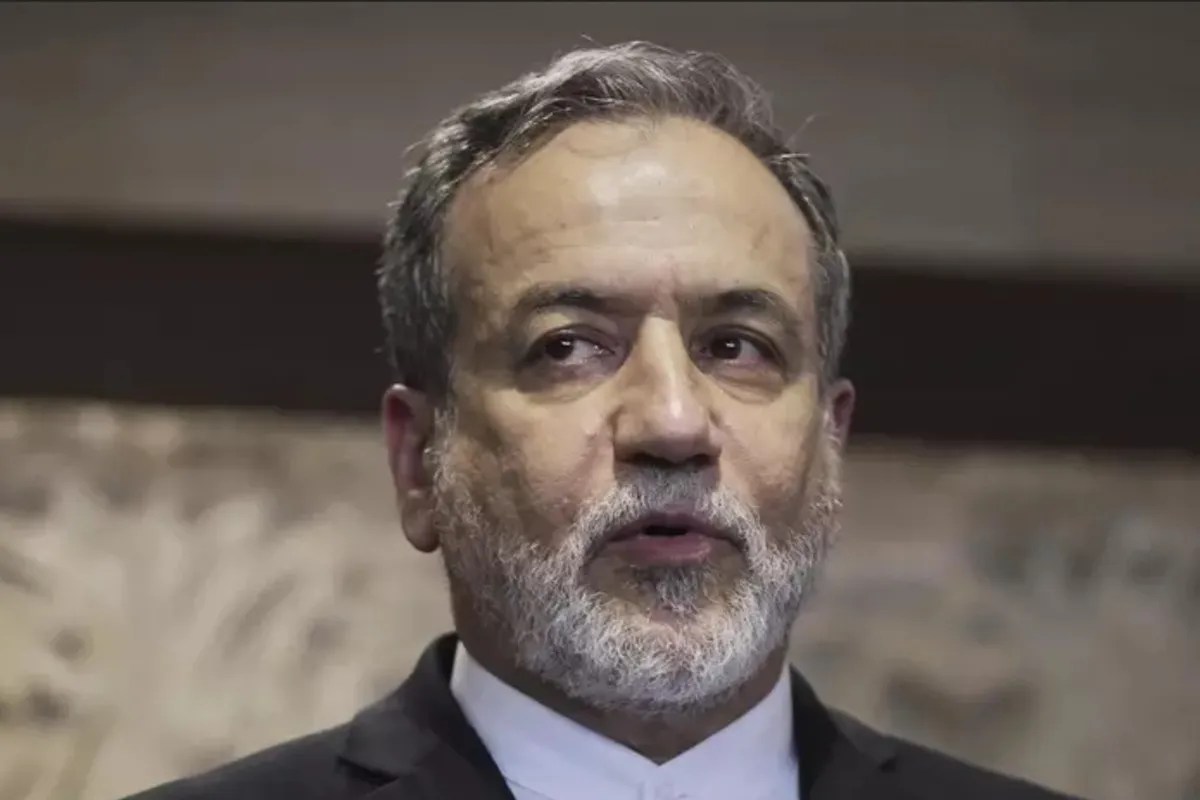
When Iranian Foreign Minister Abbas Araghchi asks what value a deal holds if war resumes two months later, he states a strategic truth that conventional headline coverage treats as mere rhetoric. A diplomatic agreement that leaves both sides with identical incentives to resume fighting does not end a conflict; it only reprices the pause between rounds.
Standard news coverage on this standoff follows a predictable loop. It quotes an official warning, summarizes a list of demands, mentions backchannel mediators, and repeats whether leaders sound optimistic or combative. That format captures surface posture while missing the underlying mechanics: why prior truces collapsed, how shipping chokepoints and sanctions convert into bargaining leverage, and what institutional constraints prevent quick compromises.
The blueprint below replaces surface commentary with a structured model of the standoff. First, it maps the commitment problem driving Tehran's skepticism. Second, it breaks down the core bargaining variables—maritime transit, economic pressure, and nuclear stockpiles—into their operational mechanisms. Third, it examines the domestic governance and mediation channels shaping negotiations. Finally, it outlines the failure modes and strategic actions required to test whether any agreement can hold.
Deconstructing the Standard Headline Narrative
Typical coverage frames Araghchi's remark as a blunt refusal or an ultimatum. Treating a negotiation stance as a fixed mood obscures what the statement actually signals about bargaining credibility.
In international relations, this dynamic is a commitment problem. When two adversaries have a history of broken pauses and unresolved grievances, signing a truce creates an immediate vulnerability: the side that lowers its guard first faces the risk of a surprise resumption of force if the other side decides the temporary settlement no longer serves its interests.
From Tehran's perspective, a short-lived pause carries a specific asymmetric cost. Concessions on maritime access or negotiation posture can be reversed or tested once immediate pressure eases, while prior truces—such as the resumption of hostilities after the June truce—reinforce distrust over durability. Conversely, Washington views agreements through the lens of compliance and enforcement, questioning whether commitments will be honored on the ground while maintaining military pressure and naval blockades.
Distinguishing known facts from educated hypotheses clarifies what is observable:
- Known facts: Public statements from Iranian officials rejecting deals seen as temporary or one-sided; ongoing diplomatic contacts mediated through regional actors such as Qatar and Pakistan; continued naval and economic friction alongside public warnings from both capitals.
- Educated hypotheses: Tehran's insistence on broad, durable terms reflects a calculation that piecemeal concessions without enforceable guardrails invite renewed military strikes once political or operational windows shift. Washington's posture reflects an effort to extract concessions while preserving leverage rather than granting sanctions or naval relief upfront.
The Three Pillars of Bargaining Leverage
Rather than treating each demand in isolation, negotiations center on three coupled mechanisms that determine how much pain each side can inflict and absorb.
Maritime Chokepoints and Transit Timelines
Control and disruption around the Strait of Hormuz act as a direct transmission belt between regional military friction and global energy markets. Because a large share of seaborne petroleum passes through narrow waters, even localized interdiction, rerouting, or threat perception raises shipping risk and insurance costs.
Negotiations over reopening or normalizing transit hinge on sequencing and verification. Proposals to compress implementation timelines—such as shrinking a multi-day window down to two days or less—attempt to solve a timing dispute. Yet timeline compression does not solve the core verification question: how each side knows the other has fulfilled upfront commitments before risky maritime operations resume.
Economic Squeeze and Domestic Adjustment Costs
Economic pressure operates through trade friction, currency strain, and fiscal constraints rather than a single switch. When sanctions and maritime blockades restrict trade routes and financial channels, import costs rise, foreign exchange faces downward pressure, and domestic subsidies or budgets tighten.
This creates a cost function of endurance for Tehran. Energy-rich economies still face acute domestic friction when logistics, refining, or external payment channels are constrained. At the same time, leaders in Tehran publicize domestic resilience and infrastructure projects to signal that economic squeeze will not force unconditional surrender.
Nuclear Stockpiles and Package Linkage
Disputes over enriched uranium stockpiles sit at the intersection of technical verification and broader political bargaining. Tehran has maintained that its official nuclear doctrine has not changed while arguing that nuclear terms cannot be separated from wider national security and economic demands.
Linking nuclear arrangements to broader terms changes the negotiation structure. Instead of trading a narrow technical limit for a narrow relief measure, linkage ties nuclear concessions to guarantees against renewed conflict and broader political outcomes. That linkage raises the stakes of every clause and slows agreement, because a single unresolved dispute can stall the entire package.
Cause-and-Effect Chains Standard Reports Miss
Headline summaries often list grievances side by side without tracing how one move triggers the next. Three causal chains govern escalation and stalemate in this conflict.
First, asymmetric escalation creates deterrence traps. When a state faces superior conventional military power, it often relies on asymmetric levers—such as maritime pressure, regional proxies, or disruptors at chokepoints—to raise the adversary's costs. The adversary responds with naval enforcement, strikes, or heightened military readiness. Each side interprets its own moves as defensive deterrence and the other's moves as offensive provocation, locking both into a cycle where de-escalation looks like weakness.
Second, domestic audience costs constrain public concessions. Leaders on both sides face domestic constituencies that penalize visible backing down. If a deal can be framed by opponents or rivals as a one-sided surrender, the signing leader absorbs severe political risk. That is why officials emphasize that terms must be mutually acceptable and not framed as an adversary's triumph.
Third, multi-front linkage prevents isolated fixes. A localized pause on one issue—such as a narrow shipping arrangement or a temporary ceasefire—can unravel if fighting or pressure persists on another front or involves regional allies. When actors treat fronts as interconnected, an isolated compromise rarely holds unless the broader conflict dynamic is addressed.
Governance Bottlenecks and Mediation Mechanics
Even when negotiators exchange revised proposals, institutional structure shapes how fast—and how reliably—an agreement can move.
In Iran's system, final approval of sensitive national security agreements does not rest solely with the foreign ministry; proposals undergo review by national security bodies such as the Supreme National Security Council's negotiating committee before final authorization. That multi-step review acts as a filter against hasty deals, but it also introduces deliberation delays and requires internal alignment across political and security institutions.
Mediation through regional intermediaries like Qatar and Pakistan helps bridge direct hostility when formal channels are strained or interrupted. Mediators can carry modified drafts, test red lines without public posturing, and propose phased steps. However, mediators have structural limits: they cannot manufacture trust between Washington and Tehran, nor can they force either capital to accept terms its leadership views as a strategic loss.
Step-by-Step Framework to Evaluate Any Proposed Deal
To cut through competing claims whenever a new draft or framework emerges, apply a five-step operational test:
- Map the sequencing rule. Identify which side must act first on each obligation—such as maritime access, naval restrictions, sanctions or blockade relief, or stockpile arrangements. Any plan that leaves the hardest verification step for last carries high collapse risk.
- Audit enforcement and violation triggers. Check whether the text defines what counts as a breach and what automatic consequences follow. Vague promises without clear tripwires invite rapid unraveling once initial goodwill fades.
- Trace front-to-front spillover. Determine whether the agreement covers the active flashpoints mentioned by both sides or leaves adjacent theaters open. Uncovered fronts often become the venue where pressure resumes.
- Test domestic survival for both sides. Ask how each leadership can defend the deal at home without looking defeated. Agreements that require one side to accept public humiliation rarely survive domestic pushback.
- Stress-test against political and operational shifts. Evaluate how the deal holds up after leadership calendars, legislative shifts, or military deployments change. A deal built only for the current week's pressure is fragile by design.
Limitations and Analytical Blind Spots
No analytical framework can eliminate uncertainty in an active geopolitical dispute. Key limitations bound any assessment of this standoff:
- Non-public text: Draft proposals, side letters, and backchannel understandings are often confidential or reported selectively, making external verification of exact wording impossible.
- Information warfare and signaling: Public statements from officials and leaders serve strategic signaling purposes—testing resolve, reassuring domestic supporters, or pressuring opponents—and may not reflect private fallback positions.
- Unplanned incidents: Mis Calculation, local clashes, or third-party actions can trigger escalation regardless of whether negotiators are making quiet progress through mediators.
Strategic Action
For policymakers, analysts, and risk managers tracking the standoff, the primary mistake is treating a truce announcement as proof of durable peace or treating tough rhetoric as proof that talks are dead. Track verifiable sequencing and enforcement mechanisms rather than headline tone. Specifically, monitor whether mediators produce concrete, phased steps with clear compliance checks across maritime transit, economic restrictions, and security guarantees; until enforceable guardrails replace short-term pauses, expect recurring cycles of brinkmanship, fragile truces, and renewed pressure.