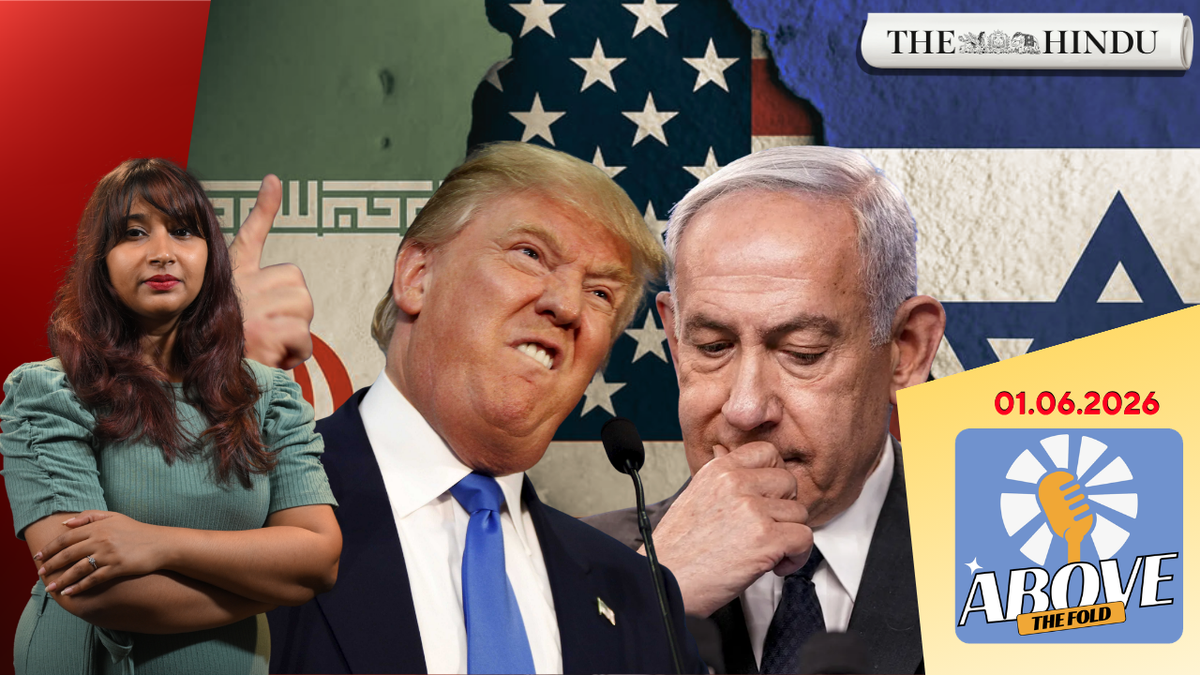
Mainstream media is stuck in a loop of predictable, lazy analysis. Look at the headlines covering June 2026 global affairs. They all peddle the same two narratives. First, they wring their hands over the "uncertainty" of a United States-Iran diplomatic breakthrough. Second, they breathlessly report on local religious and political leaders calling for a Ladakh-style regional unity movement in Jammu and Kashmir.
Both narratives are fundamentally broken.
The pundits look at these geopolitical flashpoints and see fluid, unpredictable situations that just need the right amount of diplomatic grease or grassroots organizing to resolve. They are wrong. These are not uncertain situations. They are highly predictable, structurally locked stalemates. The mainstream press is asking the wrong questions, hunting for breakthroughs where none can exist, and completely misreading the underlying mechanics of power.
Let us stop analyzing these events through the lens of wishful thinking and look at the brutal, unvarnished math of geopolitics.
The Washington Tehran Theater of Perpetual Friction
Diplomatic correspondents love the word uncertainty. It allows them to file the same story every three months without ever committing to a hard prediction. They report on every minor diplomatic gesture or stalled backchannel meeting as if it might alter the trajectory of Middle Eastern alignment.
It will not. The Iran-U.S. deal is not uncertain. It is dead, and it has been dead for years.
The structural incentives for both Washington and Tehran actively penalize a grand bargain. To understand why, you have to look past the rhetoric of the state departments and look at domestic survival strategies.
For the clerical regime in Tehran, anti-Americanism is not a policy position; it is a foundational pillar of domestic legitimacy. The ruling elite cannot afford a genuine rapprochement because the existence of an external adversary justifies internal security crackdowns, economic mismanagement, and the consolidation of power by conservative factions. When inflation spikes or domestic protests brew, the state needs the specter of the American hegemon to deflect blame. A comprehensive deal removes the shield that keeps the regime intact.
Conversely, Washington operates within a domestic political framework where any compromise with Iran is a toxic liability. No administration, democratic or republican, gains enough domestic political capital from an Iranian deal to offset the massive backlash from congressional hawks, regional allies, and defense sector interests.
The geopolitical reality is a state of managed friction.
[Domestic Political Needs] -> Drives External Hostility -> Creates Perpetual Friction -> Stabilizes Internal Power
The United States wants a contained Iran that does not trigger a regional war but remains enough of a threat to justify military partnerships and hardware sales across the Gulf. Iran wants enough nuclear leverage to prevent an invasion, but not enough to trigger an immediate, devastating preemptive strike from regional adversaries.
This is a stable equilibrium. It is a feature of the international system, not a bug. Calling it uncertain implies that a few better meetings or a change in diplomatic personnel could yield a different result. I have spent years tracking how defense intelligence and energy markets price these risks, and the smart money never bets on a breakthrough. They bet on the continuation of the status quo because the status quo serves the immediate survival needs of the players involved.
Dismantling the PAA Fallacy: Will a US-Iran Deal Stabilize Oil Markets?
People frequently ask if an eventual deal will permanently stabilize global energy markets by unleashing Iranian crude. This question is based on a false premise.
First, Iranian crude is already in the market. Through a complex network of dark fleet tankers, ship-to-ship transfers, and clearinghouses in East Asia, millions of barrels of Iranian oil move across the globe every day. The market has already priced this in.
Second, the volatility in oil markets is driven by structural underinvestment in refining capacity and shifting supply chains, not by the legal status of Iranian exports. A formal deal would merely transition these barrels from the black market to the open market, shifting revenues without fundamentally altering the global supply-demand balance. Stop waiting for a diplomatic pen stroke to lower prices at the pump.
The Ladakh Delusion in Jammu and Kashmir
Closer to the subcontinent, we see a different flavor of naive optimism. Local leaders, notably prominent clerics like Grand Mufti Nasir ul Islam, have recently called for a unified political front in Jammu and Kashmir, pointing to the administrative and political separation of Ladakh as a template for collective action and regional identity preservation.
This comparison is not just flawed; it is historically and structurally illiterate.
Ladakh achieved its distinct status because it possessed a rare alignment of demographic cohesion, geographical isolation, and a singular political objective: separation from the political dominance of the Kashmir valley. The Ladakhi movement succeeded because it was a targeted, localized effort that aligned neatly with New Delhi’s strategic desires to reconfigure the administrative map of the region in 2019.
To suggest that Jammu and Kashmir can replicate this model through a sudden burst of political unity ignores the deep, irreconcilable fractures embedded in the region's demography and political history.
Jammu and Kashmir is not a monolith. It is a fragile jigsaw puzzle of competing identities, regions, and interests:
- The Kashmir Valley: Historically focused on autonomy, distinct cultural identity, and political dominance over the state's apparatus.
- Jammu: Demographically distinct, economically integrated with mainland India, and historically resistant to the political dominance of valley-based parties.
- Sub-regional Identities: Fractured further by ethnic lines including Dogras, Gujjars, Paharis, and Kashmiri Pandits, each with wildly divergent views on governance, land rights, and political alignment.
Calling for a Ladakh-like unity movement assumes you can erase decades of deep-seated suspicion with a press conference. It is a rhetorical move designed to project leverage that does not exist.
Why Political Monoliths Fail in Post-2019 J&K
The constitutional changes of 2019 permanently altered the rules of the game. The old political guard in Kashmir used to maintain power by playing a delicate game of balancing local sentiment against federal demands. That architecture is gone. New Delhi has made it abundantly clear that the old framework of regional exceptionalism will not return.
In this new reality, calling for total unity across highly diverse sub-regions is counterproductive. It forces groups with fundamentally incompatible goals into an artificial alliance that will inevitably collapse under the weight of its own contradictions. Jammu will not subordinate its economic and political aspirations to a valley-centric agenda, and the valley cannot easily adopt the political posture of Jammu.
Instead of chasing the ghost of a unified regional front, local political actors need to accept a harder truth: the future of governance in the region lies in hyper-local, fragmented advocacy.
Success in the current political climate requires competing interest groups to cut specific, localized deals regarding land protections, job quotas, and development funds directly with the central government, rather than trying to build a massive, fragile coalition that New Delhi views as an existential challenge to its integration strategy.
The Cost of Swallowing the Conventional Narrative
What happens when analysts, investors, and policymakers believe the mainstream consensus? They misallocate resources and miscalculate risk.
Imagine an energy trader holding off on long-term positions because they believe a breakthrough in U.S.-Iran talks is imminent, or a regional investor freezing capital infrastructure projects in northern India because they fear a massive, coordinated political upheaval based on the rhetoric of regional unity. Both are making decisions based on fiction.
The downsides of my contrarian view are obvious: it offers no hope of a clean, peaceful resolution. It accepts that some conflicts are not meant to be solved; they are meant to be managed. It acknowledges that friction, division, and stalemate are often the natural endpoints of competing rational interests.
But the upside is clarity. When you accept that the Iran-U.S. deal is a mirage and that Jammu and Kashmir political unity is a demographic impossibility, you stop looking for the grand explosion or the grand bargain. You start looking at the real indicators: the volume of covert oil shipments, the specific allocation of central development funds to specific districts, and the local legislative amendments that actually alter property rights on the ground.
Stop reading the headlines that promise imminent change or call for impossible solidarity. The international order is rigid, cynical, and highly resistant to romantic notions of diplomacy and unity. Watch the structural incentives, ignore the speeches, and track where the money actually flows. Everything else is just noise designed to keep you clicking.