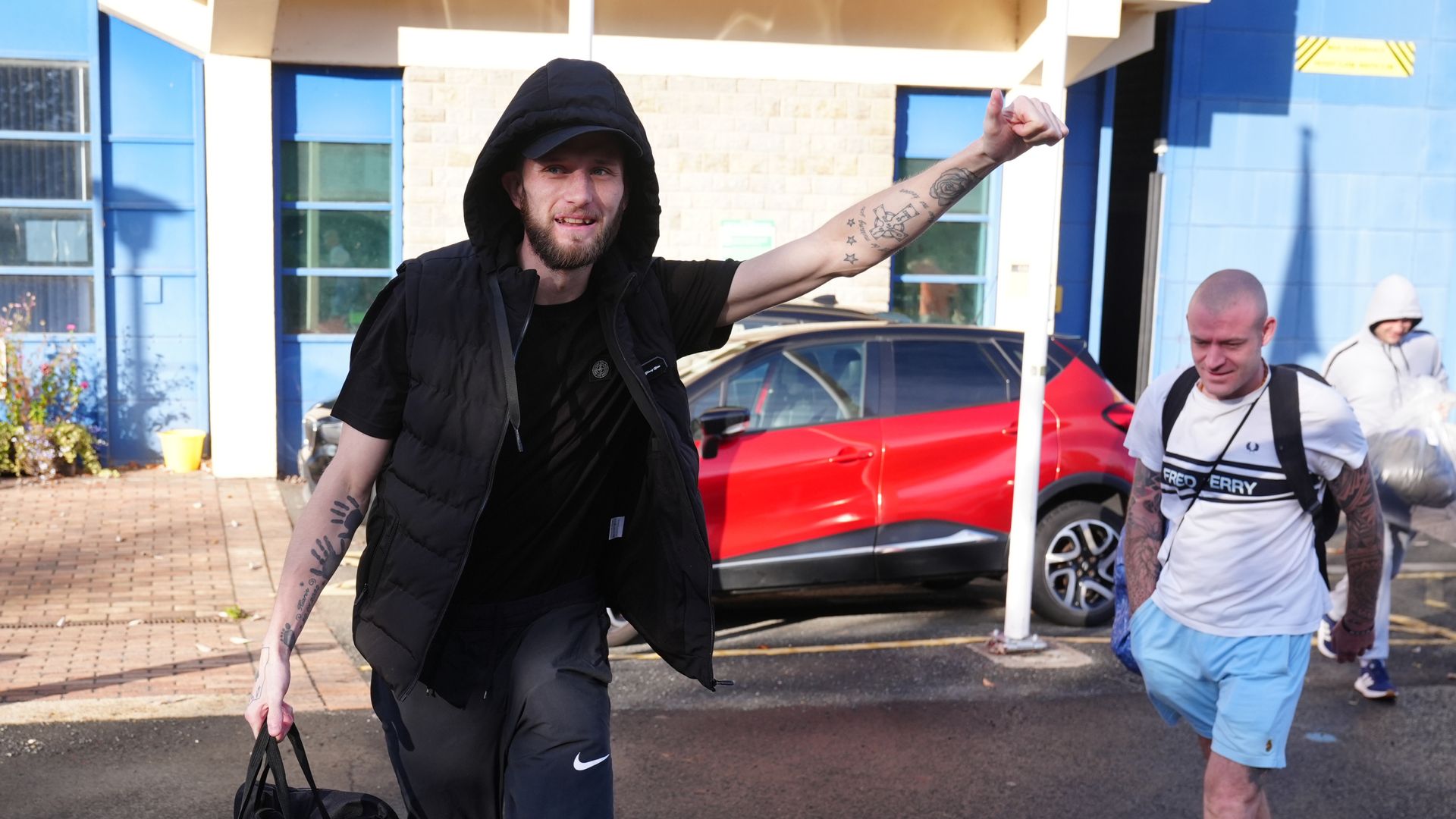
The heavy steel door does not whisper when it opens. It groans. It grinds against concrete and time, vibrating through the soles of cheap shoes and straight up into the jaw.
Outside, the air tastes different. It tastes like diesel fumes, damp asphalt, and a sudden, violent abundance of space. There is no perimeter fence out here. There are no guard towers cutting sharp silhouettes against the gray dawn. There is only a narrow strip of sidewalk, a row of waiting cars, and the terrifying, weightless reality of a Tuesday morning that belongs to nobody but the person standing in it.
"Yes, cuzzie."
The greeting cuts through the morning quiet. It is rough, familiar, filled with the specific, bruised warmth of a bloodline forged behind razor wire. A pair of arms wraps around a broad shoulders, thick with cheap cotton prison-issue fabric that is about to be discarded. A laugh breaks out—sharp, nervous, and disbelief-soaked.
Hundreds of men and women are stepping through those doors today. Not because their sentences magically vanished. Not because the legal system suddenly decided to forgive the ledger of their pasts. They are walking out because the math of the concrete boxes simply ran out of room.
Prisons are overflowing. The beds are stacked too high, the corridors hum with a low, electric aggression born of overcrowding, and the state has looked at its spreadsheets and realized a blunt truth. There is no money left to keep locking more people up for every minor infraction, and there are no cells left to put them in. So, in a second major wave of early releases, hundreds are being handed a plastic bag of personal belongings, a transit ticket, and a sudden, unfiltered second chance at ordinary life.
Call it policy. Call it pragmatism. Call it an administrative emergency. But on the ground, where the rubber meets the cold pavement, it is something much heavier. It is an earthquake scaled down to human size.
Consider what happens next.
Imagine a man we will call Marcus. (He is a composite, stitched together from dozens of case files and parole officers' notebooks, but his hands trembling as he holds a smartphone for the first time in seven years are entirely real.) Marcus spent four years inside a medium-security facility four hours away from any city he ever knew. When he walked in, smartphones were curiosities with physical keyboards; when he walks out, they are glowing glass gods that everyone interacts with like an extra limb.
He stands at the bus stop outside the correctional center. He has forty dollars in gate money, a transit pass, and a set of clothes that don't quite fit his shoulders because he lost thirty pounds of nervous weight in the first year and then bulked back up on institutional carbohydrates.
He looks at the bus schedule. The text is small. His eyes, adjusted to the fluorescent glare of indoor blocks and the dim amber of yard lights, squint against the harsh midday sun. A teenager walks past, listening to music through wireless white earbuds that look like small plastic drops of rain. Marcus stares at the kid's ears, half-expecting a wire, wondering where the player is.
This is the invisible shock of release. The world did not freeze while Marcus was inside. It kept spinning, upgrading, accelerating, and forgetting him.
The public debate surrounding early releases is usually reduced to loud shouting matches on morning talk shows. On one side, safety advocates point to recidivism rates and the undeniable reality of crimes committed by people who should have stayed behind bars. On the other side, reform economists point to the staggering cost of incarceration—often upwards of fifty thousand dollars per inmate annually—and the proven failure of warehousing human beings without rehabilitation.
Both sides are screaming past each other, armed with statistics that flatten living breathing humans into data points.
Let us look at the actual math. Overcrowded facilities breed violence. When staff-to-inmate ratios drop to dangerous lows, the internal governance of the yard falls to gangs and informal enforcers. Rehabilitation programs—the welding classes, the literacy workshops, the mental health counseling—get squeezed out to make room for basic containment and security lockdowns. Keeping a non-violent offender locked away for an extra six months does not magically transform them into a model citizen; often, it hardens their edges, severs their remaining community ties, and ensures that when they finally do emerge, they are more broken and disconnected than when they entered.
Yet, turning the key the other way carries its own freight.
When hundreds of people are released in rapid succession, the support systems groan under the sudden weight. Halfway houses fill up in hours. Parole officers find their caseloads doubled overnight. Employment agencies receive stacks of resumes with massive, multi-year gaps and a check-box that screams of a felony conviction.
The system opens the iron door, pushes the individual through, and too often washes its hands with a muttered administrative blessing. Good luck out there. Don't come back.
And that is where the real story begins. Because the state's involvement ends the moment the bus pulls away, but the human consequence lasts a lifetime.
Back at the bus stop, Marcus finally boards. He sits near the back, clutching his plastic bag like a shield. Every time someone moves too fast in the aisle, his right shoulder twitches—an instinctive, hardwired flinch developed in environments where a sudden movement meant a fight or a shakedown.
He looks out the window as the city skyline rises into view. Cranes dot the horizon. New glass towers reflect the clouds. Entire neighborhoods have changed names, coffee shops have replaced auto body repair yards, and his mother’s old apartment building is now surrounded by upscale boutiques he cannot afford to walk into.
He is technically free. But freedom without a map is just another kind of confinement.
He gets off two blocks away from his sister's house. He walks slowly, his boots scuffing the concrete. He stops at the corner store, staring through the glass at the rows of energy drinks and candy bars. He has a five-dollar bill. He doesn't know how much a bottle of soda costs anymore. Inside, inflation has turned every price tag upside down.
When he knocks on his sister’s door, there is a long, heavy silence from the other side. Not because she doesn't love him, but because love shaped by years of collect-call anxiety, missed birthdays, and court dates is complicated. It is guarded. It holds its breath.
The lock turns. The door opens an inch. Then wide.
"You're late," she says, her voice cracking slightly as her eyes immediately zero in on the cheap plastic bag in his hand.
"Traffic," Marcus lies softly, offering a weak, crooked smile.
She pulls him inside before the neighbors can stare, and the door clicks shut behind them, cutting off the sound of the street.
This is what the second wave of early releases actually means. It is not a headline about prison capacity margins or judicial efficiency metrics. It is thousands of tiny, awkward, terrifying homecomings happening in quiet living rooms across the country. It is sisters opening doors with trembling hands. It is mothers weeping over kitchen tables. It is men and women sitting on the edges of unfamiliar beds, staring at the ceiling, wondering how to become ghosts who came back to life.
The iron gates will open again tomorrow. More buses will idle at the curb. More plastic bags will change hands. And the long, quiet, unheralded work of piecing broken lives back together will continue, far away from the cameras, in the heavy silence of the rooms where second chances finally begin.