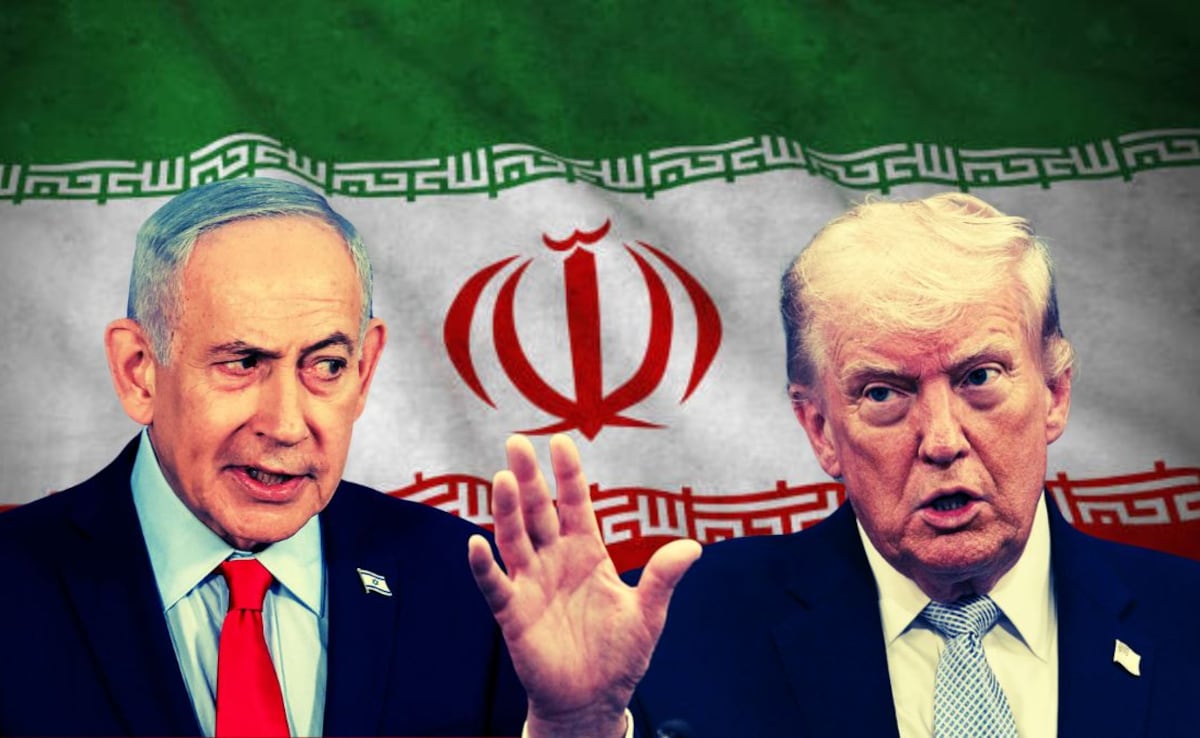
The headlines are screaming about a "betrayal." They paint a picture of a blindsided Jerusalem, an arrogant Washington, and a regional alliance crumbling under the weight of a secret deal. It is a neat, dramatic narrative that fits perfectly into the 24-hour news cycle. It is also fundamentally wrong.
The notion that Israel was "kept in the dark" on the Iranian ceasefire negotiations is a convenient fiction maintained by both sides. For the White House, it allows for the quiet execution of a containment strategy without the immediate political interference of the Likud party. For the Israeli government, it provides a necessary public mask: the "outraged ally" who can maintain its hawkish domestic credentials while privately benefiting from a cooling of immediate hostilities.
If you believe the United States simply forgot to call its closest Middle Eastern ally, you do not understand how modern diplomacy operates. This was not a lapse in communication. It was a calculated exclusion designed to provide both parties with plausible deniability.
The Myth of the Blindsided Ally
Let’s dismantle the lazy consensus first. Critics argue that by excluding Israel from the final stages of negotiation, the U.S. undermined its own credibility. They claim that "trust is the currency of diplomacy." In reality, the currency of diplomacy is leverage. Trust is what you talk about in press briefings to keep the public satisfied.
I have watched high-stakes regional negotiations for decades. When a superpower moves to freeze a conflict with a pariah state, it does not bring the regional rival to the table. Why? Because the rival’s presence makes a deal impossible. Israel’s stated policy is the total dismantling of the Iranian proxy network. That is a noble goal, but it is not the immediate goal of a U.S. administration trying to prevent a global energy crisis or a nuclear breakout during an election year.
The "secrecy" was the feature, not the bug. By the time the details leaked, the framework was already baked in. Israel’s public protest is the performance art required to satisfy a domestic base that demands a hard line, even while the defense establishment quietly breathes a sigh of relief that the immediate threat of a multi-front escalation has been delayed.
The Strategic Value of the Information Vacuum
In geopolitical terms, information is a weapon. Keeping Israel at arm’s length during the final sprint allowed the U.S. to present Iran with a deal that wasn't instantly vetoed by Jerusalem's specific tactical demands.
- Plausible Deniability: Prime Minister Netanyahu can tell his cabinet he fought the deal because he didn't see the fine print until it was too late. This prevents a right-wing coalition collapse.
- Operational Freedom: The U.S. can push through concessions that would be politically radioactive if they were discussed in an open forum with Israeli intelligence officials present.
- Escalation Control: If Israel knows every move, Iran assumes the U.S. and Israel are acting as a single unit. By creating visible friction, the U.S. signals to Tehran that it is a "neutral" mediator of its own interests, which is the only way to get a regime like Iran to sign anything.
The outrage is a tactical necessity. If Israel praised the deal, the deal would die in Tehran. If the U.S. briefed Israel every hour, the deal would die in the halls of the Knesset.
Why Washington Stopped Asking for Permission
For too long, the U.S.-Israel relationship has been viewed through a lens of "consultation first." This is a relic of a unipolar world. Today, Washington is pivoting. The U.S. interest in the Middle East is no longer about total victory; it is about management.
Managing a conflict requires the ability to ignore your friends. This isn't a sign of weakness; it’s a sign of a superpower reasserting its own priorities over the parochial concerns of its regional partners. We see this in every theater. In Eastern Europe, the U.S. regularly caps the range of weapons provided to Ukraine despite Kyiv’s pleas. In the Pacific, it negotiates trade corridors without giving every island nation a seat at the head of the table.
Israel is a powerhouse, but it is a regional powerhouse. The U.S. is a global one. The "unhappy" rhetoric we are hearing is the sound of a regional power realizing that its "veto" over U.S. foreign policy has expired.
The "Betrayal" Narrative is a Tactical Smokescreen
When analysts talk about "strained ties," they are looking at the surface ripples and ignoring the deep currents. Look at the data that actually matters:
- Military Aid: Has it stopped? No.
- Intelligence Sharing: Has the pipeline dried up? No.
- Joint Exercises: Are they canceled? No.
The foundational pillars of the relationship remain untouched. The "darkness" surrounding the Iran deal is a cosmetic issue. It is a disagreement over the process, not the partnership.
By focusing on the "shock" of the deal, the media ignores the actual mechanics of the ceasefire. They ignore how the deal buys Israel time to replenish its Iron Dome interceptors and reshuffle its northern command. They ignore how it forces Iran to pull back its proxies, even if only temporarily, which is exactly what Israel wants but cannot negotiate for itself.
The Brutal Reality of Regional Realignment
The premise of the "People Also Ask" section in most news cycles is: "Will this break the U.S.-Israel bond?"
The answer is a blunt no. But it will change the nature of the bond. We are moving toward a "Strategic Autonomy" model. The U.S. will act in its own interest—which includes a stable global oil market and no new wars—and Israel will act in its interest—which includes total security. Sometimes those interests align. Sometimes they don't.
The era of the U.S. acting as Israel’s lawyer in every room is over. Washington has decided to be the judge instead. And a judge doesn't consult the plaintiff before delivering a verdict that keeps the peace.
Stop Mourning the Transparency That Never Existed
If you are shocked by this "secrecy," you have been sold a sanitized version of history. From the 1956 Suez Crisis to the clandestine negotiations leading to the Oslo Accords, the most significant shifts in Middle Eastern history have happened in the dark.
Public diplomacy is for the weak. Private, exclusionary, and often "rude" diplomacy is how the world actually changes. Israel’s anger is a badge of honor for U.S. negotiators; it proves to the rest of the world—and specifically to the Arab states—that the U.S. is not a puppet of Jerusalem.
This perception is worth more to the U.S. than a few weeks of "happy" headlines in the Israeli press. It restores the U.S. as the only power capable of talking to everyone, a position it almost lost by being too transparent with its allies.
The deal isn't a failure of communication. It is a victory of pragmatism. The U.S. realized that to get the result it wanted, it had to stop treating its ally like a co-pilot and start treating it like a passenger.
Passengers don't always like the flight path. They don't always like the turbulence. But they still need the pilot to land the plane.
Jerusalem knows this. Washington knows this. The rest is just noise for the cameras.
Go back and look at the "angry" statements. They are carefully worded, focused on the process, and leave plenty of room for "continued cooperation." It is a scripted tantrum designed to preserve the status quo while the world shifts beneath it.
The deal is done. The secret is out. And the alliance is exactly where it needs to be: functioning in the shadows while the actors scream at each other in the light.
Stop asking if the U.S. should have told Israel. Start asking why you ever thought they had to.