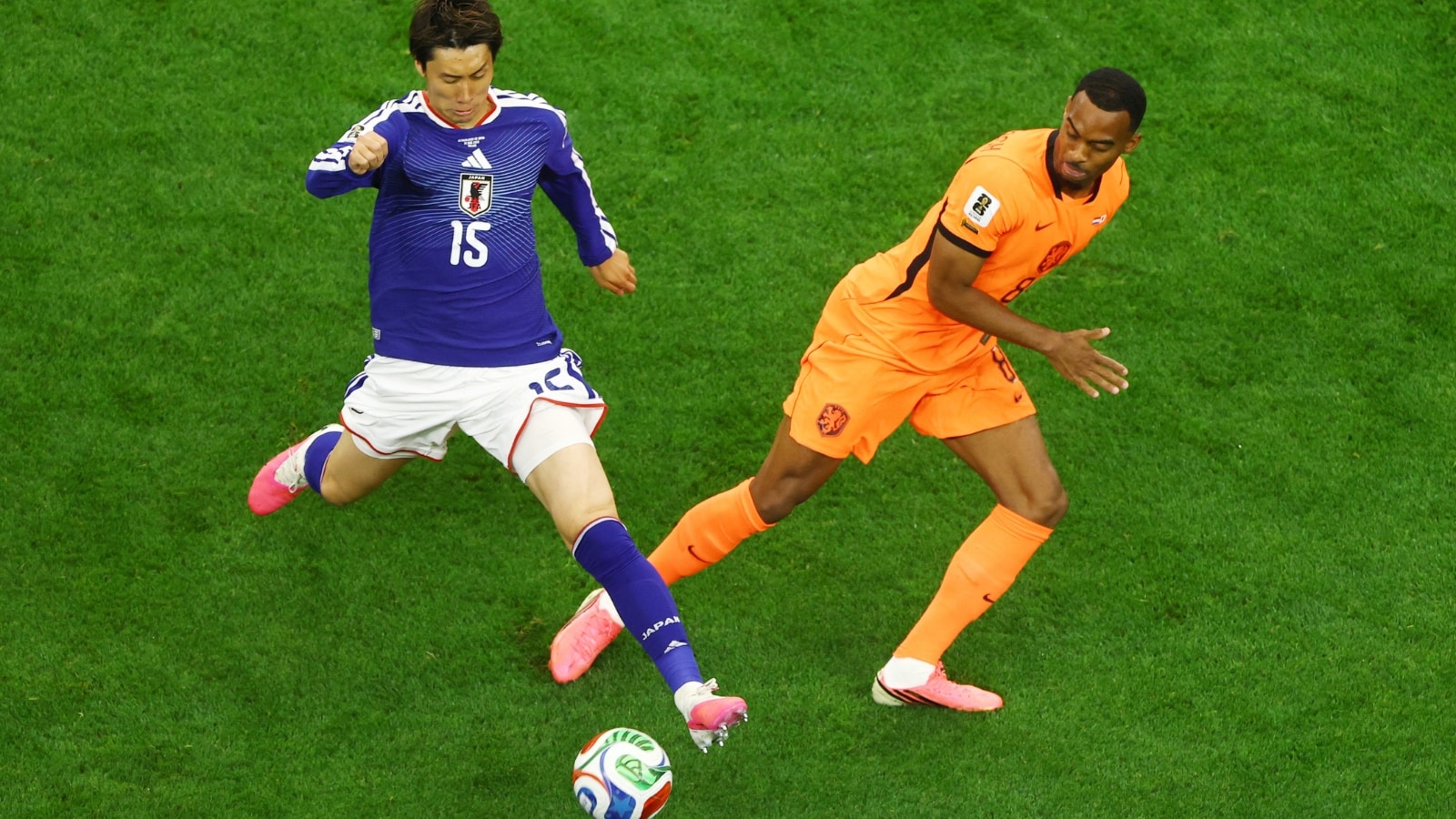
The mainstream football media is currently drooling over a "Texas thriller." They are calling Japan’s 2-2 comeback against the Netherlands in the 2026 World Cup group stage a masterpiece of resilience and entertainment.
They are entirely wrong.
What went down under the roof in Texas wasn't a masterclass. It was a tactical disasterclass masked by high-octane chaos. If you watched that match and saw two genuine World Cup contenders, you are falling for the oldest trick in the sports broadcasting book: confusing bad defending with elite attacking.
As a tactical analyst who has spent fifteen years breaking down modern pressing systems and positional structures, I felt physical pain watching this match. The punditry class is praising Japan's "spirit" and Ronald Koeman’s "fluidity." Let’s strip away the hype and look at the brutal reality of what actually happened on that pitch.
The Illusion of the Japanese Comeback
The current narrative is comforting. Japan fell behind 2-0 to a superior Dutch side, adjusted at halftime, and fought back with technical brilliance to secure a vital point.
Here is what actually happened: Louis van Gaal’s ghost seems to still haunt this Dutch side, but without any of the structural discipline.
The Netherlands didn't dominate the first half because of tactical superiority. They dominated because Japan’s initial mid-block was shockingly passive. Hajime Moriyasu deployed a defensive line that dropped so deep it practically invited the Dutch midfield to dictate play without a single ounce of pressure.
When Japan "battled back" in the second half, it wasn’t because of some magical tactical epiphany. It was because the Dutch engine room completely collapsed logistically.
The Midfield Vacuum
Look at the tracking data from the 55th to the 80th minute. The Dutch central midfield pair stopped tracking vertical runners entirely. Japan didn't carve the Netherlands open; the Netherlands left the front door wide open, turned off the security system, and went to sleep.
- The First Japanese Goal: A basic third-man run that any under-15 academy side should track. The Dutch center-backs were left completely isolated because the midfield pivot failed to drop into the defensive line.
- The Equalizer: Pure structural negligence. A cleared corner where the Dutch edge-of-box coverage was nonexistent, allowing a second-phase cross to find an unmarked man at the back post.
Calling this an elite comeback is an insult to genuine tactical adjustments. It was a game decided by who blundered less egregiously in the final thirty minutes.
Ronald Koeman Has Learned Absolutely Nothing
Let’s talk about the Netherlands. For years, Dutch football has been plagued by an ideological identity crisis. They want the total football aesthetic but possess a squad built for pragmatic, transition-based counter-attacks.
Koeman’s setup in Texas exposed the worst of both worlds.
"If you try to control a match without establishing structural security against the counter-attack, you aren't playing dominant football. You are playing Russian Roulette with eleven men."
The Dutch went up 2-0 and immediately abandoned their rest defense. In elite modern football, your positioning while you have the ball dictates how well you defend when you lose it. The Dutch full-backs pushed so high into the half-spaces that when possession turned over, the center-backs were forced to cover vast expanses of open grass. Against a team with Japan's straight-line speed, that is tactical suicide.
This isn't an isolated incident. I’ve watched this Dutch core throw away leads in major tournaments for half a decade because they lack the emotional maturity to slow a game down. They don't know how to suffocate a match. They only know how to run, and when they get tired, they bleed goals.
Dismantling the Fan Consensus
The "People Also Ask" section of football forums is already filling up with fundamentally flawed questions about this match. Let’s correct the record with some brutal honesty.
Is Japan's high-pressing system ready to challenge elite European sides?
Absolutely not. The only reason Japan's press looked effective in the second half is because the Netherlands opted to play high-risk passes out of the back instead of bypassing the first line of pressure. A tier-one side like France or Spain would have exploited the massive gaps behind Japan's pressing triggers within ten minutes. Japan's press is energetic, but it lacks the synchronized triggers required to disrupt a truly elite build-up phase.
Should the Netherlands drop their three-back system after conceding two goals?
The system isn't the problem; the execution is. Switching to a back four won't magically fix a midfield that refuses to track runners. The Dutch squad is perfectly built for a 3-5-2 or a 3-4-2-1, but Koeman is asking his wing-backs to play like traditional wingers without adjusting the defensive responsibilities of his central midfielders. It is a structural mismatch.
The Cost of Entertaining Chaos
The downside of my perspective is obvious: it drains the joy out of the sport for the casual viewer. If you just want to drink a beer and watch four goals and a dozen near-misses, Texas delivered a classic.
But if you want to predict who is actually going to lift the trophy at the end of this tournament, you have to look past the scoreboard.
Neither of these teams is functional.
[Defensive Structural Integrity Rating - Texas Match]
Netherlands: 4.5/10 (Elite personnel, catastrophic spacing)
Japan:       5.0/10 (Excellent work rate, poor tactical discipline)
To win a World Cup in the modern era, a team must control transitions. Manchester City, Real Madrid, the recent international triumphs of Argentina and France—all of them excel at managing the tempo of a match when things get chaotic. They don't let games turn into basketball matches.
What we saw in Texas was international basketball on grass. It was end-to-end because neither coach had the tactical capability to establish control over the middle third of the pitch.
Stop Praising the Flaws
We need to change how we talk about international football. Stop praising teams for rescuing a point from a mess they created themselves. Stop celebrating a manager for making a substitution that fixes a problem his own starting lineup caused.
Japan showed heart, sure. The Netherlands showed flashes of brilliance, absolutely. But if either of these sides meets a disciplined, structurally sound opponent in the knockout rounds, they will be picked apart with surgical precision.
The Texas draw wasn't a thriller because the football was elite. It was a thriller because the football was fundamentally broken.
Stop buying the hype. Demand better structure. Turn off the highlight reels, look at the staggering space between the lines, and see this match for what it truly was: a warning sign for both nations.