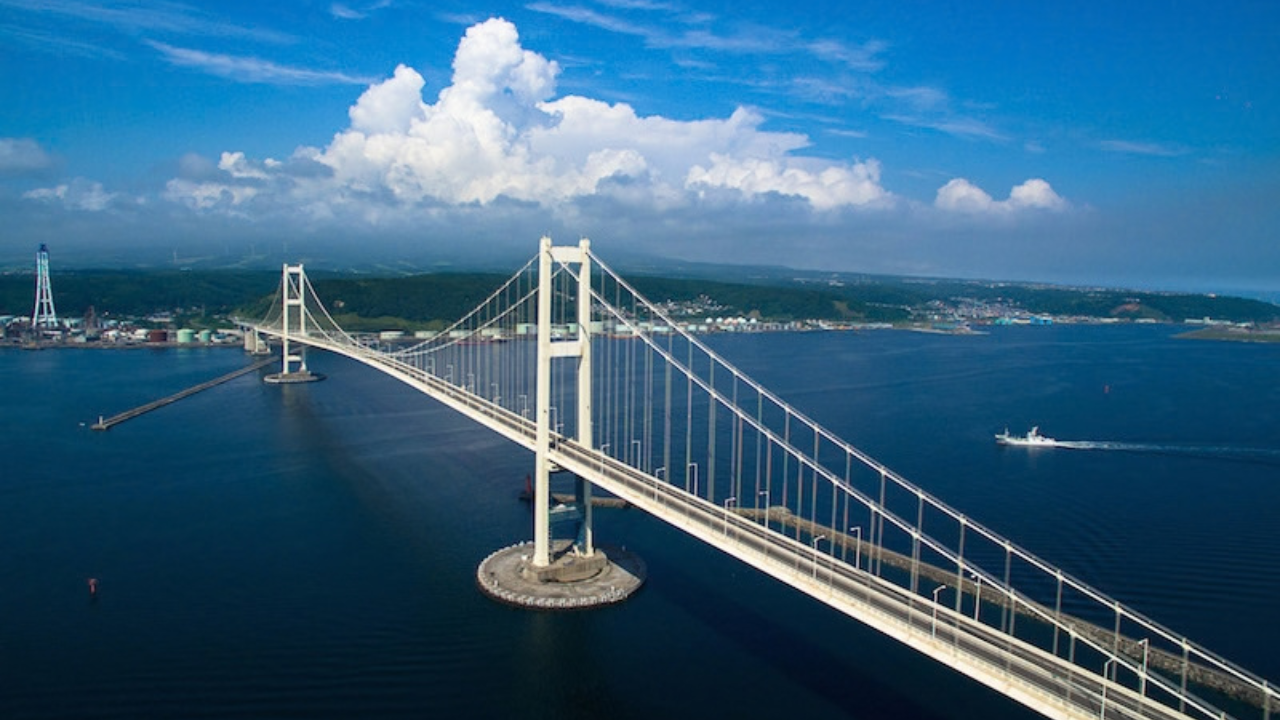
We usually treat industrial waste as a liability. We store it, bury it in liners, or argue about who pays for the cleanup. But back in the 1980s, Japanese civil engineers looked at mountains of powdery coal fly ash and saw something entirely different: free rock.
Instead of dumping the byproduct on land, project planners mixed coal ash with water and hardening agents, then pumped the slurry straight beneath the sea to build stable ground for major bridge foundations. Decades later, that industrial byproduct is still holding up massive marine infrastructure. It sounds counterintuitive, almost risky. If you drop waste into the ocean, doesn't it leach toxins or wash away? Let's look at why this engineering feat actually works and what it teaches us about modern material science. If you enjoyed this article, you might want to look at: this related article.
The Engineering Problem Beneath the Waves
Building heavy bridge piers over a soft marine seabed is a structural nightmare. Traditional fill material is heavy, placing immense lateral pressure on temporary steel walls called cofferdams. If you dump loose dirt or sand into an enclosed underwater space, it shifts. It settles unevenly. Engineers needed something that could flow like liquid when poured into underwater enclosures, yet cure into a solid mass capable of supporting multi-ton towers.
Enter coal fly ash. This fine powder, captured from the exhaust of coal-fired power plants, possesses pozzolanic properties. When combined with water and minor amounts of cement or lime, it undergoes chemical reactions similar to concrete. It doesn't just sit there—it hardens. For another look on this event, see the recent coverage from The Next Web.
Instead of fighting the soft seabed or importing expensive natural sand from distant quarries, Japanese contractors created artificial islands and underwater foundations using slurried fly ash. Workers poured the slurry directly into enclosed marine spaces. The material settled, displaced the water, and cured into rigid synthetic rock.
Why the Material Gets Stronger Over Time
The most fascinating part of this marine engineering isn't that it set hard initially. It's what happened afterward.
Subsequent geotechnical surveys of these underwater fills revealed a surprising trend: the coal-ash material didn't degrade in the marine environment. It kept gaining compressive strength for more than a decade. The internal chemical reactions—specifically the formation of calcium-silicate-hydrate gels—continued slowly over years.
Think about how standard construction fill behaves. It compacts, shifts under seismic activity, and washes away if containment fails. The solidified fly ash mix essentially became a monolithic block. Because the material locked the ash particles into a stable matrix, it also immobilized heavy metals that would otherwise cause environmental concern, turning a regulatory headache into structural support.
What This Means for Future Infrastructure
We generate millions of tons of coal ash globally each year. Most of it ends up in dry landfills or surface impoundments that require perpetual monitoring. Projects like the marine applications in Japan demonstrate a clear gap in how we view industrial byproducts.
When you treat waste as a raw geomaterial, construction costs drop and environmental footprints shrink. Sourcing natural marine sand for reclamation projects has become increasingly expensive and ecologically destructive. Using stabilized industrial residues as a substitute for natural aggregate solves two problems at once. You stop dredging delicate seabeds, and you clear out industrial storage yards.
Of course, this approach requires rigorous testing. Engineers must check every batch for chemical leaching and verify that long-term immersion won't compromise structural integrity. But the real-world results speak for themselves. Decades of heavy traffic pounding down from the bridge deck above prove that industrial byproducts can handle structural loads just as well as quarried stone.
Stop looking at waste as something to hide. Sometimes, it's the strongest thing you can build on.