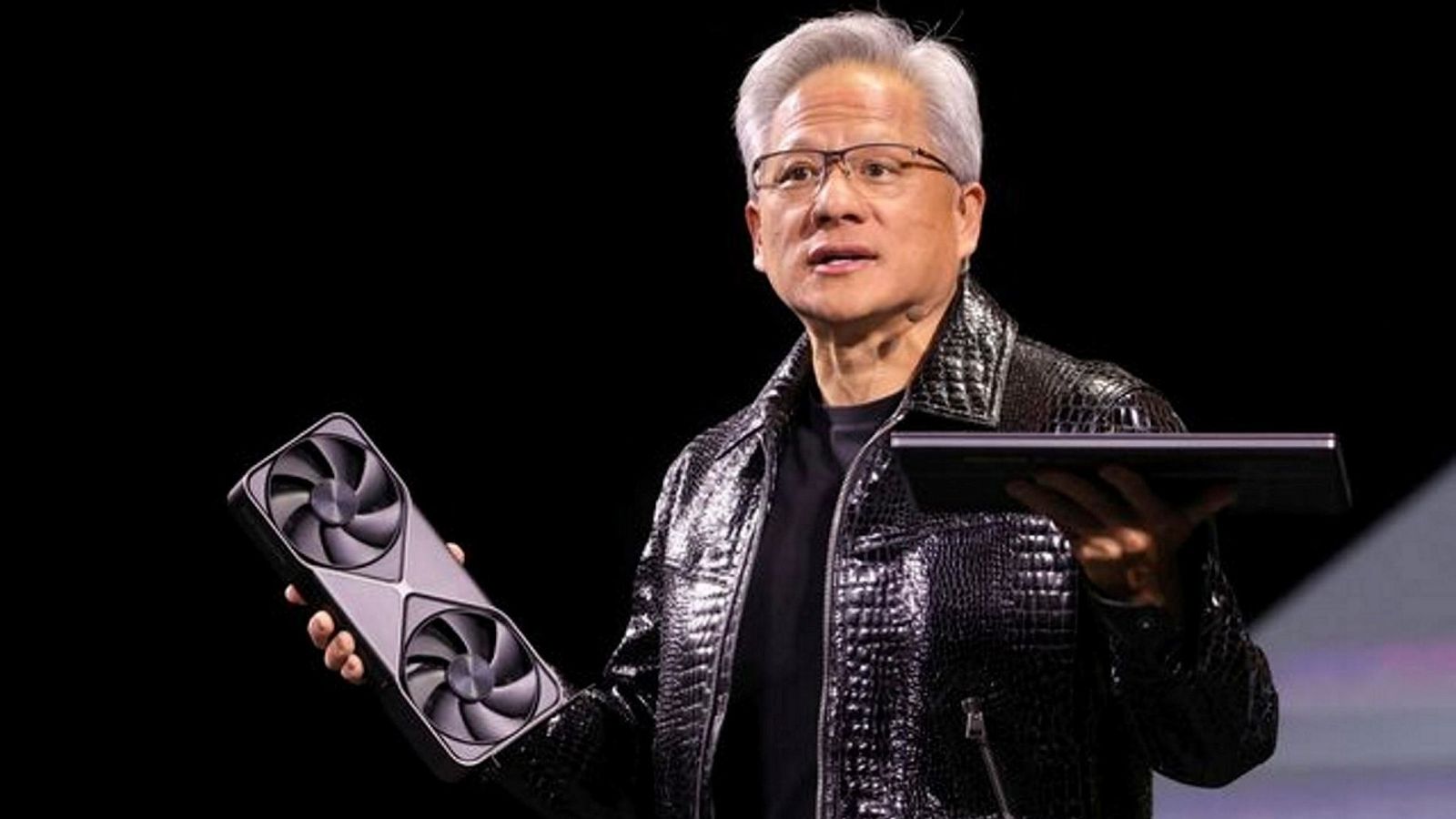
No. Jensen Huang has not resigned as chief executive officer of Nvidia, and Chief Financial Officer Colette Kress has not been named interim CEO. The viral headline claiming otherwise is a fabrication circulating on aggregator sites and social media feeds, exploiting market anxiety around artificial intelligence valuations and executive succession at the world's most valuable chipmaker. Huang remains firmly at the helm of the company he co-founded in 1993, continuing to direct its product roadmap, supply chain partnerships, and global data center expansion.
False executive departure rumors are nothing new on Wall Street, yet they carry explosive weight when attached to a founder-led titan like Nvidia. Markets move in milliseconds on algorithmic sentiment. A single unverified headline alleging a sudden leadership vacuum at a company anchoring global AI infrastructure can trigger automated sell-offs, option chain distortions, and widespread confusion among retail investors. Understanding why this specific rumor gained traction—and what an actual leadership transition at Nvidia would look like—requires looking closely at the mechanics of financial misinformation, corporate governance, and the real succession bench inside Santa Clara.
How Fake Executive News hijacks Market Sentiment
Financial disinformation thrives at the intersection of high market concentration and low editorial oversight. Over the past several years, Nvidia evolved from a specialized graphics card designer into the foundational hardware supplier for generative artificial intelligence. When a single executive becomes synonymous with an entire technological wave, his personal status turns into a proxy for market stability.
Click-farming operations and automated content networks routinely scrape trending financial tickers and pair them with high-stakes corporate triggers. "Resigns," "steps down," and "interim CEO" are classic algorithmic bait. They provoke immediate emotional reactions—fear among shareholders, schadenfreude among skeptics, and urgency among traders. Because modern financial news aggregators often ingest syndication feeds without human verification, a fabricated item published on a low-tier domain can briefly mirror the formatting of a legitimate wire alert.
Notice the structure of the rumor itself. It pairs a shocking premise—Jensen Huang resigning—with a plausible detail—CFO Colette Kress stepping in as interim chief. That second detail is what gives the lie its sticking power. In standard corporate governance, appointing the sitting chief financial officer as interim CEO during an unexpected departure is textbook protocol. By anchoring a false claim to a realistic boardroom mechanism, the rumor bypasses casual skepticism.
Verify before reacting. Legitimate leadership changes at publicly traded American corporations do not break quietly on obscure websites with broken URLs. Under Securities and Exchange Commission rules, the resignation or appointment of a principal executive officer requires a Form 8-K filing within four business days, and companies of Nvidia's scale issue simultaneous press releases through established wire services alongside immediate investor relations updates. None of those filings exist.
The Reality of Founder-Led Governance at Nvidia
To understand why a sudden, unexplained resignation from Jensen Huang runs counter to everything observable about Nvidia's corporate DNA, you have to examine how the company is structured. Unlike legacy technology firms run by rotating classes of professional managers, Nvidia operates under an unusually flat, founder-driven architecture.
Huang famously maintains dozens of direct reports—far exceeding the conventional corporate span of control of six to ten executives. He eliminates traditional middle-management layers so engineering, software, and product teams communicate directly with the top. There is no chief operating officer sitting between Huang and the division heads. This structure works precisely because Huang possesses deep technical fluency across silicon architecture, networking interconnects, and software stacks like CUDA.
Such centralization creates immense operational speed, allowing Nvidia to compress product release cycles down to an annual cadence. At the same time, it creates acute key-person risk. Institutional investors routinely flag Huang's centrality in risk assessments. If he were ever to step aside, it would not happen via a quiet Friday afternoon blurb without months of staged transition, board disclosures, and direct communication with major hyperscale customers.
What Colette Kress Actually Does Inside the Company
Colette Kress is widely respected on Wall Street, and for good reason. Since joining Nvidia as executive vice president and chief financial officer in 2013—following stints at Cisco and Microsoft—she has overseen the financial discipline that transformed a cyclical gaming chip vendor into a cash-generating powerhouse.
Her role focuses on capital allocation, gross margin management, supply chain commitments, and translating complex semiconductor demand into clear guidance for institutional analysts. During quarterly earnings calls, Kress provides the steady, methodical counterpoint to Huang's visionary technical briefings. She manages the balance sheet, structures massive prepaid supply agreements with foundry partners like TSMC, and navigates export control impacts on quarterly revenue.
Could Kress serve as an interim caretaker if an emergency ever forced the board's hand? Certainly. Boards frequently tap seasoned CFOs to steady the ship while conducting an executive search, because the finance chief already understands every revenue driver, customer contract, and regulatory exposure across the enterprise. However, an interim administrative role is vastly different from running Nvidia's long-term technical strategy. Kress is a financial architect, not a chip designer. Any permanent succession plan at Nvidia would inevitably require deep engineering and systems-level leadership alongside financial stewardship.
Why Investors Are Hypersensitive to Nvidia Leadership Rumors
Rumors do not spread in a vacuum. They take root when underlying anxiety already exists. Even though the report of Huang's resignation is completely false, the fact that so many people paused to wonder whether it might be true reveals real fault lines in how the market views Nvidia.
First, there is valuation fatigue. After historic multi-year runs driven by hyperscaler capital expenditures, investors constantly scan the horizon for signs that the cycle is peaking. In bull markets, traders look for catalysts to buy; in mature rallies, they look for excuses to lock in gains. A sudden CEO exit represents the ultimate top-of-cycle signal—the suspicion that the founder knows growth is slowing and wants to exit at the peak.
Second, regulatory and geopolitical pressures have turned the CEO job into a high-wire diplomatic act. Navigating shifting export restrictions, antitrust scrutiny across multiple jurisdictions, and intense competition from custom silicon built by Nvidia's own biggest customers demands relentless travel and political engagement. Observers watching Huang's punishing global schedule occasionally speculate about burnout, giving false departure stories a veneer of plausibility.
Third, the sheer scale of customer concentration creates ongoing tension. A handful of cloud computing giants account for a massive share of Nvidia's data center revenue. Every time one of those customers announces an internal AI accelerator project, headlines question how long Nvidia can defend its extraordinary gross margins. Against that backdrop, any whisper of internal instability triggers outsized nerves.
Separating Real Corporate Signals From Algorithmic Noise
In an era where synthetic text and automated scrapers flood financial search results, investors and industry watchers need a strict verification protocol. Relying on social media screenshots or unverified aggregator links is a guaranteed way to get whipsawed by bad data.
When evaluating major corporate claims—especially executive shakeups, mergers, or regulatory penalties—apply four basic filters:
- Check the primary regulatory wire. For any U.S.-listed company, the SEC's EDGAR database is the definitive source of truth. Material leadership changes require formal disclosure. If there is no Form 8-K and nothing on the company's official investor relations newsroom, treat the claim as false until proven otherwise.
- Trace the source URL. Legitimate investigative scoops come from named reporters at established outlets with verifiable editorial standards and a history of covering the beat. When a dramatic headline traces back to an undefined link, a generic content farm, or a domain registered weeks earlier, you are looking at traffic arbitrage, not journalism.
- Watch the derivatives and bond markets. Sophisticated institutional desks have direct access to corporate communications teams and terminal alerts. If a genuine resignation occurred at a mega-cap tech leader, trading volume would explode across equities, options, and credit markets within seconds, accompanied by trading halts or official company statements.
- Look for corroborating details. Real executive transitions include specifics: effective dates, transition advisory agreements, board committee statements, and quotes from both the departing leader and the incoming successor. Vague two-sentence blurbs lacking dates or board attribution are hallmarks of fabrication.
The Real Questions Worth Asking About Nvidia's Future
Focusing on a fake resignation distracts from the actual structural challenges facing Nvidia—issues that have nothing to do with who sits in the corner office today and everything to do with how the semiconductor industry evolves over the next decade.
The real story is not executive turnover. It is architectural transition and competitive pressure. Nvidia is pushing aggressively to move beyond selling individual graphics processing units toward selling entire rack-scale systems, proprietary networking fabrics, and enterprise software subscriptions. That shift turns Nvidia from a component supplier into a full-stack infrastructure provider, pitting it more directly against traditional server OEMs and cloud service providers alike.
At the same time, supply chain constraints remain a constant battle. Advanced packaging capacity, high-bandwidth memory allocation, and power delivery bottlenecks at the data center level dictate how fast revenue can actually be recognized. Managing those physical limits requires years of advance capital commitment—a domain where Jensen Huang and Colette Kress continue to operate in lockstep.
Succession planning at Nvidia will eventually become a legitimate boardroom priority, just as it does for every founder-led giant from Apple to Berkshire Hathaway. When that day actually arrives, it will not be buried in a broken link or a scraped headline. It will be telegraphed well in advance, backed by SEC filings, and accompanied by a deliberate engineering handoff designed to protect one of the most consequential technology franchises ever built. Until those official filings hit the wire, treat every viral resignation headline for what it is—noise engineered to harvest your attention.