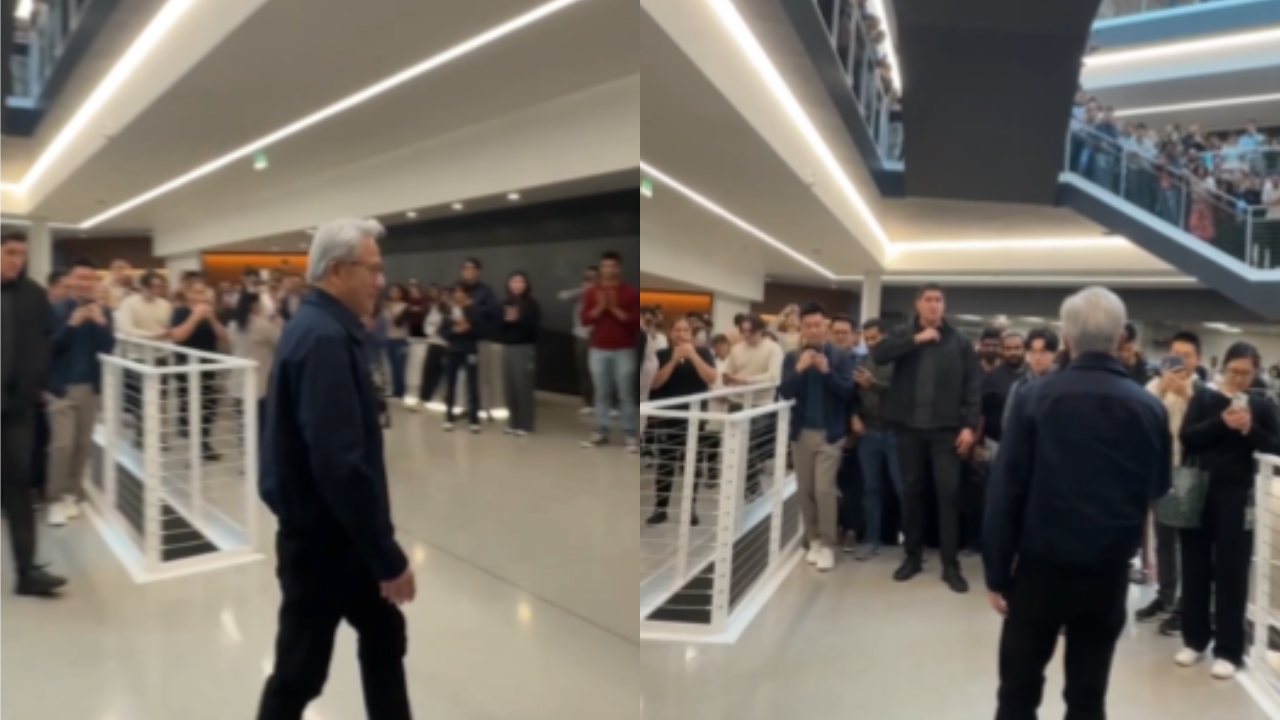
Eleven days. That's all it took for Jensen Huang to go from resigning in disgrace over an alleged Chinese espionage scandal to walking back into Nvidia's Santa Clara headquarters as CEO.
If you're trying to make sense of why Capitol Hill is melting down right now, you're not alone. On November 23, 2026, Nvidia's board voted unanimously to reinstate Huang as president, chief executive, and board member. They didn't do it in a vacuum. President Donald Trump personally leaned on the board, arguing publicly that losing Huang's leadership was a bigger threat to America than the national security allegations swirling around him.
Lawmakers from both parties aren't buying it. Not even close.
What Actually Happened During Nvidia's 11-Day Leadership Crisis
To understand why senators are furious, you have to look at why Huang stepped down on November 12 in the first place. Following explosive reporting by The New York Times and other outlets, Huang admitted to an extramarital affair with Alice Huang (no relation), an executive at the Singapore-based data center firm Megaspeed. U.S. authorities reportedly suspect she was gathering intelligence for Beijing.
Reports of a separate relationship with an Nvidia subordinate hit the press right before the board met. Wall Street panicked. When markets opened on November 12, Nvidia shares plunged 13% before closing down 4.3%, wiping out more than $180 billion in market value in a single session. CFO Colette Kress stepped in as interim CEO, and Harvey C. Jones became board chair while the company announced a search for a permanent replacement.
Then Trump stepped in.
During a Monday morning CNBC interview on November 23, Trump praised Huang as a "genius" and claimed Huang "did nothing wrong". Trump openly took credit for brokering the comeback, telling reporters he spoke directly with Huang and Nvidia's directors to convince them to bring him back. By that afternoon, Huang was back at headquarters asking IT for a new computer and telling cheering employees to get "back to work".
Why Lawmakers Are Rejecting the White House Clearance
Nvidia's board justified the reversal by stating it had received "input from senior levels of the United States government" and felt confident Huang's return posed zero national security risk.
That single sentence set off a firestorm in Congress.
Usually, corporate scandals split Washington cleanly along party lines. Not this time. Republican Senator John Cornyn of Texas reacted on social media with blunt disbelief, asking, "No national security risk? Based on what?" Republican Representative Don Bacon argued Nvidia was entirely capable of operating without its co-founder and demanded a thorough investigation into who approved advanced chip shipments to China.
The core problem isn't just personal conduct. It's intelligence compartmentalization. According to Reuters reporting, the underlying intelligence assessments regarding the affair and potential espionage were closely held within the executive branch and never shared with congressional oversight committees.
Lawmakers are effectively being told to trust a board's internal review—conducted in under two weeks—without seeing the intelligence files themselves. When you're dealing with the company that supplies the foundational hardware for military AI systems, "trust us" doesn't fly on Capitol Hill.
The Megaspeed and Chip Smuggling Angle
Most casual observers think this controversy is just tabloid drama about a billionaire's private life. That's a massive misreading of the stakes.
Investigators aren't worried about gossip. They're worried about leaks in U.S. export controls. Representative Jim Himes pointed out that congressional investigators need to focus squarely on Alice Huang as a potential conduit between Nvidia and Beijing. Specifically, lawmakers want to know whether sensitive operational details were exposed:
- Product roadmaps and R&D locations: Advance knowledge of when next-generation chips launch gives foreign competitors and state-backed labs a massive head start.
- Intermediary routing: Lawmakers are probing whether pressure was applied to route high-end GPUs through third-party data center operators like Megaspeed, allowing restricted hardware to be diverted to Chinese military or AI programs.
- Diplomatic travel plans: Reports indicate investigators are even looking at whether details surrounding Trump's travel plans in China were compromised.
Between December 2025 and May 2026 alone, the House Foreign Affairs Committee noted that the administration approved exports of 879,000 Nvidia and AMD chips to Chinese entities. Add suspected grey-market smuggling on top of official licenses, and you see why defense hawks are livid.
The Corporate Governance Trap Nobody Talks About
Step back from the geopolitics for a second and look at what just happened to corporate governance in Silicon Valley.
Nvidia is a $4 trillion public company. Its board of directors has a strict fiduciary duty to shareholders, employees, and national security compliance laws. Yet in less than two weeks, that board went from accepting a CEO's resignation over major compliance and conduct failures to unanimously reinstating him after a phone call from the Oval Office.
I've watched tech boards bend to founder pressure for years, from OpenAI's boardroom chaos to Silicon Valley's dual-class share structures. Nothing compares to this. When the President of the United States acts as a de facto headhunter for a private corporation—and even floats the idea of a presidential pardon before a CEO testifies to Congress—normal institutional guardrails evaporate.
Sure, Nvidia's stock stabilized once Huang returned. Institutional investors hate uncertainty, and nobody knows Nvidia's supply chain like the guy who built it over 33 years. But short-term relief creates long-term vulnerability. If Nvidia's board cannot enforce basic accountability on its own chief executive without White House intervention, how can regulators trust the company to police its own global distribution network?
What Happens on Capitol Hill This Week
Huang's comeback tour hits a wall immediately. In a joint statement, Republican committee chairmen Brian Mast, John Moolenaar, and Rick Crawford made it clear that Nvidia's brief internal probe did not erase the national security threats facing the country.
Instead of fading away, the scrutiny is escalating into a high-stakes week in Washington:
- December 1 and 2 closed-door interviews: Huang and Nvidia General Counsel Tim Teter are scheduled to sit down with three House committees. Expect intense questioning behind closed doors regarding Megaspeed, internal compliance audits, and chip diversion.
- December 3 public Senate hearing: At 10:00 a.m. ET, Huang will appear as the sole witness before the Senate Banking Committee in a live-streamed session titled "Protecting America's AI Advantage: Oversight of U.S. Export Controls".
- December 10 Commerce scrutiny: Commerce Secretary Howard Lutnick has also been invited to testify before the Senate Banking Committee, putting the administration's licensing decisions directly under the microscope.
Meanwhile, lawmakers are already looking at the upcoming National Defense Authorization Act as a legislative vehicle to strip away executive discretion and lock stricter chip export rules directly into federal law.
How Investors and Tech Leaders Should Read This Moment
If you hold semiconductor stocks, run a tech company, or manage enterprise AI infrastructure, don't treat this like a standard political news cycle. The ground rules for cross-border tech just shifted underneath your feet.
Watch the December 3 Senate Banking Committee broadcast closely. Pay less attention to political grandstanding and more attention to how Huang answers technical questions about post-shipment chip tracking and KYC (know-your-customer) enforcement for overseas data centers. If Huang struggles to explain how Nvidia prevents intermediaries from renting out compute capacity to restricted entities, Congress will almost certainly pass rigid hardware-tracking mandates.
Audit your own vendor and supply chain exposure if you operate internationally. Even if the White House favors looser export licensing for favored champions, bipartisan majorities in Congress are moving in the exact opposite direction. Companies relying on offshore GPU clusters in Southeast Asia—particularly Singapore and Malaysia, which have drawn heavy scrutiny over diversion risks—face sudden compliance freezes or entity-list additions.
Jensen Huang got his desk back. Whether he can keep Nvidia out of the legislative crosshairs is another story entirely.