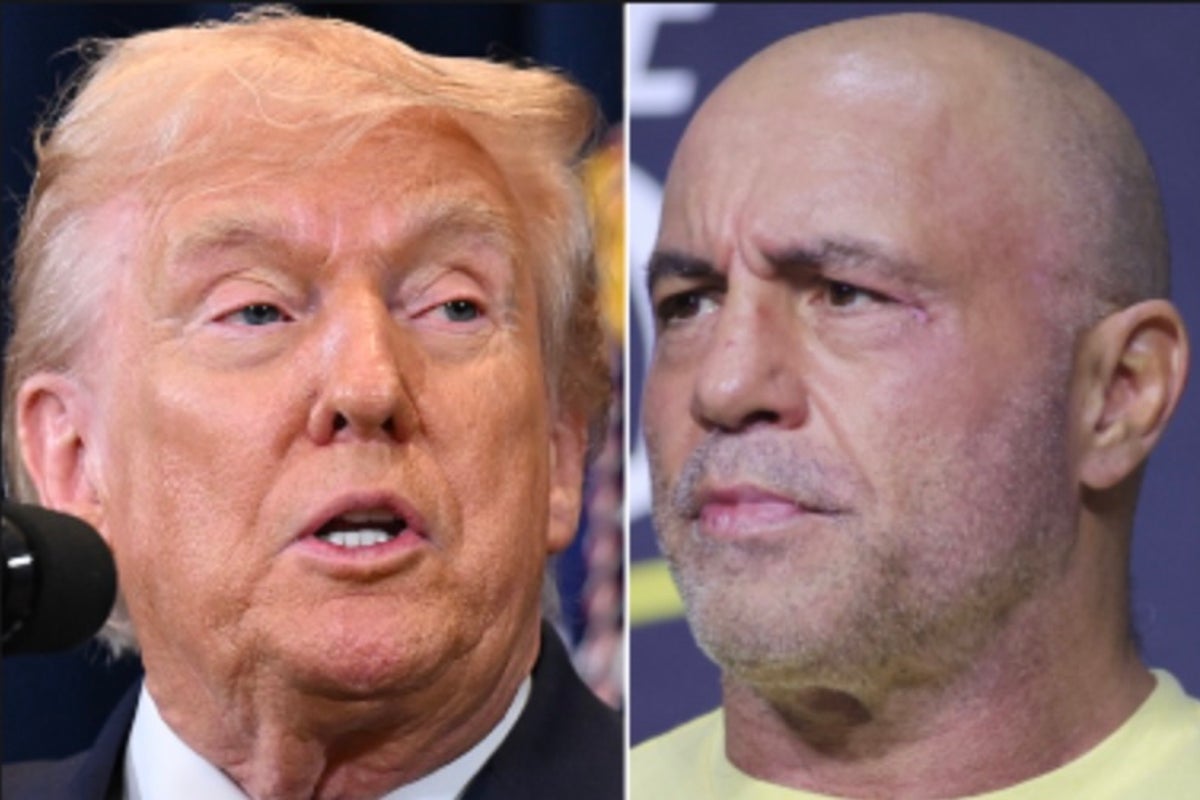
The friction between Joe Rogan and Donald Trump over Middle Eastern interventionism is not just a momentary clash of egos. It represents a fundamental fracture in the modern populist coalition. When Rogan recently characterized the prospect of a strike on Iran as "insane," he wasn't merely offering a personal opinion. He was signaling a hard boundary for a massive segment of the American electorate that initially supported Trump precisely to end "forever wars."
For years, the alliance between the "New Right" and the heterodox media sphere—led by figures like Rogan—was built on a shared skepticism of the Washington establishment. Both camps viewed the foreign policy consensus of the last thirty years as a catastrophic failure. However, as the rhetoric surrounding Tehran intensifies, that alliance is hitting a wall. Rogan’s critique exposes the reality that while the MAGA movement is often painted as a monolith, its base is deeply divided between traditional hawks and a growing, vocal isolationist wing.
The Breakdown of the Anti War Mandate
The appeal of the 2016 Trump campaign relied heavily on the rejection of the Iraq War. By framing himself as an outsider who would put "America First," Trump captured voters who were exhausted by decades of intervention. Rogan, whose podcast serves as a digital town square for the skeptical and the disillusioned, became a natural megaphone for this sentiment.
But the mechanics of governance often override campaign rhetoric. The administration’s withdrawal from the JCPOA (the Iran nuclear deal) and the subsequent "maximum pressure" campaign created a trajectory toward conflict that many Rogan listeners find indistinguishable from the neoconservative era they despise. When Rogan calls the escalation "insane," he is identifying a bait-and-switch. He is pointing out that the policy looks less like a new "America First" strategy and more like a return to the 2003 playbook.
This isn't about Rogan becoming a pacifist. It is about the perceived betrayal of a core promise. The populist movement was sold as a way to dismantle the military-industrial complex, not to provide it with a different set of targets.
The Influence of the Podcast Class
We have moved past the era where Sunday morning talk shows dictated the political narrative. Today, a three-hour conversation on the Joe Rogan Experience carries more weight with the military-age demographic than any white paper from a D.C. think tank. Rogan’s skepticism matters because he represents the "common sense" filter of the American independent.
His reaction to Iran reflects a broader exhaustion. The data suggests that younger veterans and working-class families—the backbone of Trump’s support—are the least likely to support a new theater of war. They are looking at the price of domestic goods and the decay of local infrastructure. When they hear talk of billion-dollar missile strikes, the disconnect is jarring. Rogan isn't leading this sentiment; he is reflecting it back to a political class that seems to have forgotten why it was elected.
A Conflict of Philosophies
The internal struggle within the Republican party is now between the "Jacksonians" and the "Restrainers."
Jacksonians, who influence much of Trump's inner circle, believe in overwhelming force if American honor or interests are slighted. They don't necessarily want to build nations, but they are perfectly willing to blow them up. On the other hand, the Restrainers—a group that includes Rogan, Tucker Carlson, and several libertarian-leaning lawmakers—argue that any intervention in the Middle East inevitably leads to mission creep and long-term instability.
These two groups can coexist when the enemy is "the establishment." They cannot coexist when the question is whether to drop bombs on a country of 85 million people. The "insanity" Rogan refers to is the lack of a clear endgame. He has spent years interviewing veterans who returned from Iraq and Afghanistan with physical and mental scars, only to find that the geopolitical situation in those regions was no better than when they arrived. To Rogan and his audience, doing the same thing with Iran is not a display of strength; it is a symptom of a broken intellectual culture in Washington.
The Geopolitical Reality vs. The Soundbite
The situation is complicated by the fact that Iran is a far more formidable adversary than 2003-era Iraq. Its geography, its proxy networks, and its sophisticated missile capabilities mean that any "surgical strike" would almost certainly devolve into a regional conflagration.
Rogan’s "insane" comment highlights the gap between political posturing and the reality of modern warfare. Politicians talk about "red lines" and "deterrence." Rogan talks about the actual human cost. This creates a PR nightmare for an administration that wants to project strength without losing its base. If the most influential podcaster in the world is telling his millions of listeners that the commander-in-chief is making a catastrophic mistake, the political cost of military action becomes much higher.
Following the Money and the Logic
Critics of Rogan often argue that he lacks the "clearance" or the "expertise" to understand the Iranian threat. This argument fails to move the needle with his audience. In the eyes of a Rogan listener, the "experts" are the people who have been wrong about every major conflict since the turn of the century.
There is a growing suspicion that the push for war with Iran is driven by regional allies and defense contractors rather than genuine American security needs. While Rogan doesn't always dive into the minutiae of the military-industrial complex, his gut-level rejection of the conflict resonates with those who feel that American blood and treasure are being treated as disposable assets.
The tension is exacerbated by the economic climate. It is difficult to convince a person struggling with 10% inflation that the most pressing issue in their life is the enrichment level of a centrifuge in Natanz. Rogan’s skepticism is a grounded, pragmatic response to a foreign policy that feels increasingly detached from the needs of the average citizen.
The Risk of Alienation
If the populist movement continues to lean into the rhetoric of escalation, it risks a permanent divorce from the independent media figures who helped build it. Rogan is not a partisan hack. He has supported Bernie Sanders and Tulsi Gabbard in the past, largely due to their anti-interventionist stances. His loyalty is not to a party, but to a specific set of ideas regarding government overreach and military restraint.
By calling the Iran strategy "insane," Rogan is drawing a line in the sand. He is telling the political right that they do not have a blank check for war. This creates a significant problem for a movement that relies on "outsider" credibility. If you lose the outsiders, you are just the old establishment in a different hat.
The Future of the Coalition
The outcome of this disagreement will define the next decade of American politics. Either the populist movement will revert to a standard neoconservative foreign policy under a different brand, or the pressure from figures like Rogan will force a genuine shift toward non-interventionism.
The current trajectory is unsustainable. You cannot maintain a "working-class" movement while simultaneously pursuing policies that disproportionately burden the working class with the costs of war. Rogan’s voice is the canary in the coal mine. He is warning that the base is not as eager for a fight as the pundits in D.C. might think.
The "insanity" of the situation isn't just about the tactical risks of attacking Iran. It is about the political suicide of a movement that is currently in the process of abandoning its most popular mandate.
Check the enrollment numbers for the military. Look at the polling for overseas aid. The appetite for intervention is at an all-time low. Rogan isn't an outlier; he is the majority. If the leadership doesn't listen, they will find themselves at the head of a very small and very lonely army.
Monitor the shift in the comment sections of major populist platforms. The change is already happening.