Jordan is not afraid of an Israeli election changing course. Jordan is terrified of an Israeli political system that cannot change course even when voters demand it.
Read the standard commentary whenever Knesset ballots are cast, and you get the exact same tired script: Amman dreads that Jerusalem will keep its hardline regional posture. That framing is lazy. Worse, it gets the causal mechanism backward. Discover more on a similar subject: this related article.
Conventional coverage treats Israeli elections like a light switch. Flip it one way, you get aggressive West Bank moves, friction over Jerusalem holy sites, and zero movement on Palestinian statehood. Flip it the other way, and suddenly Amman gets relief. Neither premise holds up under pressure.
Having watched regional crises play out from diplomatic desks and policy rooms for years, I have seen foreign ministries burn millions in political capital chasing the wrong villain in a neighbor's election cycle. They treat a coalition reshuffle as a strategic reset, then act stunned when security doctrine, border enforcement, and territorial red lines barely budge. A prime minister's tone can shift overnight. Structural incentives do not. More analysis by BBC News highlights related perspectives on the subject.
The Lazy Consensus About Ballot Boxes and Borders
Here is the misunderstanding that trips up half the punditry in the region: conflating electoral volatility with strategic reversal.
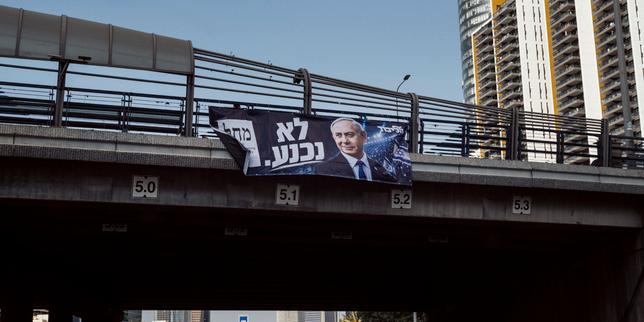
In Israeli politics, a fragmented Knesset does not automatically produce a bold new regional doctrine. When no bloc commands a clean majority—as seen in the October 27, 2026 Knesset vote where Benjamin Netanyahu's bloc took 53 seats, the opposition took 48, and Arab-led lists reached a record 19—coalition math dictates survival first and grand strategy second. Even when figures like Gadi Eisenkot enter coalition talks with backing from anti-Netanyahu lawmakers and Arab factions, deep ideological splits over the ultra-Orthodox draft, security control, and coalition partners constrain every move.
Let us be precise about the terms here. Regional policy is not a single speech or a cabinet press release; it is the stack of operational habits governing West Bank security, Jordan Valley border management, Jerusalem's status quo, and escalation along adjacent fronts. Coalition authority, by contrast, is the raw parliamentary leverage required to make binding concessions or alter long-standing commitments.
When analysts say Jordan fears Israel "maintaining its regional policy," they miss the sharper danger. What threatens Amman most is a government—or an extended caretaker gridlock—that lacks the political bandwidth to honor existing understandings while still retaining executive latitude to react tactically to crises.
Why "Who Wins?" Is the Wrong Question
Ask almost anyone in casual conversation: Will a new Israeli prime minister give Jordan breathing room on the West Bank and Jerusalem?
That question assumes the next prime minister actually wants—or can afford—to rewrite Israel's post-October 7 security consensus. Across Israel's mainstream political spectrum, skepticism toward territorial concessions and appetite for tight security control between the Jordan River and the Mediterranean remain entrenched. Changing the face at the podium changes tone and diplomatic style, not the underlying security calculus.
Consider a second common search query: Does Jordan want a right-wing or center-left government in Israel?
Amman does not get to pick its neighbor's ballot, and pretending a center-left or opposition-led coalition is a magic wand for Jordanian interests is wishful thinking. A less hawkish cabinet might sound calmer in Washington or Europe, yet still face coalition vetoes the moment it touches sensitive files like West Bank settlement expansion or Jerusalem custodianship. Meanwhile, a fragile coalition worried about collapse can become more cautious on concessions, not less.
A third question usually follows: Can Jordan stop regional spillover on its own?
No. Geography is unforgiving. Jordan shares a long border with the West Bank, carries deep demographic and political ties to Palestinians, and sits inside a neighborhood where war in Gaza, friction along northern fronts, and wider regional confrontation with Iran reverberate directly into Amman's economy and internal stability. King Abdullah II has stated repeatedly that regional security and stability will not hold without a viable path to Palestinian statehood—a core Jordanian red line—but rhetoric alone cannot seal a porous geopolitical environment.
Imagine a Scenario Where Coalition Paralysis Hits Amman
Imagine a scenario where Knesset coalition talks drag on for months without a stable majority.
In that thought experiment, an outgoing or caretaker leadership operates with narrow domestic room to maneuver. Making a binding diplomatic assurance to Amman carries high political risk at home, while taking unilateral tactical measures along a flashpoint looks decisive to domestic audiences. Meanwhile, Jordanian officials seeking clarity on West Bank friction or border coordination find no single, empowered decision-maker able to lock in long-term commitments.
That is the real bind. Not a sudden cartoonish villain twist after Election Day, but slow-motion friction caused by domestic paralysis meeting unresolved regional flashpoints.
What Heavy Hitters Actually Watch
Serious Middle East analysts—from institutions like the Institute for National Security Studies (INSS) to seasoned regional risk observers—do not read Israeli elections through naive slogans. They watch three concrete markers:
- Coalition agreements and red lines: Not campaign speeches, but the written horse-trading that determines who holds security, finance, and West Bank portfolios.
- The gap between executive action and binding concessions: Leaders can act quickly in a crisis, yet struggle to deliver lasting diplomatic trade-offs when their parliamentary footing is shaky.
- External anchors, especially Washington: Because bilateral bargaining with a gridlocked or fragile cabinet often stalls, regional capitals closely watch how U.S. diplomacy frames ceasefires, humanitarian access, and territorial boundaries.
| Common Assumption | What Actually Happens in Practice | Why It Matters for Jordan |
|---|---|---|
| A change of Israeli prime minister resets regional policy | Security doctrine and domestic coalition limits persist regardless of leadership changes | Amman cannot bank on personality shifts to solve structural West Bank or border pressures |
| A hung or deadlocked Knesset freezes all regional risk | Executive and security actions still happen during negotiations or caretaker periods | Unilateral or reactive moves can still flare up even when formal deals stall |
| Bilateral calm in Amman insulates Jordan from wider wars | Spillover from Gaza, the West Bank, and broader regional conflicts affects trade, security, and domestic politics | Stability requires broader regional de-escalation, not just quiet border channels |
The Downside of Betting on Structural Inertia
Let's be honest about the catch with my argument. If you assume that Israeli regional policy is mostly locked in by structure and coalition math, you can underprice genuine inflection points.
Elections can matter when a decisive majority emerges, when a coalition hinges on unusual partners, or when an external shock forces a leadership change that alters diplomatic bandwidth in Washington and across the region. Over-indexing on "nothing ever changes" makes analysts blind to moments when a new cabinet actually does take a gamble—for better or worse. Good contrarian analysis spots the trap without becoming a prisoner of its own cynicism.
Actionable Playbook for Reading the Next Cycle
Stop treating Israeli election coverage like a sports scoreboard where one side's win equals Amman's loss. Do this instead:
- Audit the coalition math before the victory speech: Count the seats needed for survival and identify which faction holds veto power over West Bank and Jerusalem issues.
- Track operational signals over diplomatic platitudes: Watch border crossings, West Bank enforcement, and official statements on Jerusalem's holy sites rather than polite post-election greetings.
- Watch Washington as a force multiplier: Track how U.S. leverage interacts with whatever government—or caretaker cabinet—is sitting in Jerusalem.
Jordan does not fear a static Israeli policy line because Amman is surprised by it. Jordan fears getting trapped between a neighbor that cannot make lasting concessions and a region that will not wait for Israel to sort itself out.