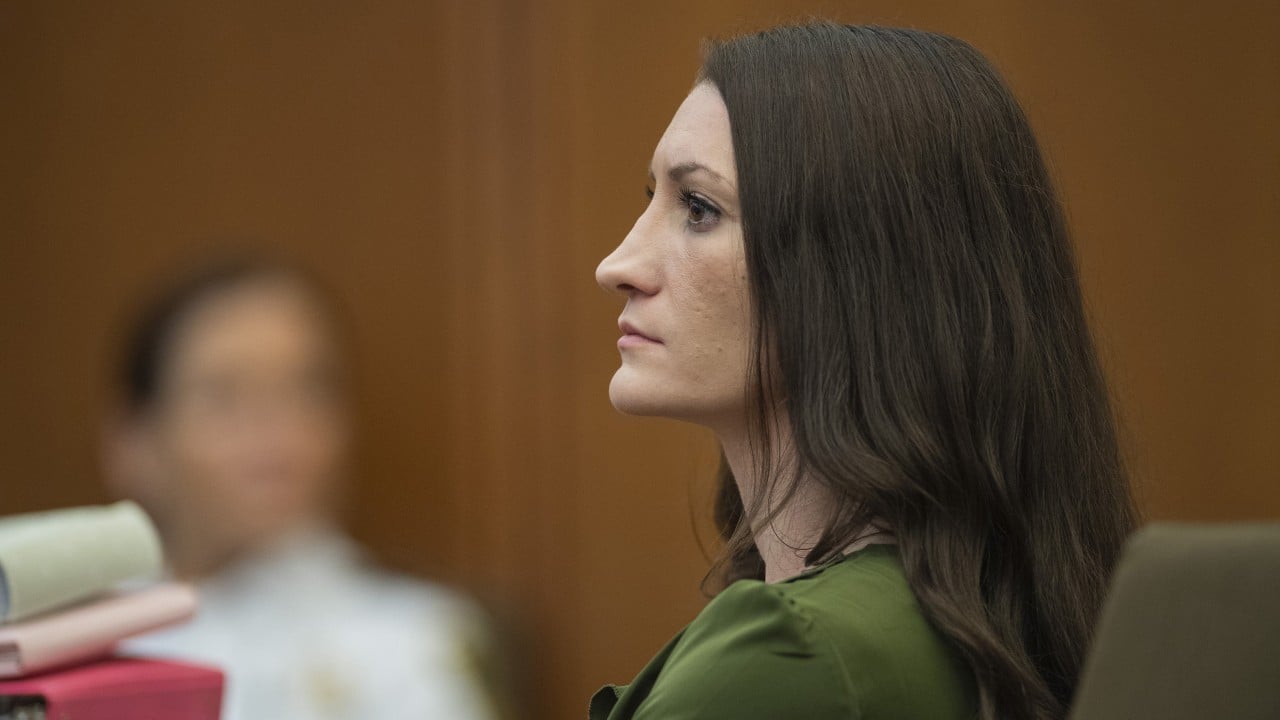
Most people assume a severe mental health crisis automatically shields a defendant from a murder trial. It doesn't.
A Massachusetts Superior Court judge made that crystal clear when denying Lindsay Clancy’s motion to dismiss the murder charges against her in the deaths of her three young children. If you've followed the Duxbury tragedy since January 2023, you know the defense has built its entire strategy around postpartum psychosis and heavy prescription medication. Yet the court ruled that prosecutors presented more than enough evidence to take this case straight to a jury.
Let's be honest about what this ruling actually means. It isn't a verdict on Clancy's sanity, nor is it a declaration that she wasn't suffering. Instead, it's a sharp reminder of how high the legal bar is when a defense team tries to kill a criminal indictment before a trial even starts.
What Happened in Plymouth County Superior Court
Defense attorney Kevin Reddington asked the court to toss the indictments charging Lindsay Clancy with three counts of murder and three counts of strangulation or suffocation. The core argument rested on the idea that the grand jury process was flawed and that Clancy lacked the criminal intent required for murder because she was experiencing severe postpartum psychosis and overmedication.
The judge wasn't buying it.
In Massachusetts, a motion to dismiss an indictment faces an uphill battle. Under state legal standards—often tied to the precedent set in Commonwealth v. McCarthy—a judge only looks at whether the grand jury heard enough evidence to establish probable cause that a crime occurred and that the defendant committed it. Prosecutors don't have to prove guilt beyond a reasonable doubt at this stage. They don't even have to disprove an insanity defense before trial.
By denying the motion, the court confirmed that the evidence presented to the grand jury met that threshold. Prosecutors pointed to specific actions taken on the evening of January 24, 2023, arguing they showed planning, awareness, and deliberate execution rather than a complete detachment from reality.
Why Pre-Trial Dismissal Motions Rarely Succeed in High-Profile Homicides
If you look at criminal procedure in Massachusetts, pre-trial motions to dismiss murder charges almost always fail unless prosecutors blatantly lied to the grand jury or withheld exculpatory evidence that would have changed their decision. Even then, courts prefer letting twelve jurors sort out conflicting psychiatric testimony.
Think about the evidence prosecutors outlined during earlier court hearings, including Clancy's arraignment from her hospital bed:
- The takeout errand: Prosecutors alleged Clancy used Apple Maps to check the driving time to a restaurant in another town, ThreeV in Plymouth, before asking her husband, Patrick Clancy, to pick up dinner and stop at CVS for children's medication.
- The timeline: That errand gave her a specific window of time alone at their Summer Street home in Duxbury.
- The method: Medical examiners determined five-year-old Cora, three-year-old Dawson, and eight-month-old Callan died from asphyxia due to strangulation, reportedly using exercise bands.
- The aftermath: Clancy then cut her own wrists and neck before jumping from a second-story window, leaving her paralyzed from the waist down.
From a purely legal standpoint, a judge looking at a cold transcript sees evidence of sequence and timing. A defense attorney sees a mother spiraling out of control after being prescribed more than a dozen different psychiatric medications over several months. Both interpretations exist simultaneously, and under American law, resolving that clash isn't a judge's job during a pre-trial motion. It's the jury's job at trial.
The Clash Over Postpartum Psychosis and Overmedication
Here's where the public conversation gets messy, and frankly, where a lot of armchair legal analysts get things wrong.
Supporters of Clancy point to her documented psychiatric history. Prior to the killings, she voluntarily checked herself into McLean Hospital, a premier psychiatric facility in Belmont, Massachusetts. She was prescribed a staggering list of medications—including antidepressants, benzodiazepines, mood stabilizers, and antipsychotics—in a relatively short span. Her defense team has argued that this cocktail of drugs, combined with severe postpartum mood disorders, left her unable to appreciate the wrongfulness of her actions.
Under Massachusetts law, the standard for criminal responsibility comes from Commonwealth v. McHoul. To be found not guilty by reason of insanity, a defendant must suffer from a mental disease or defect that leaves them lacking the substantial capacity either to appreciate the criminality of their conduct or to conform their conduct to the requirements of the law.
Notice the catch. Once the defense raises lack of criminal responsibility at trial, the burden actually flips onto the prosecution in Massachusetts. Prosecutors must prove beyond a reasonable doubt that the defendant was criminally responsible at the time of the act.
That's a massive hurdle for the Plymouth County District Attorney’s Office when the trial eventually begins. Right now, though, during a motion to dismiss, the prosecution doesn't carry that heavy burden. They only need probable cause.
What Most People Miss About Grand Jury Rules
People often hear "motion to dismiss" and assume it's a mini-trial where the judge weighs witness credibility. It isn't.
Grand jury proceedings are secret, one-sided affairs controlled entirely by prosecutors. Defense attorneys aren't in the room cross-examining police detectives or introducing their own psychiatric experts. Prosecutors are only legally required to present exculpatory evidence if withholding it would severely distort the grand jury's understanding of the case.
Kevin Reddington argued that the integrity of the grand jury was impaired. Prosecutors countered that they presented a fair summary of the investigation, including details about Clancy's mental health treatment. When a judge reviews those minutes and denies the motion, it means the court found no prosecutorial misconduct severe enough to invalidate the indictments.
It also signals that the Commonwealth's theory—that Clancy had the presence of mind to calculate travel times and create a window of opportunity—is legally sufficient to sustain murder charges on paper.
How This Ruling Shapes the Upcoming Murder Trial
With the motion to dismiss off the table, both sides are locked into preparing for one of the most closely watched criminal trials in New England history. The judge's refusal to drop the charges doesn't weaken the defense's ultimate trial strategy; it simply forces them to win in front of a jury rather than on paper.
Expect the courtroom battle to center on three distinct fronts:
- The digital footprint: Prosecutors will lean heavily on phone records, search histories, and the exact timing of the Apple Maps lookup to argue Clancy acted with intent and premeditation.
- The medical records: The defense will walk jurors through every prescription written for Clancy between late 2022 and January 2023, bringing in forensic psychiatrists to explain how abrupt medication changes and postpartum psychosis can trigger sudden, catastrophic breaks from reality.
- The lack of prior hostility: Friends, family, and even Patrick Clancy himself have publicly described Lindsay as a devoted mother who loved her children fiercely. Unlike typical homicide cases driven by anger, greed, or domestic abuse, there's no history of child mistreatment here.
Patrick Clancy’s public statement forgiving his wife shortly after the tragedy added an emotional layer rarely seen in triple-murder prosecutions. Jurors will hear about a woman who actively sought medical help before everything fell apart, contrasted against the grim physical reality of how three children died.
Where the Legal Process Goes From Here
Denying the motion to dismiss clears the biggest procedural roadblock standing between the indictment and a trial date. If you're tracking the case through Plymouth County Superior Court, watch the upcoming pre-trial conferences closely. Those hearings will determine which psychiatric evaluations get admitted, whether specific statements Clancy made to medical staff are protected by patient-psychotherapist privilege, and how potential jurors will be screened for bias given the wall-to-wall media coverage across Massachusetts.
For anyone following criminal justice or maternal mental health policy, the real takeaway isn't about legal technicalities. Keep your eyes on the expert witness disclosures filed in the Plymouth County docket over the coming months, because the battle between forensic psychiatrists over medication-induced psychosis will decide the outcome of this trial long before closing arguments begin.


