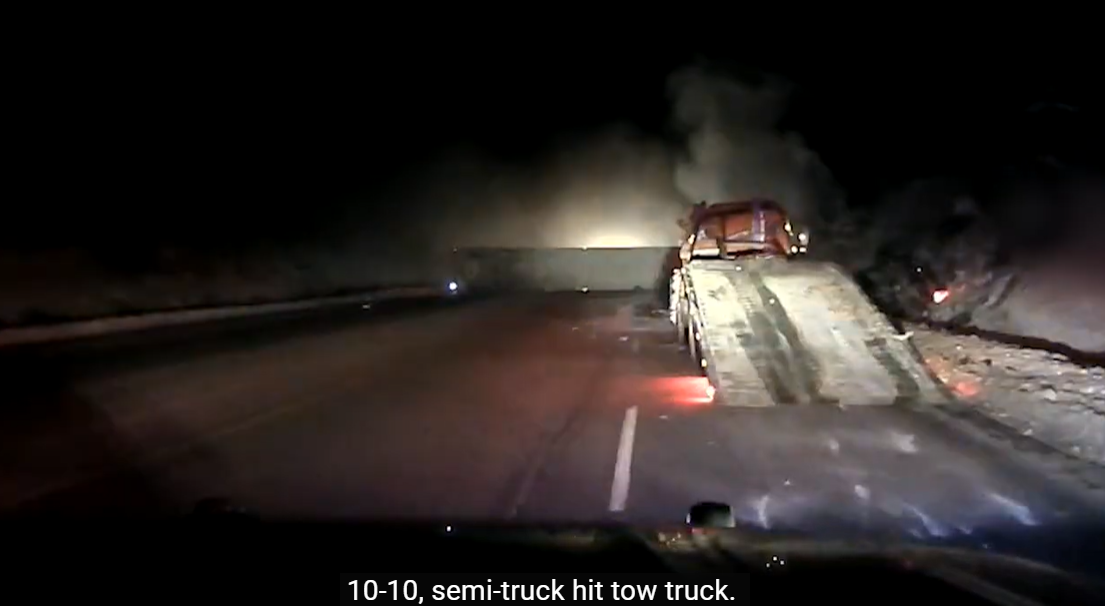
The sentencing of an Alberta man following a high-speed collision in British Columbia provides a critical case study in the intersection of physics, criminal negligence, and the judicial mechanics of general deterrence. While public discourse often focuses on the visual shock of dashboard camera footage, a rigorous analysis must prioritize the Kinetic Energy Transfer Model and the Legal Threshold of Criminal Negligence to understand why specific carceral outcomes are sought and achieved. The 2023 incident involving a Ford Mustang—traveling at speeds exceeding 150 km/h in a 60 km/h zone—illustrates a failure of risk-assessment logic that the Canadian judicial system counteracts through the principle of denunciation.
The Mechanics of High-Velocity Impact
The severity of a vehicular incident is a direct function of kinetic energy ($E_k$), defined by the formula $E_k = \frac{1}{2}mv^2$. Because velocity is squared, an increase from 60 km/h to 150 km/h does not merely double the potential for destruction; it increases the kinetic energy by a factor of 6.25. This exponential growth in energy creates a "Lethality Gap" where standard safety features—crumple zones, side-curtain airbags, and reinforced pillars—reach their mechanical failure points.
In this specific case, the vehicle’s trajectory across a median into oncoming traffic represents a total loss of directional control, a state where the driver becomes a passive passenger to the laws of inertia. The resulting collision with multiple vehicles serves as a physical manifestation of a "high-consequence, low-probability" event triggered by intentional disregard for established safety limits. The court’s primary challenge lies in quantifying this disregard into a sentence that reflects the near-lethal potential of the act, regardless of whether a fatality occurred.
Deconstructing the Legal Framework: Section 249 vs Section 320.13
Under the Criminal Code of Canada, the transition from "Careless Driving" (a provincial regulatory offense) to "Dangerous Operation" (a federal criminal offense) is defined by the marked departure from the standard of care that a reasonable person would observe. The B.C. court’s decision to impose a custodial sentence of 18 months, followed by a multi-year driving prohibition, suggests the presence of several aggravating factors within the Risk-Liability Matrix:
- Magnitude of Departure: The speed differential (90 km/h over the limit) is classified as a "gross" departure rather than a momentary lapse in judgment.
- Temporal and Spatial Context: Executing high-speed maneuvers on a bridge or high-traffic corridor increases the "Density of Risk," as third parties have zero escape vectors.
- Post-Event Conduct: Leaving the scene or failing to render aid—though not the primary charge here—often functions as a proxy for the driver’s "State of Mind" (Mens Rea), influencing the severity of the denunciation.
The defense's attempt to mitigate through personal circumstances often clashes with the judicial priority of General Deterrence. The court operates on the assumption that certain behaviors are so inherently dangerous that the individual’s rehabilitation must be secondary to sending a systemic signal to the driving public.
The Psychological Profile of High-Risk Operators
High-velocity vehicular offenses are rarely isolated incidents of bad luck. They are typically the culmination of a "Normalization of Deviance." This psychological framework posits that if an individual repeatedly breaks traffic laws without consequence, their internal threshold for risk shifts.
The Ford Mustang involved in the B.C. crash serves as a variable in the Vehicle-Identity Feedback Loop. Performance vehicles are marketed through the lens of capability and speed, which can create a false sense of security in the operator. This "Technical Overconfidence" leads drivers to believe they can compensate for physics through superior reflexes. The reality, demonstrated by the crash footage, is that human reaction time (averaging 1.5 to 2.5 seconds in high-stress scenarios) is insufficient when a vehicle covers 41.6 meters per second.
The Economic and Social Cost Function
The sentencing of the Alberta driver must also be viewed through the lens of resource allocation and social costs. A single high-speed collision on a major artery like the Alex Fraser Bridge or the Sea-to-Sky Highway triggers a cascade of negative externalities:
- Emergency Response Overhead: Deployment of Fire, EMS, and Police services, often involving specialized heavy rescue units.
- Infrastructure Degradation: Damage to medians, asphalt, and structural barriers that require immediate, high-cost repairs.
- Macro-Economic Friction: The "Congestion Multiplier." Closing a major bridge for six hours for a forensic investigation results in thousands of lost man-hours, delayed logistics, and fuel waste for thousands of unrelated commuters.
By imposing a significant carceral sentence, the court attempts to "internalize" these costs. The sentence serves as a non-monetary fine intended to rebalance the scales between the individual’s pursuit of high-risk thrill and the public’s right to a functional, safe transit network.
Variables in Sentencing Disparity
One of the most complex aspects of this case is the "Jurisdictional Friction" between the driver’s residence (Alberta) and the site of the offense (British Columbia). While the Criminal Code is federal, the "Range of Sentence" is often influenced by provincial appellate precedents.
- Precedent Scaling: B.C. courts have historically moved toward harsher penalties for "street racing-adjacent" behaviors following high-profile tragedies in the early 2000s.
- The Mitigation Trap: Common defense strategies include emphasizing a clean prior record or "exceptional" character. However, in cases of gross dangerous driving, the Principle of Proportionality dictates that the gravity of the offense outweighs the personal circumstances of the offender.
The 18-month sentence in this instance represents a mid-to-high range for Dangerous Operation not causing death. It signals that the judiciary is moving away from fines and towards incarceration for "High-Kinetic Negligence," even when the victims survive. This shift reflects an evolving understanding of "Potential Harm"—treating the act of creating a lethal environment as nearly equivalent to the harm itself.
The Efficiency of Driving Prohibitions as a Control Mechanism
Beyond the custodial term, the five-year driving prohibition is the most effective tool for "Risk Neutralization." Unlike incarceration, which has a high state cost, a prohibition is a low-cost regulatory barrier. Its effectiveness relies on the "Cost of Non-Compliance." If the individual drives while prohibited, they enter a category of "Contempt of Court," which carries much higher likelihood of immediate and prolonged detention.
From a strategic standpoint, the prohibition serves two functions:
- Direct Incapacitation: The physical removal of the high-risk agent from the system.
- Systemic Signaling: Informing insurers and licensing bodies that the individual is a "Catastrophic Risk Grade," making future legal operation of a vehicle prohibitively expensive or impossible.
Structural Failures in Urban Planning and Speed Enforcement
While the individual is legally responsible, the frequency of such events suggests a failure in "Passive Mitigation." Roads designed with wide lanes and long sightlines—standard in many parts of B.C. and Alberta—unintentionally signal to drivers that high speeds are safe.
The implementation of "Average Speed Cameras" (point-to-point enforcement) would logically reduce the prevalence of these incidents more effectively than traditional "Spot Enforcement." In the absence of such systemic controls, the judiciary is forced to use the "Brute Force" of sentencing to maintain order. The 18-month sentence is a reactive patch for a proactive safety deficit.
Strategic Trajectory of Vehicular Law
The Alberta man’s sentencing marks a definitive end to the era of "fines-only" for high-speed reckless behavior. As dashboard camera technology becomes ubiquitous, the "Information Asymmetry" between the driver and the court has vanished. Judges no longer rely on conflicting eyewitness accounts; they have high-definition evidence of the Marked Departure from safety.
Future legal strategy for the Crown will likely involve the integration of "Telematics Data." If a vehicle’s internal computer (EDR) shows 100% throttle application and zero braking in the seconds before impact, the argument for "momentary inattention" becomes legally untenable.
The strategic takeaway for the public and legal practitioners is clear: The judicial system has recalibrated its valuation of "Kinetic Risk." If you operate a vehicle at velocities that exceed the design limits of the environment, the court will treat the vehicle not as a transport tool, but as a weapon of negligence. The 18-month carceral term is the new baseline for those who gamble with the physics of the public square and lose.
The final strategic move for provincial transport authorities is the mandatory integration of speed-limiting technology for repeat high-velocity offenders, shifting the burden of safety from judicial deterrence to mechanical impossibility. Until then, the prison cell remains the only viable governor for those who refuse to self-regulate.



:strip_icc()/pic2513216.jpg)