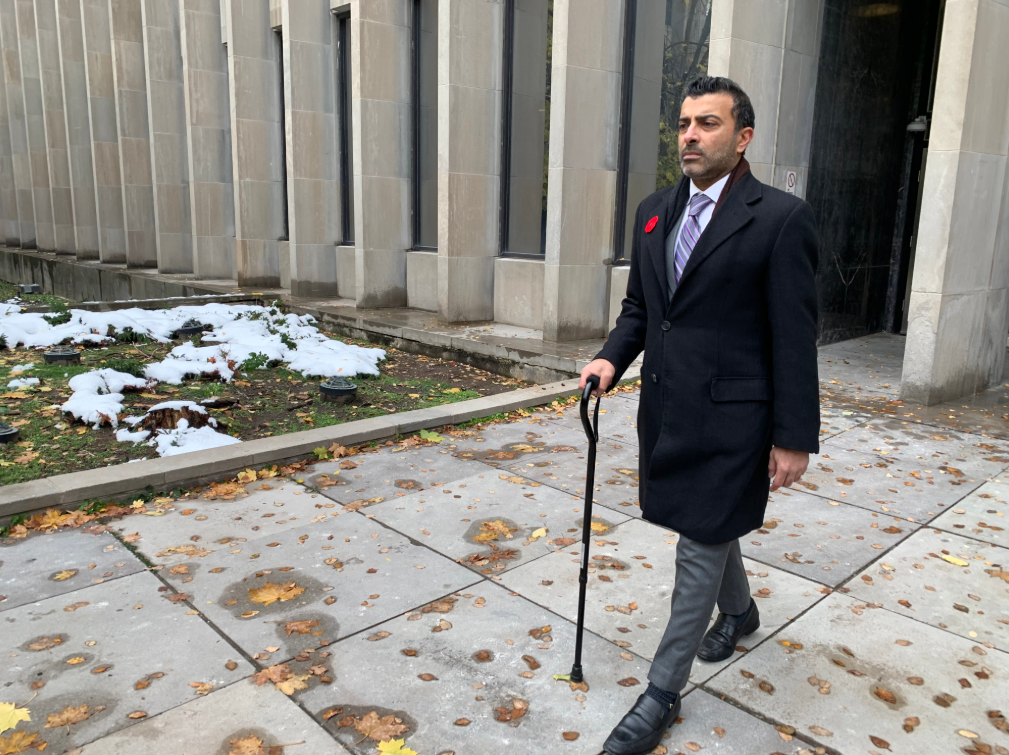
The court of public opinion is a kangaroo court. It operates on emotion, viral video clips, and a fundamental misunderstanding of what a "not guilty" verdict actually signifies. When the news broke that a man charged with a Toronto hit-and-run in an alleged impaired case was found not guilty, the digital mob did exactly what it always does: it shrieked about a broken system.
They are wrong. The system didn’t break. It worked with surgical, cold-blooded precision.
The lazy consensus among armchair legal experts is that an acquittal equals a declaration of innocence or, worse, a "get out of jail free" card for the wealthy or the lucky. This perspective is intellectually bankrupt. In a courtroom, "not guilty" does not mean "it didn't happen." It means the state—with all its resources, its police force, and its prosecutorial weight—failed to meet the highest burden of proof known to man: beyond a reasonable doubt.
If you find that outcome frustrating, you don't hate the verdict. You hate the Charter of Rights and Freedoms.
The Myth of the Open and Shut Case
Most people consume crime through the lens of police procedurals where the DNA matches perfectly in 42 minutes. Real-world litigation is a messy, gray swamp of procedural errors and witness fallibility. In the Toronto case, the prosecution's narrative relied on a house of cards that collapsed under the weight of evidentiary standards.
When an "alleged impaired" case falls apart, it usually isn't because the judge is soft on crime. It’s because the police botched the collection of evidence or the Crown couldn't bridge the gap between "suspicion" and "certainty."
We have been conditioned to believe that if a tragedy occurs, someone must pay. But the law is not a tool for vengeance; it is a shield against the state. The moment we start convicting people because "it probably happened" is the moment we trade a justice system for a mob.
The Reasonable Doubt Threshold is Not a Loophole
Let's talk about the math of justice. If the prosecution proves a case to a 90% certainty, in the eyes of the law, that person is not guilty. That 10% gap isn't a "loophole." It is the breathing room that prevents innocent people from rotting in cells.
- The Burden of Proof: It never shifts. The defendant could sit in total silence for the entire trial, and they should still walk free if the Crown doesn’t bring the heat.
- Presumption of Innocence: This isn't a polite suggestion. It is a mandatory starting point.
- The Quality of Evidence: In hit-and-run cases, identification is often the Achilles' heel. Was it the owner of the car? Or just the car? If you can't place the person behind the wheel with absolute certainty at the moment of impact, the case is dead on arrival.
I’ve watched cases where the public was certain of guilt, only for the cross-examination to reveal that the star witness was looking through a rain-slicked windshield from fifty yards away. Perspective matters.
The Failure of "Impaired" Allegations
The word "alleged" is the most important word in any crime report, yet it’s the first one the public ignores. In cases involving impairment, the technical requirements for breathalyzer samples or blood draws are excruciatingly specific.
If a police officer violates Section 10(b) of the Charter—the right to counsel—by delaying a phone call to a lawyer, the evidence often gets tossed. The public screams about "technicalities." But those aren't technicalities. They are our rights. If the police are allowed to ignore the rules for a "bad guy," they will eventually ignore them for you.
You cannot have a "little bit" of constitutional protection. It’s binary. Either the rules apply to everyone, regardless of the optics of the crime, or they apply to no one.
Stop Asking if the Defendant "Did It"
The question "did he do it?" is the wrong question for a trial. The correct question is: "Did the Crown prove he did it using only legally obtained evidence that leaves no other reasonable explanation?"
In this Toronto case, the answer was no.
The judge’s job isn't to make the victim's family feel better. The judge's job is to be the umpire. If the ball is an inch outside the strike zone, it’s a ball. It doesn't matter how hard the pitcher threw it or how much the crowd wanted a strikeout.
Why You Should Support This Verdict (Even if it Feels Wrong)
It sounds counter-intuitive to cheer for an acquittal in a hit-and-run case. But you aren't cheering for the act; you are cheering for the process.
Imagine a scenario where the standard was lowered. Imagine if we convicted based on "the balance of probabilities"—the standard used in civil lawsuits.
- You’d have a higher conviction rate.
- You’d also have a 15% to 20% "error rate" of innocent people in prison.
- The police would have zero incentive to follow proper procedure because "close enough" would get the job done.
Is that the world you want to live in? Because that is the world the "outraged" commenters are inadvertently asking for.
The Professional Incompetence of Public Outrage
Most news outlets cover these verdicts by interviewing grieving families and then quoting a dry line from a defense lawyer. This creates a false dichotomy: the "good" victims versus the "sneaky" legal system.
It ignores the reality that the Crown often overpromises and underdelivers. Prosecutors frequently run cases with massive holes in them, betting that the emotional weight of the tragedy will blind the judge to the lack of evidence. When a judge stays objective, the prosecution looks incompetent. It’s easier for the media to blame "the law" than to admit the state's case was trash.
The Toronto verdict is a reminder that the law is a cold, indifferent machine. It doesn't care about your hashtags. It doesn't care about the optics of a hit-and-run. It cares about whether the box was checked, the witness was credible, and the timeline held up under scrutiny.
The Actionable Truth
If you want fewer acquittals in impaired hit-and-run cases, stop complaining about judges. Start demanding better police training and more rigorous prosecutorial review.
- Demand Forensic Excellence: Identification tech and roadside procedures need to be airtight.
- Invest in Investigation: Hit-and-runs are notoriously hard to prove because the crime scene is literally moving. If the police don't secure the vehicle and the driver immediately, the chain of evidence is compromised.
- Accept the Cost: The price of a free society is that sometimes, people who likely committed a crime will walk free because the state couldn't prove it.
The alternative is a system where your guilt is decided by how much people dislike the headline of your life.
The Toronto acquittal isn't a failure of justice. It is the ultimate proof that the system is still standing, refusing to buckle under the weight of public emotion. It is a victory for every person who believes that the government should have to prove its case before it can take a person's liberty.
If that offends you, you're the problem, not the judge.
Stick to the facts or stay out of the jury box.


:strip_icc()/pic2513216.jpg)