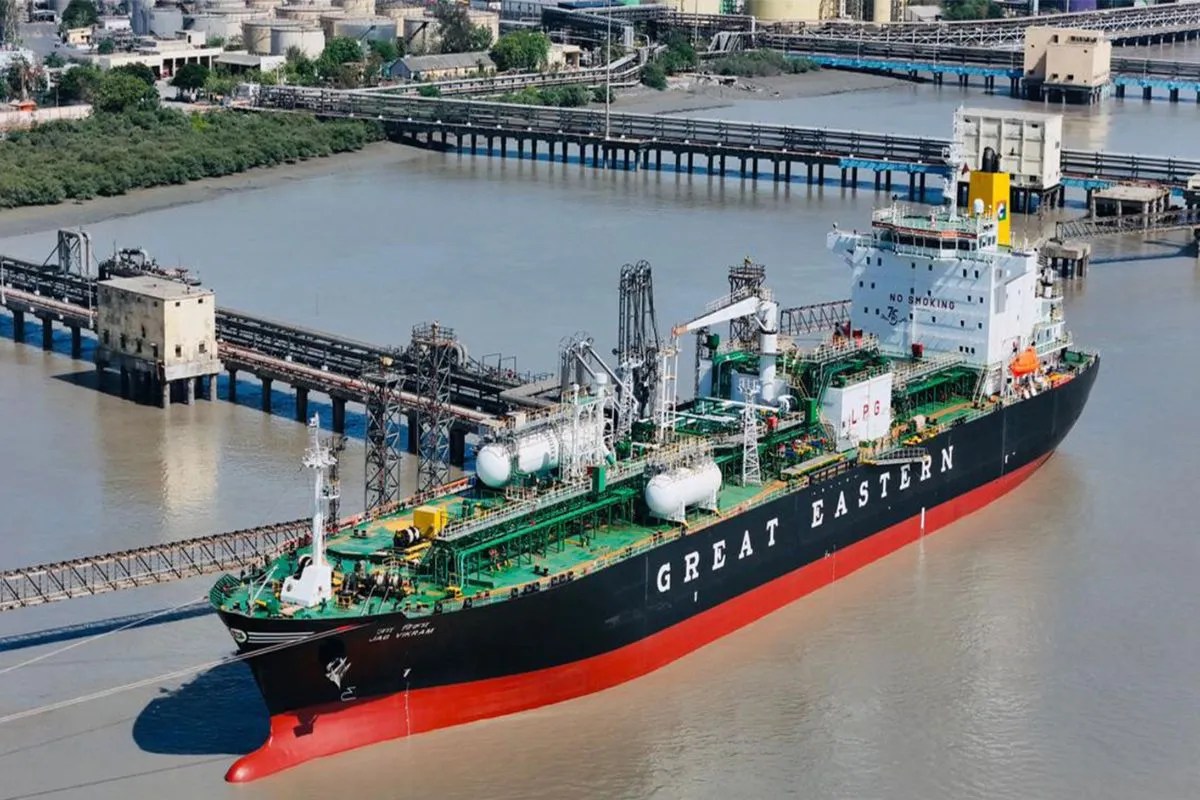
The arrival of the ‘Jag Vikram’ at Kandla Port with 20,400 metric tons of LPG isn’t a victory. It’s a symptom of a deep-seated energy insecurity that the mainstream media continues to dress up as a "success story."
While headlines celebrate the successful transit through the Strait of Hormuz, they ignore the terrifying reality: India is patting itself on the back for managing to survive a hostage situation. We are celebrating the fact that a single vessel made it through a 21-mile-wide choke point without being seized or caught in the crossfire of geopolitical brinkmanship.
If this is what "good news" looks like, we are in serious trouble.
The Hormuz Trap
The Strait of Hormuz is the most dangerous piece of water on the planet. One-third of the world’s liquefied natural gas and 25% of total global oil consumption passes through this narrow corridor. For India, the dependence is even more acute.
Celebrating the arrival of one ship is like a gambler cheering because they didn't lose their shirt on the first hand. It ignores the house edge. The "house" in this case is a volatile mix of Iranian naval posture, US sanctions, and the constant threat of asymmetric warfare.
When the ‘Jag Vikram’ docks, we see 20,400 metric tons of fuel. I see a massive logistical liability. Relying on this route for base-load energy requirements is not a strategy; it’s a prayer. Every time a vessel passes through Hormuz, the Indian economy pays a "tension premium" that never shows up in the official price per ton, but is reflected in insurance spikes and naval escort costs.
The Infrastructure Myth
The narrative surrounding Kandla Port often centers on its capacity and efficiency. This is a distraction. You can build the most sophisticated port in the world, but if the supply line is tethered to a single, fragile umbilical cord in the Middle East, the port is nothing more than an expensive parking lot.
The true metric of energy success isn't "arrival." It is diversification.
India’s energy policy is currently suffering from a massive case of inertia. We are doubling down on traditional shipping routes because they are familiar, not because they are secure. We talk about the Pradhan Mantri Ujjwala Yojana and the massive expansion of LPG access to rural households—which is a noble social goal—but we fail to mention that this entire social revolution is built on the shifting sands of the Persian Gulf.
If Hormuz closes for even a week, the "good news" at Kandla evaporates. The price of a cylinder in a village in Uttar Pradesh doesn't just go up; the supply stops. That is the vulnerability we are ignoring while we celebrate routine dockings.
Why the "Jag Vikram" Success is a False Signal
The media loves a hero ship. It provides a tangible image for a complex economic process. But the focus on specific vessels masks three brutal truths:
- The Insurance Tax: Every voyage through Hormuz carries a War Risk Surcharge. Indian consumers are effectively paying a tax to global insurers because our energy source is located in a combat zone. We are subsidizing the risk of the Middle East with every liter of LPG we burn.
- The Strategic Reserve Deficit: India’s strategic petroleum reserves are a joke compared to our consumption. We have enough to last roughly 9 to 12 days. In a real-world blockade, the ‘Jag Vikram’ wouldn’t even be a drop in the bucket.
- The False Sense of Security: By framing these arrivals as "good news," we reduce the urgency for radical energy shifts. We tell the public that the system is working, which allows policymakers to kick the can down the road instead of investing in aggressive coal-to-gasification or domestic biogas infrastructure.
Stop Looking West, Start Looking Down
The obsession with Middle Eastern LPG is a relic of 20th-century thinking. If India wants real energy independence, we need to stop treating the arrival of a foreign-sourced tanker as a national achievement.
We should be asking why we aren't seeing the same headlines for massive breakthroughs in domestic Hydrogen production or deep-water exploration in the Krishna-Godavari Basin. The "Jag Vikram" represents a dependency. A domestic biogas plant represents autonomy.
I’ve watched companies and countries pour billions into securing "routes" when they should have been destroying the need for the route in the first place. It is a classic sunk-cost fallacy. We have the infrastructure for LPG, so we must keep buying LPG, so we must keep sending ships through a war zone.
The Logistics of Vulnerability
Let's look at the math that the "good news" articles skip.
20,400 metric tons of LPG sounds like a lot. In reality, it covers a fraction of India’s daily appetite. India consumes over 28 million tons of LPG annually. You need nearly 1,400 ‘Jag Vikram’ sized shipments a year just to keep the lights on. That is four ships every single day, 365 days a year, navigating the most contested waters on earth.
One mistake, one stray drone, or one political miscalculation in Tehran or Washington, and the "good news" at Kandla becomes a national emergency.
The Only Real Solution
The contrarian view is simple: Every LPG tanker that arrives at Kandla is a reminder of a failure to innovate.
We need to stop celebrating the successful navigation of a trap and start dismantling the trap itself. This means:
- Aggressive Diversification: Sourcing from the US, Australia, and Africa, even if the per-ton price is slightly higher. The "security premium" of avoiding Hormuz is worth the cost.
- Decentralized Energy: Moving away from massive, centralized port-fed systems toward localized waste-to-energy and solar-hydrogen hubs.
- Brutal Realism: Admitting that the Middle East is an increasingly unreliable partner and that the "blue-water navy" aspirations of India must prioritize escorting these specific energy assets above all else until the dependency is broken.
The ‘Jag Vikram’ reached Kandla. Great. Now let’s talk about how we make sure we never have to care about the Strait of Hormuz ever again.
Until then, we aren't winning. We're just lucky. And in the energy business, luck is a debt that eventually comes due with interest.
Stop cheering for the tanker. Start demanding a system where the tanker doesn't matter.